
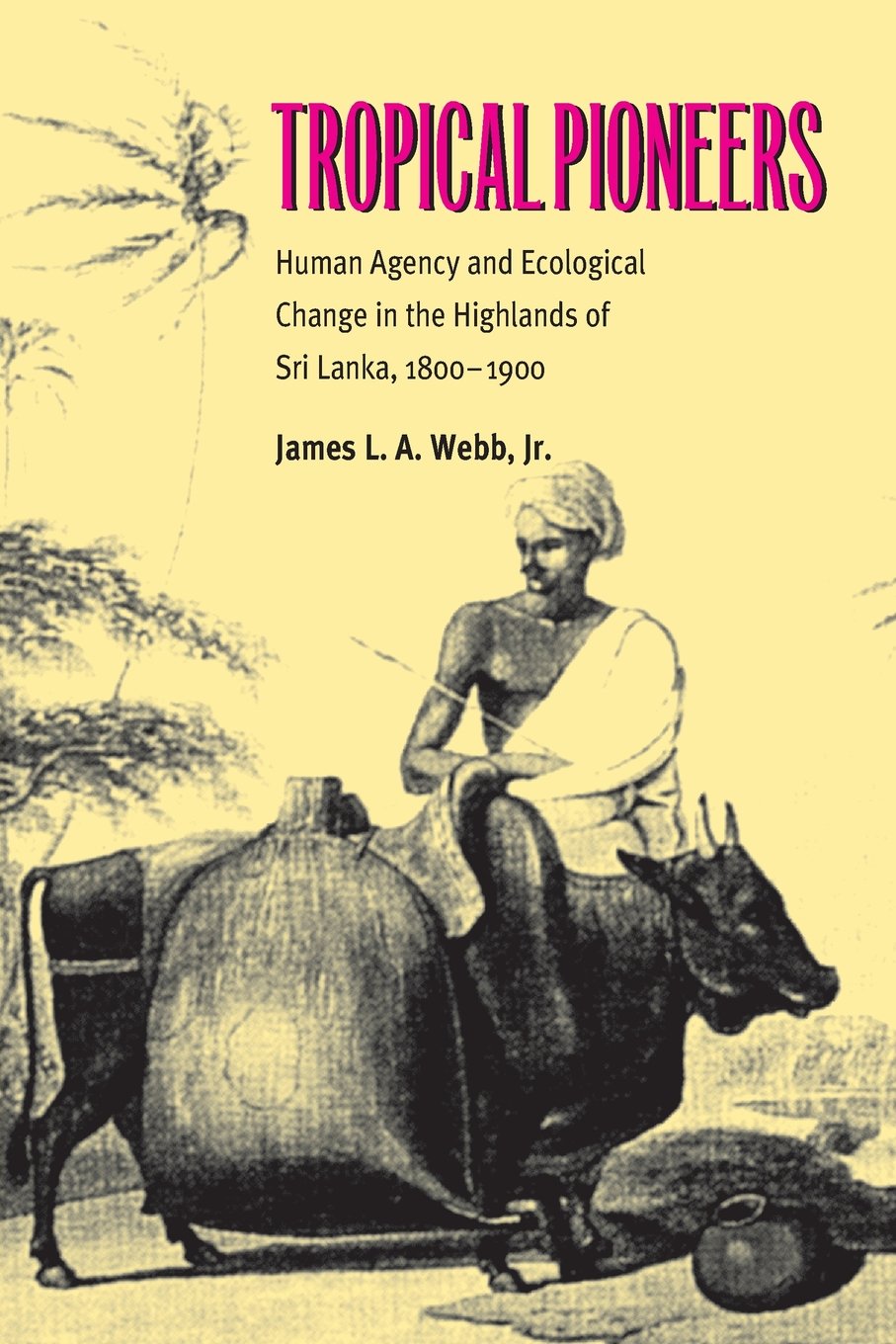
Title
Tropical Pioneers: Human Agency and Ecological Change in the Highlands of Sri Lanka, 18001900 (Series in Ecology and History),Used
Sold by Ergodebooks, an authorized reseller.
Returns accepted within 30 days | support@ergodebooks.com
Shipping Information
- Free Standard Shipping — United States only
- Processing Time: 3–5 business days
- Estimated Delivery: 6–10 business days after dispatch
- Double-boxed, fully insured & discreetly packaged
- Tracking number sent via email once dispatched
Returns & Refund
Returns accepted within 30 days of delivery.
Damaged or Defective Item
Free return shipping + replacement or full refund
Wrong Item Received
Free return shipping + replacement or full refund
Change of Mind
Return shipping at customer's expense · 25% restocking fee applies
Payment Option

In 1800, the highlands of Sri Lanka had some of the most biologically diverse primary tropical rainforest ecosystems in the world. By 1900, only a few craggy corners and mountain caps had been spared the fire stick. Highland villagers, through the extension of slashandburn agriculture, and British managers, through the creation of plantationsfirst of coffee, then cinchona, and finally teahad removed virtually the entire primary forest cover.Tropical Pioneers documents the conversion of a tropical rainforest biome and the collision between what previously had been more discrete ecological zones within South Asia. The ecological impacts were transformational. Author James L. A. Webb, Jr., demonstrates that profound ecological disruption occurred in the central highlands of Sri Lanka during the nineteenth century and suggests that the theme of ecological crisis brought about by the integration of tropical ecological zones during precolonial and colonial periods alike is an important one for historians to investigate elsewhere.Tropical Pioneers is based on extensive research in the National Archives of Sri Lanka, the National Agricultural Library at Gannaruwa, the Library of the Royal Asiatic SocietyCeylon Branch, the Royal Botanic Gardens at Kew, the Public Record Office of the United Kingdom, and the British Library.
⚠️ WARNING (California Proposition 65):
This product may contain chemicals known to the State of California to cause cancer, birth defects, or other reproductive harm.
For more information, please visit www.P65Warnings.ca.gov.
- Q: What is the main topic of 'Tropical Pioneers'? A: 'Tropical Pioneers' explores the ecological changes in the highlands of Sri Lanka between 1800 and 1900, focusing on the impact of human activities on tropical rainforest ecosystems.
- Q: Who is the author of 'Tropical Pioneers'? A: The book is authored by James L. A. Webb, Jr., who conducted extensive research on the ecological history of Sri Lanka.
- Q: What type of condition is the book in? A: 'Tropical Pioneers' is listed as a used book in good condition, ensuring it is still readable and valuable for research or leisure reading.
- Q: How many pages does 'Tropical Pioneers' have? A: The book contains 243 pages, providing a comprehensive overview of its subject matter.
- Q: What is the binding type of this book? A: 'Tropical Pioneers' is published in paperback binding, making it lightweight and easy to handle.
- Q: When was 'Tropical Pioneers' published? A: 'Tropical Pioneers' was published on March 1, 2002, and is the first edition of the book.
- Q: What ecological themes does the book address? A: The book discusses the theme of ecological crisis resulting from the integration of tropical ecological zones during both precolonial and colonial periods.
- Q: Where did the author conduct research for this book? A: Research for 'Tropical Pioneers' was conducted in various prestigious institutions, including the National Archives of Sri Lanka and the British Library.
- Q: Is 'Tropical Pioneers' suitable for academic research? A: Yes, 'Tropical Pioneers' is suitable for academic research, as it is based on extensive archival research and provides valuable insights into ecological history.
- Q: Can I find information about the ecological impacts on Sri Lanka in this book? A: Absolutely, 'Tropical Pioneers' details significant ecological impacts and transformations that occurred in the central highlands of Sri Lanka during the nineteenth century.