If you have any questions, you are always welcome to contact us. We'll get back to you as soon as possible, withing 24 hours on weekdays.
Customer service
All questions about your order, return and delivery must be sent to our customer service team by e-mail at yourstore@yourdomain.com
Sale & Press
If you are interested in selling our products, need more information about our brand or wish to make a collaboration, please contact us at press@yourdomain.com
Help
If you have any questions, you are always welcome to contact us. We'll get back to you as soon as possible, withing 24 hours on weekdays.
Customer service
All questions about your order, return and delivery must be sent to our customer service team by e-mail at yourstore@yourdomain.com
Sale & Press
If you are interested in selling our products, need more information about our brand or wish to make a collaboration, please contact us at press@yourdomain.com
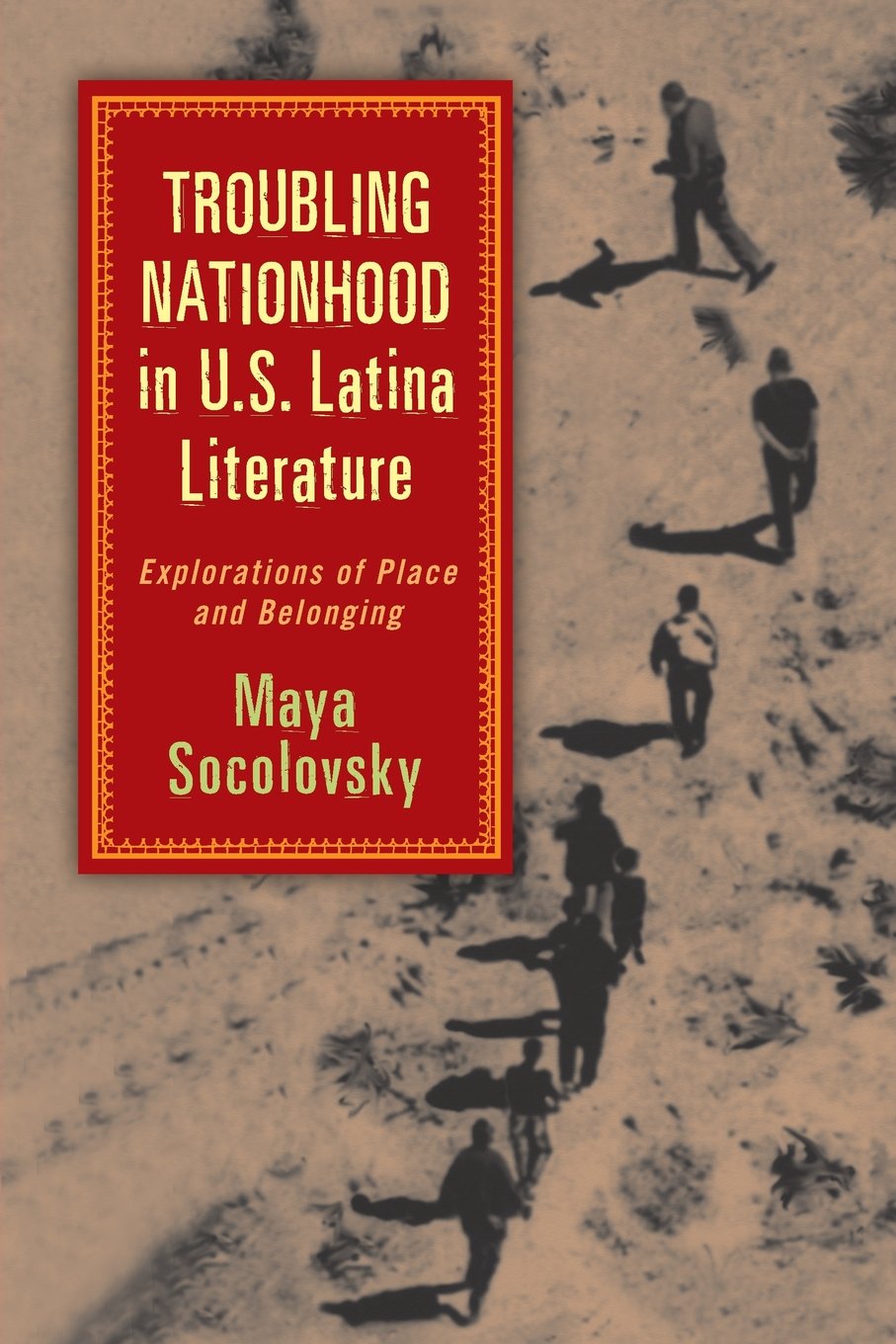
This book examines the ways in which recent U.S. Latina literature challenges popular definitions of nationhood and national identity. It explores a group of feminist texts that are representative of the U.S. Latina literary boom of the 1980s, 1990s, and 2000s, when an emerging group of writers gained prominence in mainstream and academic circles. Through close readings of select contemporary Mexican American, Puerto Rican, and Cuban American works, Maya Socolovsky argues that these narratives are remapping the United States so that it is fully integrated within a larger, hemispheric Americas.Looking at such concerns as nation, place, trauma, and storytelling, writers Denise Chavez, Sandra Cisneros, Esmeralda Santiago, Ana Castillo, Himilce Novas, and Judith Ortiz Cofer challenge popular views of Latino cultural unbelonging and make strong cases for the legitimate presence of Latinas/os within the United States. In this way, they also counter much of todays antiimmigration rhetoric.Imagining the U.S. as part of a broader "Americas," these writings trouble imperialist notions of nationhood, in which political borders and a long history of intervention and colonization beyond those borders have come to shape and determine the dominant culture's writing and the defining of all Latinos as "other" to the nation.
⚠️ WARNING (California Proposition 65):
This product may contain chemicals known to the State of California to cause cancer,
birth defects, or other reproductive harm.
For MAP (Minimum Advertised Price) violations and Intellectual Property (IP) or Trademark concerns, please contact:
support@ergodebooks.com
⚠️ California Proposition 65 Warning: Some products sold on this website may expose you to chemicals known to the State of California to cause cancer, birth defects, or other reproductive harm. For more information, visit www.P65Warnings.ca.gov.