
Title
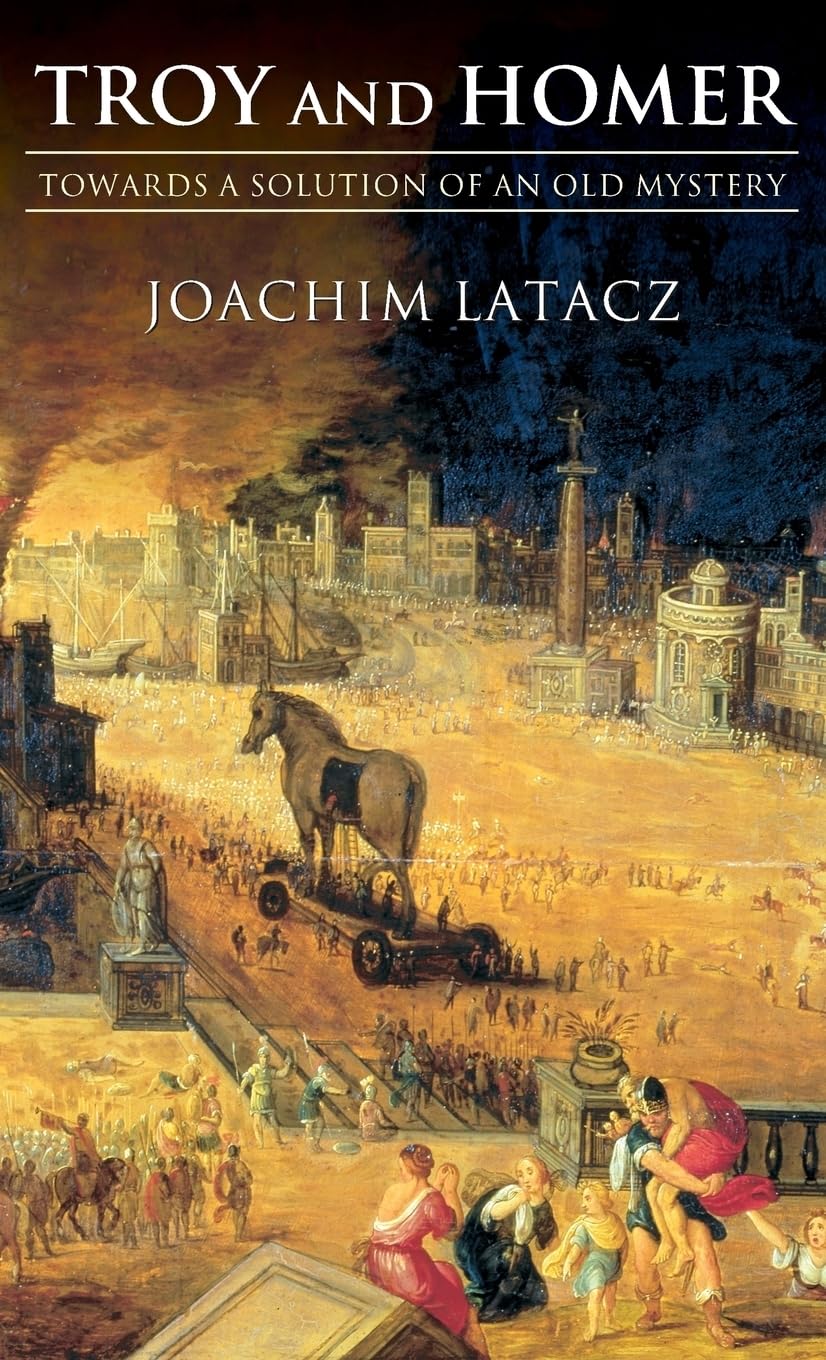
Troy and Homer: Towards a Solution of an Old Mystery,Used
Sold by Ergodebooks, an authorized reseller.
Returns accepted within 30 days | support@ergodebooks.com
Shipping Information
- Free Standard Shipping — United States only
- Processing Time: 3–5 business days
- Estimated Delivery: 6–10 business days after dispatch
- Double-boxed, fully insured & discreetly packaged
- Tracking number sent via email once dispatched
Returns & Refund
Returns accepted within 30 days of delivery.
Damaged or Defective Item
Free return shipping + replacement or full refund
Wrong Item Received
Free return shipping + replacement or full refund
Change of Mind
Return shipping at customer's expense · 25% restocking fee applies
Payment Option

In this book Joachim Latacz turns the spotlight of modern research on the muchdebated question of whether the wealthy city of Troy described by Homer in the Iliad was a poetic fiction or a memory of historical reality.Earlier excavations at the hill of Hisarlik, in Turkey, on the Dardanelles, brought no answer, but in 1988 a new archaeological enterprise, under the direction of Manfred Korfmann, led to a radical shift in understanding. Latacz, one of Korfmann's closest collaborators, traces the course of these excavations, and the renewed investigation of the imperial Hittite archives they have inspired. As he demonstrates, it is now clear that the background against which the plot of the Iliad is acted out is the historical reality of the thirteenth century BC. The Troy story as a whole must have arisen in this period, and we can detect traces of it in Homer's great poem.
⚠️ WARNING (California Proposition 65):
This product may contain chemicals known to the State of California to cause cancer, birth defects, or other reproductive harm.
For more information, please visit www.P65Warnings.ca.gov.
- Q: How many pages does the book have? A: This book has three hundred sixty-four pages. It provides an in-depth exploration of the historical context of Troy and Homer's Iliad.
- Q: What are the dimensions of the book? A: The book measures eight point seven four inches in length, five point five one inches in width, and five point seven five inches in height. These dimensions make it a convenient size for reading.
- Q: What type of binding does this book have? A: This book features a hardcover binding. Hardcover books are known for their durability and sturdiness.
- Q: Who is the author of the book? A: The author of the book is Joachim Latacz. He is known for his expertise in classical studies and archaeology.
- Q: What is the genre of the book? A: The genre of this book is Criticism and Theory. It delves into historical analysis and literary critique of ancient texts.
- Q: What is the main theme of the book? A: The main theme revolves around the historical reality versus poetic fiction of Troy as described in the Iliad. It investigates archaeological findings and ancient texts.
- Q: How do I read this book? A: You can read this book like any traditional book, starting from the first page and continuing to the last. It is suitable for history and literature enthusiasts.
- Q: Is this book suitable for academic studies? A: Yes, this book is suitable for academic studies. It provides valuable insights into classical literature and archaeology.
- Q: What age group is this book intended for? A: This book is intended for adults and older teens interested in classical literature and history. It contains complex themes and discussions.
- Q: How should I store this book? A: Store this book in a cool, dry place, upright on a shelf to prevent damage. Avoid exposure to direct sunlight to preserve its condition.
- Q: Can I clean the book if it gets dirty? A: Yes, you can clean the book gently with a dry, soft cloth. Avoid using water or cleaning solutions.
- Q: What if the book arrives damaged? A: If the book arrives damaged, contact the seller for a return or exchange. Most retailers have a return policy for damaged items.
- Q: Is there a warranty for this book? A: Typically, there is no warranty for books. However, check with the retailer for their specific return policy.
- Q: Can I find this book in libraries? A: Yes, many libraries may carry this book. Check your local library's catalog or ask a librarian for assistance.
- Q: Is this book easy to understand? A: The book is intended for readers with a background in literature or history. Some sections may be complex for casual readers.
- Q: What makes this book different from others on the same topic? A: This book integrates modern archaeological findings with literary analysis, providing a fresh perspective on the historical context of Troy.