If you have any questions, you are always welcome to contact us. We'll get back to you as soon as possible, withing 24 hours on weekdays.
Customer service
All questions about your order, return and delivery must be sent to our customer service team by e-mail at yourstore@yourdomain.com
Sale & Press
If you are interested in selling our products, need more information about our brand or wish to make a collaboration, please contact us at press@yourdomain.com
Help
If you have any questions, you are always welcome to contact us. We'll get back to you as soon as possible, withing 24 hours on weekdays.
Customer service
All questions about your order, return and delivery must be sent to our customer service team by e-mail at yourstore@yourdomain.com
Sale & Press
If you are interested in selling our products, need more information about our brand or wish to make a collaboration, please contact us at press@yourdomain.com
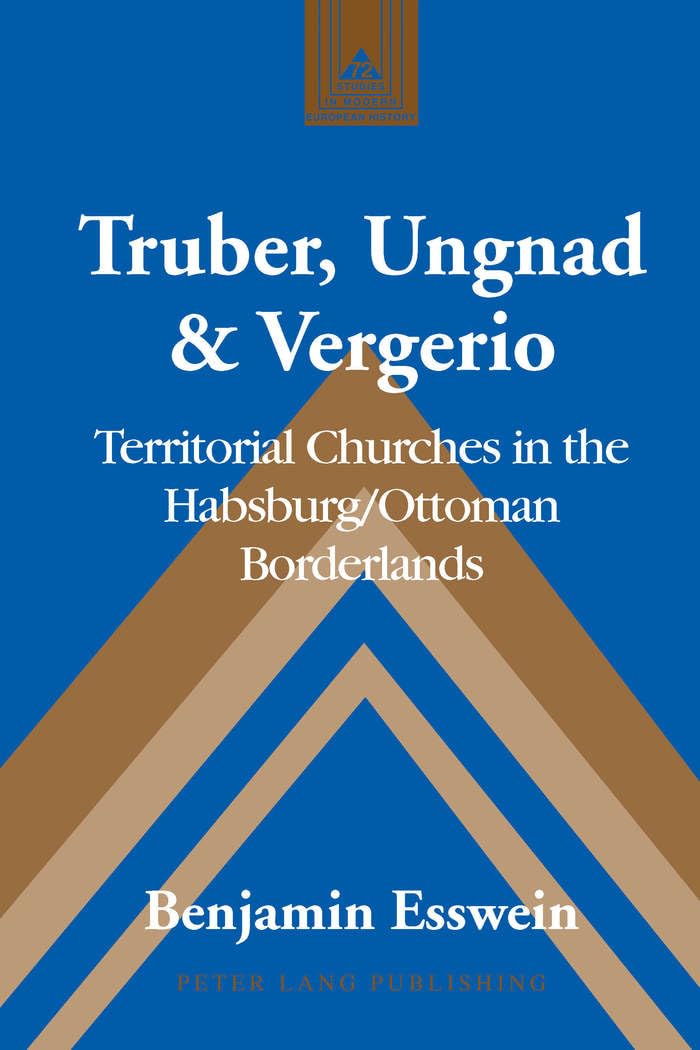
Truber, Ungnad & Vergerio: Territorial Churches in the Habsburg/Ottoman Borderlands provides a critical study of Lutheran reformers in Krain, formerly a province along what is now the Croatian/Slovenian border, and acts as a case study for the rest of the HabsburgOttoman borderlands. Focus is given to the Austrian Habsburgs, benefactors to the reformers, who sought to adopt Johannes Brenz Lutheran territorial church model that would provide the Habsburgs the means to expand their hegemony over the region for decades.During this time, there were three individuals who were integral in establishing this movement: reformer and Bible translator Primus Truber, Lutheran diplomat Peter Paul Vergerio, and Austrian nobleman Hans Ungnad, the latter of whom played a central role in transmitting Slavic translation of Biblical and Evangelical texts into Krain through his personal network, which continued to help grow the Habsburg sphere of influence and contributed to their larger goal keeping the Ottomans out.All three men established networks of support including notable moderate Catholics and Swiss Reformed, relying on their networks integrally to spread their faith and financially support them. The use of the Lutheran territorial church model signifies an attempt to establish a Lutheran confession and church regulation in Slovenian and Croatian lands by making them loyal to the regional reformer responsible for instilling Godly virtue and the true faith.
⚠️ WARNING (California Proposition 65):
This product may contain chemicals known to the State of California to cause cancer,
birth defects, or other reproductive harm.
For MAP (Minimum Advertised Price) violations and Intellectual Property (IP) or Trademark concerns, please contact:
support@ergodebooks.com
⚠️ California Proposition 65 Warning: Some products sold on this website may expose you to chemicals known to the State of California to cause cancer, birth defects, or other reproductive harm. For more information, visit www.P65Warnings.ca.gov.