
Title
Trust and Mistrust in International Relations,Used
Sold by Ergodebooks, an authorized reseller.
Returns accepted within 30 days | support@ergodebooks.com
Shipping Information
- Free Standard Shipping — United States only
- Processing Time: 3–5 business days
- Estimated Delivery: 6–10 business days after dispatch
- Double-boxed, fully insured & discreetly packaged
- Tracking number sent via email once dispatched
Returns & Refund
Returns accepted within 30 days of delivery.
Damaged or Defective Item
Free return shipping + replacement or full refund
Wrong Item Received
Free return shipping + replacement or full refund
Change of Mind
Return shipping at customer's expense · 25% restocking fee applies
Payment Option

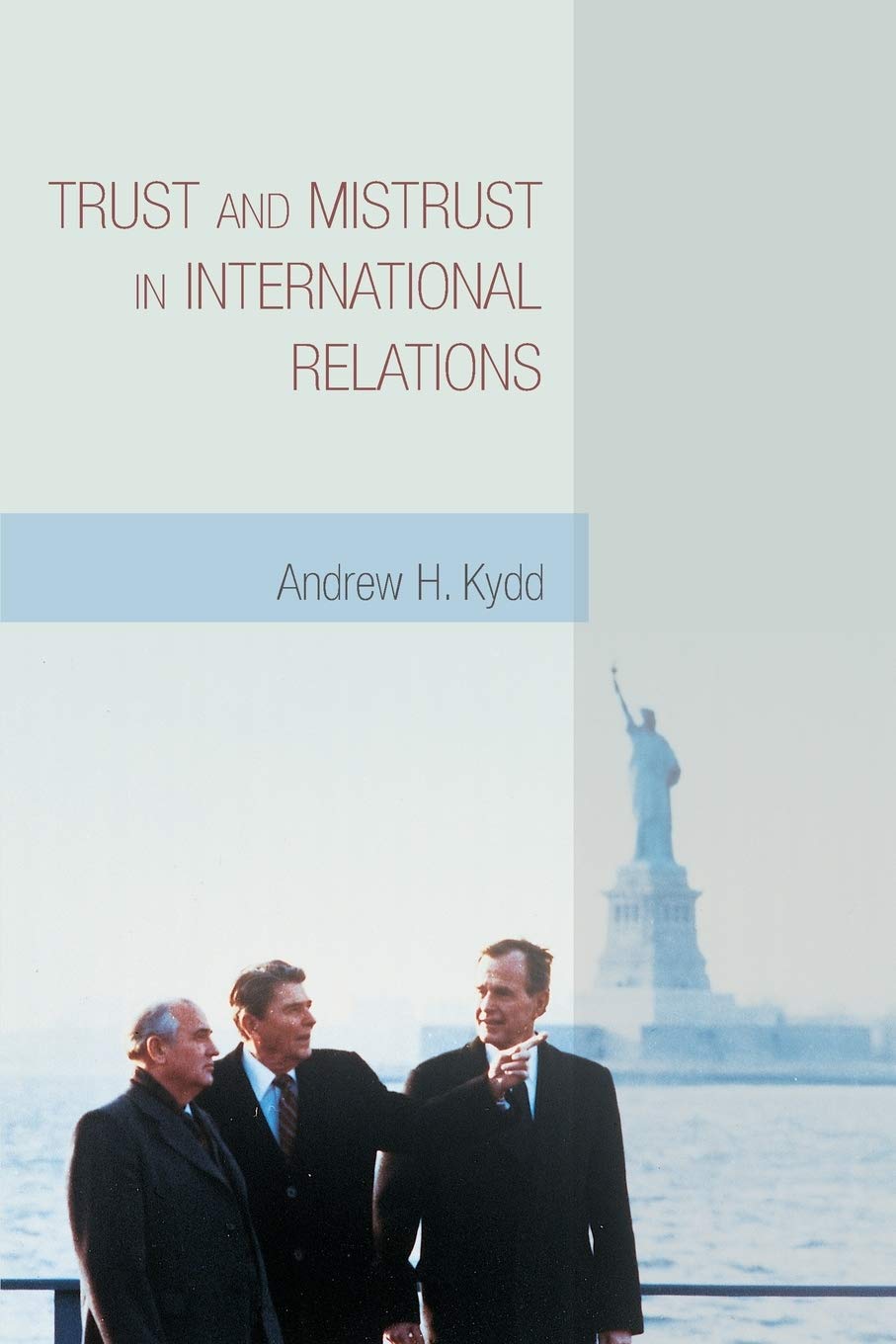
The difference between war and peace can be a matter of trust. States that trust each other can cooperate and remain at peace. States that mistrust each other enough can wage preventive wars, attacking now in fear that the other side will attack in the future. In this groundbreaking book, Andrew Kydd develops a theory of trust in international relations and applies it to the Cold War. Grounded in a realist tradition but arriving at conclusions very different from current realist approaches, this theory is the first systematic game theoretic approach to trust in international relations, and is also the first to explicitly consider how we as external observers should make inferences about the trustworthiness of states.Kydd makes three major claims. First, while trustworthy states may enter conflict, when we see conflict we should become more convinced that the states involved are untrustworthy. Second, strong states, traditionally thought to promote cooperation, can do so only if they are relatively trustworthy. Third, even states that strongly mistrust each other can reassure each other and cooperate provided they are trustworthy.The book's historical chapters focus on the growing mistrust at the beginning of the Cold War. Contrary to the common view that both sides were willing to compromise but failed because of mistrust, Kydd argues that most of the mistrust in the Cold War was justified, because the Soviets were not trustworthy.
⚠️ WARNING (California Proposition 65):
This product may contain chemicals known to the State of California to cause cancer, birth defects, or other reproductive harm.
For more information, please visit www.P65Warnings.ca.gov.
- Q: What is the main theme of 'Trust and Mistrust in International Relations'? A: The main theme of the book explores the crucial role of trust in international relations, specifically how it influences cooperation and conflict among states.
- Q: Who is the author of this book? A: The author of 'Trust and Mistrust in International Relations' is Andrew Kydd.
- Q: What are the key claims made in the book? A: Kydd makes three key claims: 1) Conflict can increase our perception of untrustworthiness among states; 2) Strong states can only promote cooperation if they are relatively trustworthy; 3) Even states with high mistrust can cooperate if they exhibit trustworthiness.
- Q: What historical context does the book cover? A: The book focuses on the growing mistrust at the beginning of the Cold War, arguing that much of the mistrust was justified due to the Soviets' lack of trustworthiness.
- Q: How many pages does the book have? A: The book contains 304 pages.
- Q: What is the condition of the book being offered? A: The book is listed as 'New'.
- Q: What is the binding type of this book? A: The binding type of 'Trust and Mistrust in International Relations' is paperback.
- Q: When was this book published? A: The book was published on August 26, 2007.
- Q: Is there any specific material used in the book? A: There is no specific material listed for the book.
- Q: In what category is this book classified? A: The book is classified under 'International & World Politics'.