
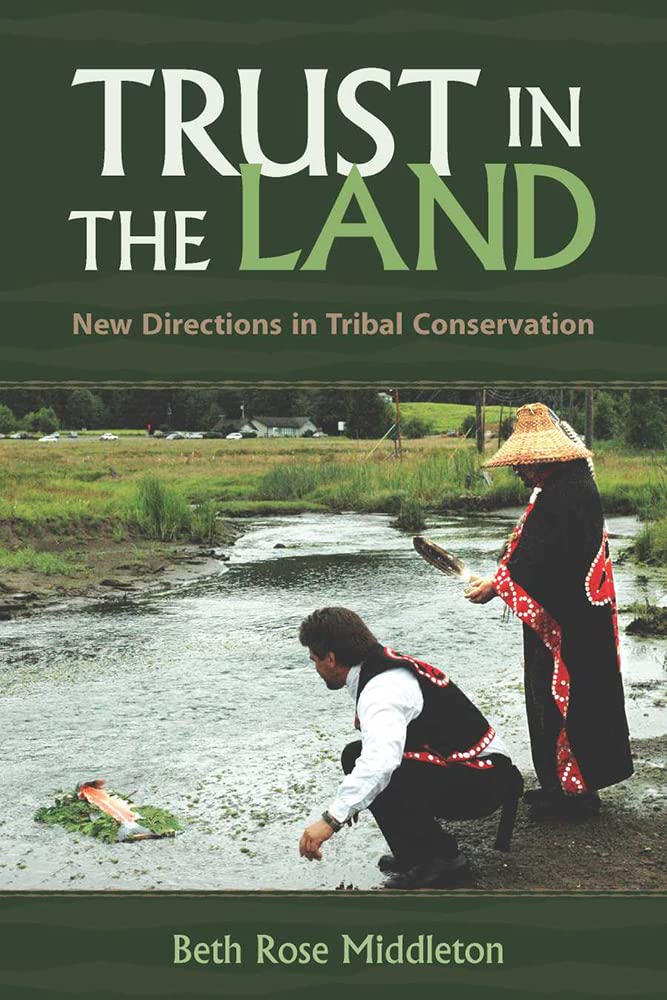
Title
Trust In The Land: New Directions In Tribal Conservation (First Peoples: New Directions In Indigenous Studies)
Sold by Ergodebooks, an authorized reseller.
Returns accepted within 30 days | support@ergodebooks.com
Shipping Information
- Free Standard Shipping — United States only
- Processing Time: 3–5 business days
- Estimated Delivery: 6–10 business days after dispatch
- Double-boxed, fully insured & discreetly packaged
- Tracking number sent via email once dispatched
Returns & Refund
Returns accepted within 30 days of delivery.
Damaged or Defective Item
Free return shipping + replacement or full refund
Wrong Item Received
Free return shipping + replacement or full refund
Change of Mind
Return shipping at customer's expense · 25% restocking fee applies
Payment Option

The Earth Says, God Has Placed Me Here. The Earth Says That God Tells Me To Take Care Of The Indians On This Earth; The Earth Says To The Indians That Stop On The Earth, Feed Them Right. . . . God Says Feed The Indians Upon The Earth.Cayuse Chief Young Chief, Walla Walla Council Of 1855America Has Always Been Indian Land. Historically And Culturally, Native Americans Have Had A Strong Appreciation For The Land And What It Offers. After Continually Struggling To Hold On To Their Land And Losing Millions Of Acres, Native Americans Still Have A Strong And Ongoing Relationship To Their Homelands. The Land Holds Spiritual Value And Offers A Way Of Life Through Fishing, Farming, And Hunting. It Remains Essentialnot Only For Subsistence But Also For Cultural Continuitythat Native Americans Regain Rights To Land They Were Promised.Beth Rose Middleton Examines New And Innovative Ideas Concerning Native Land Conservancies, Providing Advice On Land Trusts, Collaborations, And Conservation Groups. Increasingly, Tribes Are Working To Protect Their Access To Culturally Important Lands By Collaborating With Native And Non Native Conservation Movements. By Using Private Conservation Partnerships To Reacquire Lost Land, Tribes Can Ensure The Health And Sustainability Of Vital Natural Resources. In Particular, Tribal Governments Are Using Conservation Easements And Land Trusts To Reclaim Rights To Lost Acreage. Through The Use Of These And Other Private Conservation Tools, Tribes Are Able To Protect Or In Some Cases Buy Back The Land That Was Never Sold But Rather Was Taken From Them.Trust In The Land Sets Into Motion A New Wave Of Ideas Concerning Land Conservation. This Informative Book Will Appeal To Native And Nonnative Individuals And Organizations Interested In Protecting The Land As Well As Environmentalists And Government Agencies.
⚠️ WARNING (California Proposition 65):
This product may contain chemicals known to the State of California to cause cancer, birth defects, or other reproductive harm.
For more information, please visit www.P65Warnings.ca.gov.
- Q: What is the page count of 'Trust in the Land'? A: This book has three hundred fifty-two pages. It provides an in-depth exploration of tribal conservation and land rights.
- Q: What type of binding does this book have? A: This book is available in paperback binding. Paperback editions are often lighter and more flexible than hardcover.
- Q: Who is the author of 'Trust in the Land'? A: The author is Beth Rose Middleton Manning. She focuses on Native American land conservation and rights.
- Q: How is 'Trust in the Land' used in education? A: This book is suitable for academic settings and personal enrichment. It addresses key issues in Indigenous studies and conservation.
- Q: Is 'Trust in the Land' appropriate for all ages? A: Yes, it is appropriate for a general audience. The content is educational and relevant to those interested in environmental and cultural topics.
- Q: What themes are explored in 'Trust in the Land'? A: The book explores themes of tribal rights, land conservation, and cultural identity. It highlights innovative approaches to reclaiming lost lands.
- Q: How should I store this book? A: Store it in a cool, dry place away from direct sunlight. This will help preserve the quality of the paper and binding.
- Q: Can this book be cleaned if it gets dirty? A: Yes, you can gently wipe the cover with a damp cloth. Avoid using harsh chemicals to prevent damage.
- Q: Is there a return policy for 'Trust in the Land'? A: Yes, there is typically a return policy available. Check with the seller for specific details regarding returns.
- Q: What if 'Trust in the Land' arrives damaged? A: You should contact the seller immediately for assistance. Most sellers will offer a replacement or refund for damaged items.
- Q: How does 'Trust in the Land' compare to other conservation books? A: This book specifically focuses on Indigenous perspectives in conservation, setting it apart from general conservation literature.
- Q: Is this book suitable for someone new to Indigenous studies? A: Yes, it is accessible for beginners. The book presents complex ideas in a relatable manner for new readers.
- Q: What audiences would benefit from reading this book? A: Environmentalists, educators, and anyone interested in Native American rights would benefit from this book. It offers valuable insights into land conservation.
- Q: Are there any illustrations in 'Trust in the Land'? A: Yes, the book includes illustrations and maps. These visuals enhance the understanding of the discussed concepts and areas.
- Q: Does the book discuss any specific tribes? A: Yes, it examines various tribes and their unique relationships with their land. This provides a comprehensive view of Indigenous land issues.
- Q: What is the main purpose of 'Trust in the Land'? A: The main purpose is to educate readers about the importance of land rights for Native Americans. It advocates for innovative conservation practices.