
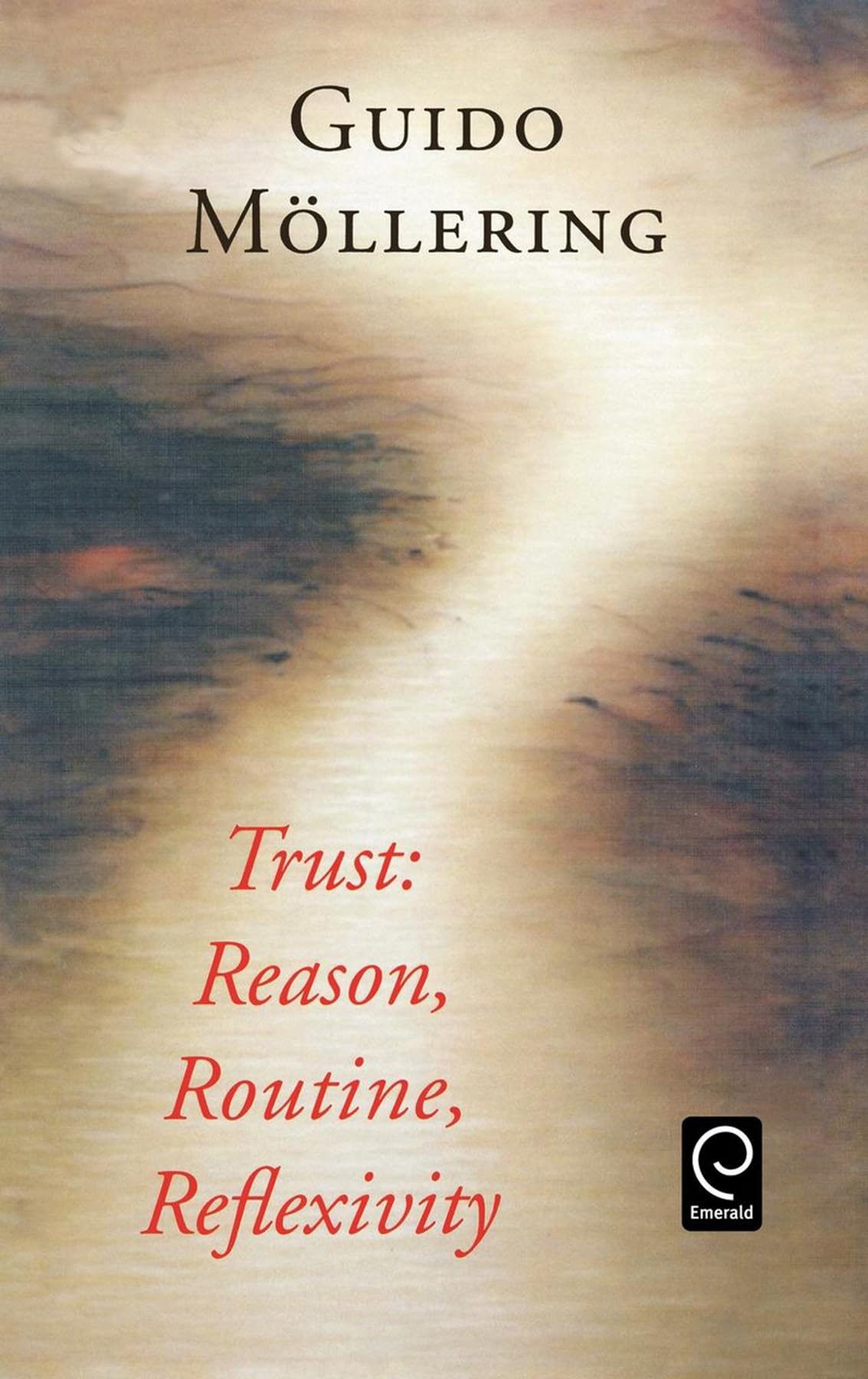
Title
Trust: Reason, Routine, Reflexivity,Used
Sold by Ergodebooks, an authorized reseller.
Returns accepted within 30 days | support@ergodebooks.com
Shipping Information
- Free Standard Shipping — United States only
- Processing Time: 3–5 business days
- Estimated Delivery: 6–10 business days after dispatch
- Double-boxed, fully insured & discreetly packaged
- Tracking number sent via email once dispatched
Returns & Refund
Returns accepted within 30 days of delivery.
Damaged or Defective Item
Free return shipping + replacement or full refund
Wrong Item Received
Free return shipping + replacement or full refund
Change of Mind
Return shipping at customer's expense · 25% restocking fee applies
Payment Option

What makes trust such a powerful concept? Is it merely that in trust the whole range of social forces that we know play together? Or is it that trust involves a peculiar element beyond those we can account for? While trust is an attractive and evocative concept that has gained increasing popularity across the social sciences, it remains elusive, its many facets and applications obscuring a clear overall vision of its essence. In this book, Guido Mollering reviews a broad range of trust research and extracts three main perspectives adopted in the literature for understanding trust. Accordingly, trust is presented as a matter of reason, routine or reflexivity. While all these perspectives contribute something to our understanding of trust, Mollering shows that they imply, but cannot explain, suspension the leap of faith that is typical of trust. He, therefore, proposes a new direction in trust research that builds on existing perspectives but places the suspension of uncertainty and vulnerability at the heart of the concept of trust. Beyond a purely theoretical line of argument, the author discusses implications for empirical studies of trust and presents original case material that captures the experience of trust in terms of reason, routine, reflexivity and suspension. Mollering concludes by suggesting how the new approach can enhance the relevance of trust research and its contributions to broader research agendas concerning the constitution of positive expectations in the face of prevalent uncertainty and change at various levels in our economies and societies. The book is essential reading for anyone who wants to gain a thorough understanding of trust. It can serve as a general introduction for advanced students and scholars in the social sciences, especially in economics, sociology, psychology and management. For more experienced researchers, it is a challenging and provocative critique of the field and a new approach to understanding trust. It provides a detailed examination of trust as a social concept; argues that trust can be a matter of reason, routine, or reflexivity; and discusses theoretical aspects of trust but addresses practical applications as well.
⚠️ WARNING (California Proposition 65):
This product may contain chemicals known to the State of California to cause cancer, birth defects, or other reproductive harm.
For more information, please visit www.P65Warnings.ca.gov.