
Title
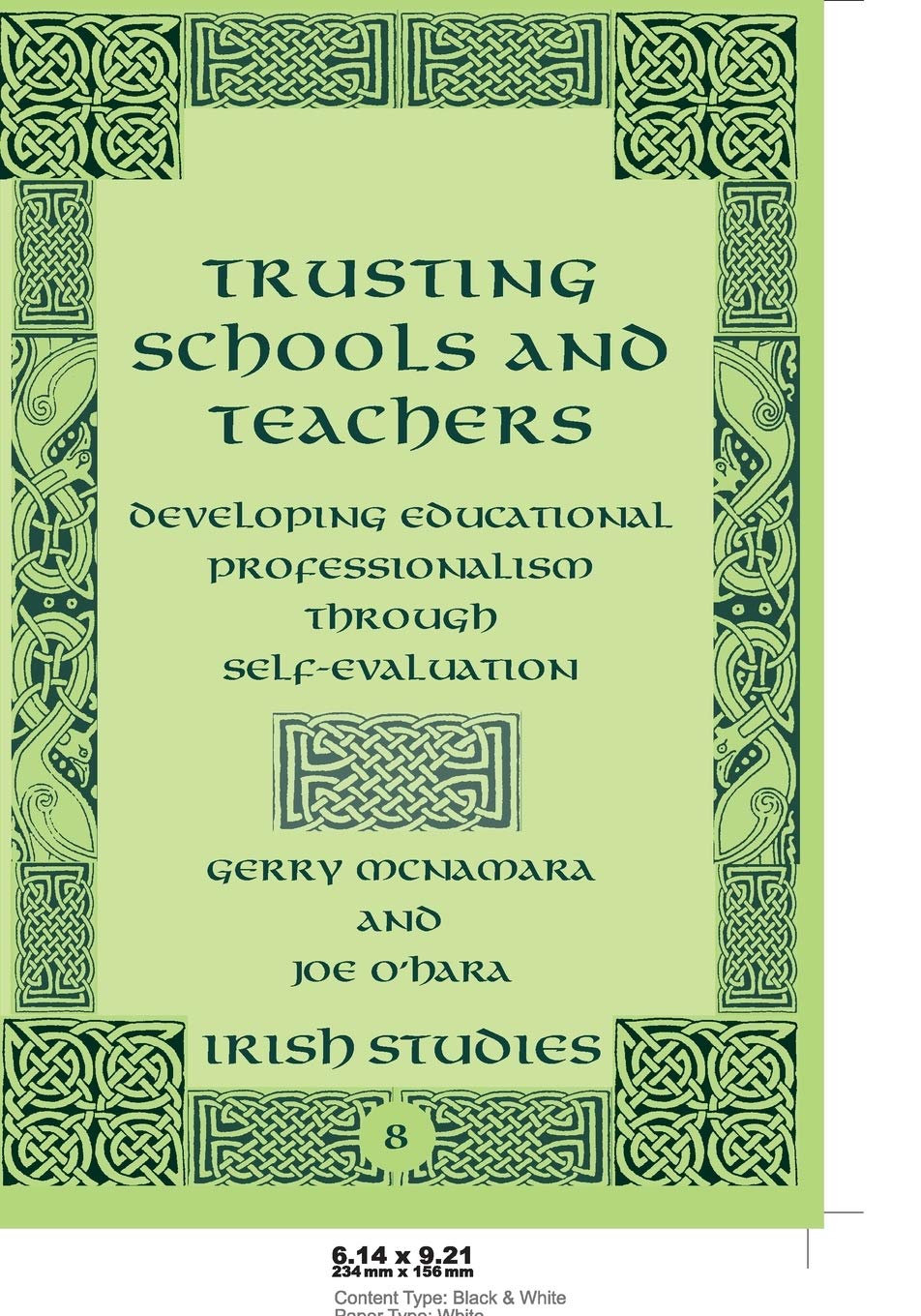
Trusting Schools And Teachers: Developing Educational Professionalism Through Selfevaluation (Irish Studies),Used
Sold by Ergodebooks, an authorized reseller.
Returns accepted within 30 days | support@ergodebooks.com
Shipping Information
- Free Standard Shipping — United States only
- Processing Time: 3–5 business days
- Estimated Delivery: 6–10 business days after dispatch
- Double-boxed, fully insured & discreetly packaged
- Tracking number sent via email once dispatched
Returns & Refund
Returns accepted within 30 days of delivery.
Damaged or Defective Item
Free return shipping + replacement or full refund
Wrong Item Received
Free return shipping + replacement or full refund
Change of Mind
Return shipping at customer's expense · 25% restocking fee applies
Payment Option

Product Description Trusting Schools and Teachers: Developing Educational Professionalism Through SelfEvaluation emerged from a series of studies undertaken with teachers at various stages of their careers exploring the impact of a range of evaluation systems on their personal and professional development. The book begins with a comparative analysis of the rise of school and teacher evaluation, charting the trends conceptual and political influences, and highlights how the concept of selfevaluation has come, for a variety of reasons, to play a surprisingly large role in the emerging approaches to school and teacher evaluation. This is illustrated by a detailed analysis of the emerging system of wholeschool evaluation in Ireland. Research indicates that while selfevaluation looms large in the systems theoretical framework, in fact, there is strong evidence that neither schools nor teachers have the expertise required to systematically selfevaluate. This book identifies methodologies designed to empower schools and teachers to become genuinely selfevaluating through the development of research skills in the context of online communities of practice. Review This is an extremely important and groundbreaking work of scholarship. The authors adopt a lowkey, dispassionate tone, recognizing the validity of different positions on what they refer to as a spectrum of approaches to school evaluation. Yet the values of the work are clearly located in a concept of enhanced teacher professionalism. Perhaps most important, the book provides a blueprint for development that can facilitate both professional autonomy and public accountability. This book is an important contribution to the international literature on evaluation. It uses the Irish context not just as a case study but as an exemplar of how a serious engagement with educational politics can provide professionally satisfying outcomes. In doing so, it elevates educational evaluation from the realm of fraught political tensions to a site of teacher empowerment and professional fulfillment. (Gary Granville, Head of Faculty of Education, National College of Art and Design, Dublin) Trusting Schools and Teachers offers informative insights into the complexities of developing and implementing meaningful school evaluation in the European Union but more specifically in Ireland. For an experienced U.S. evaluator and aspiring evaluation scholar, this book echoes similarly noted challenges to establish schoolbased evaluation communities led by school principals and teachers. Gerry McNamara and Joe OHara do not attempt to disguise the blemishes that were evident in the critically important educational evaluation efforts undertaken in Ireland via its Whole School Evaluation and Looking at Our Schools initiatives. Rather, they present these blemishes as opportunities for increasing their understanding of this new phenomenon of schoolbased evaluation in Ireland for the purpose of refining their future efforts. (Stafford Hood, Associate Dean for Research, Professor of Psychology of Education, Mary Lou Fulton College of Education, Arizona State University) From the Back Cover ' This is an extremely important and groundbreaking work of scholarship. The authors adopt a lowkey, dispassionate tone, recognising the validity of different positions on what they refer to as a 'spectrum of approaches' to school evaluation. Yet the values of the work are clearly located in a concept of enhanced teacher professionalism. Perhaps most importantly, the book provides a blueprint for development that can facilitate both professional autonomy and public accountability. This book is an important contribution to the international literature on evaluation. It uses the Irish context not just as a case study but as an exemplar of how a serious engagement with educational politics can provide professionally satisfying outcomes. In doing so, it elevates educational evaluation from
⚠️ WARNING (California Proposition 65):
This product may contain chemicals known to the State of California to cause cancer, birth defects, or other reproductive harm.
For more information, please visit www.P65Warnings.ca.gov.