If you have any questions, you are always welcome to contact us. We'll get back to you as soon as possible, withing 24 hours on weekdays.
Customer service
All questions about your order, return and delivery must be sent to our customer service team by e-mail at yourstore@yourdomain.com
Sale & Press
If you are interested in selling our products, need more information about our brand or wish to make a collaboration, please contact us at press@yourdomain.com
Help
If you have any questions, you are always welcome to contact us. We'll get back to you as soon as possible, withing 24 hours on weekdays.
Customer service
All questions about your order, return and delivery must be sent to our customer service team by e-mail at yourstore@yourdomain.com
Sale & Press
If you are interested in selling our products, need more information about our brand or wish to make a collaboration, please contact us at press@yourdomain.com
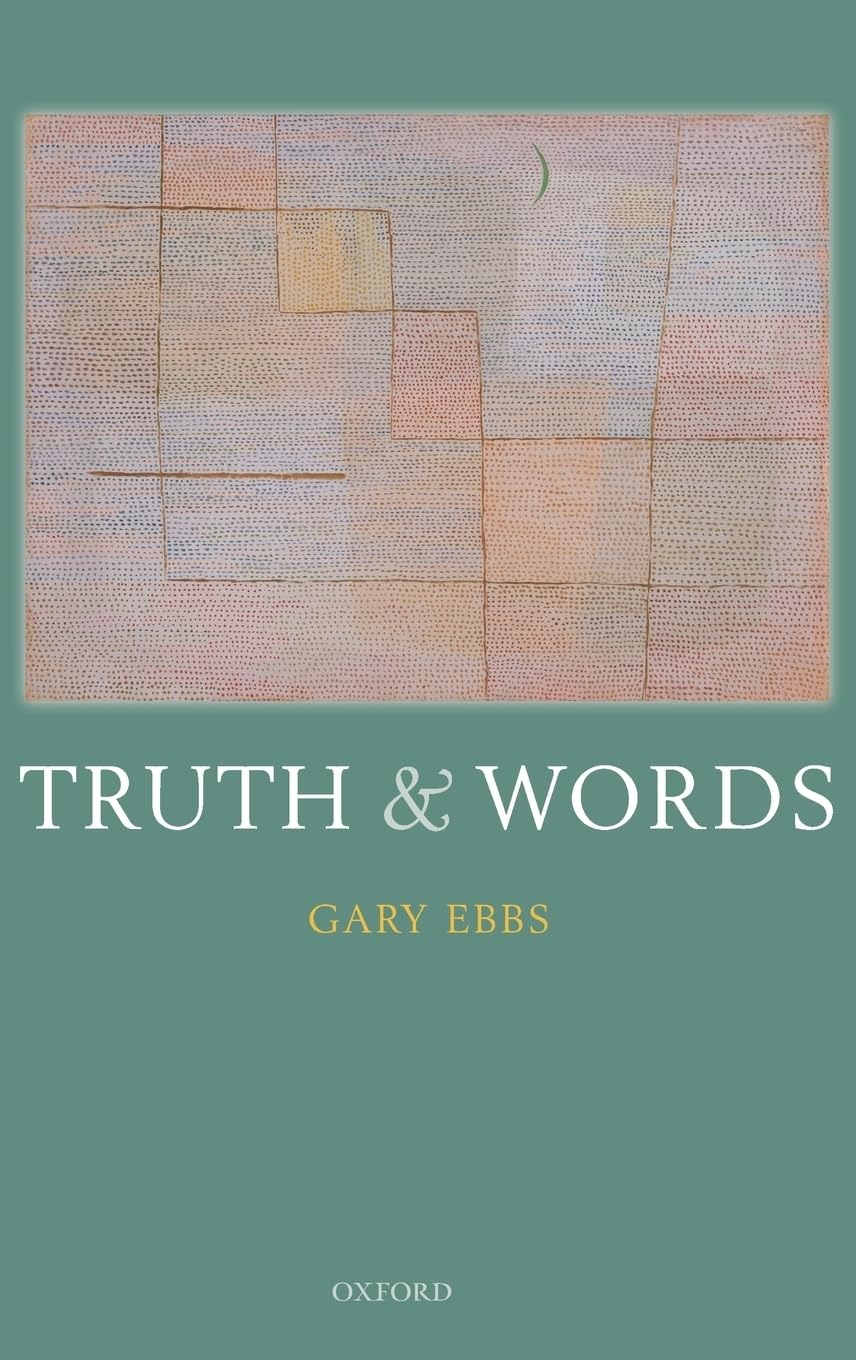
To clarify and facilitate our inquiries we need to define a disquotational truth predicate that we are directly licensed to apply not only to our own sentences as we use them now, but also to other speakers' sentences and our own sentences as we used them in the past. The conventional wisdom is that there can be no such truth predicate. For it appears that the only instances of the disquotational pattern that we are directly licensed to accept are those that define "is true" for our own sentences as we use them now. Gary Ebbs shows that this appearance is illusory. He constructs an account of words that licenses us to rely not only on formal (spellingbased) identifications of our own words, but also on our nondeliberative practical identifications of other speakers' words and of our own words as we used them in the past. To overturn the conventional wisdom about disquotational truth, Ebbs argues, we need only combine this account of words with our disquotational definitions of truth for sentences as we use them now. The result radically transforms our understanding of truth and related topics, including antiindividualism, selfknowledge, and the intersubjectivity of logic.
⚠️ WARNING (California Proposition 65):
This product may contain chemicals known to the State of California to cause cancer,
birth defects, or other reproductive harm.
For MAP (Minimum Advertised Price) violations and Intellectual Property (IP) or Trademark concerns, please contact:
support@ergodebooks.com
⚠️ California Proposition 65 Warning: Some products sold on this website may expose you to chemicals known to the State of California to cause cancer, birth defects, or other reproductive harm. For more information, visit www.P65Warnings.ca.gov.