
Title
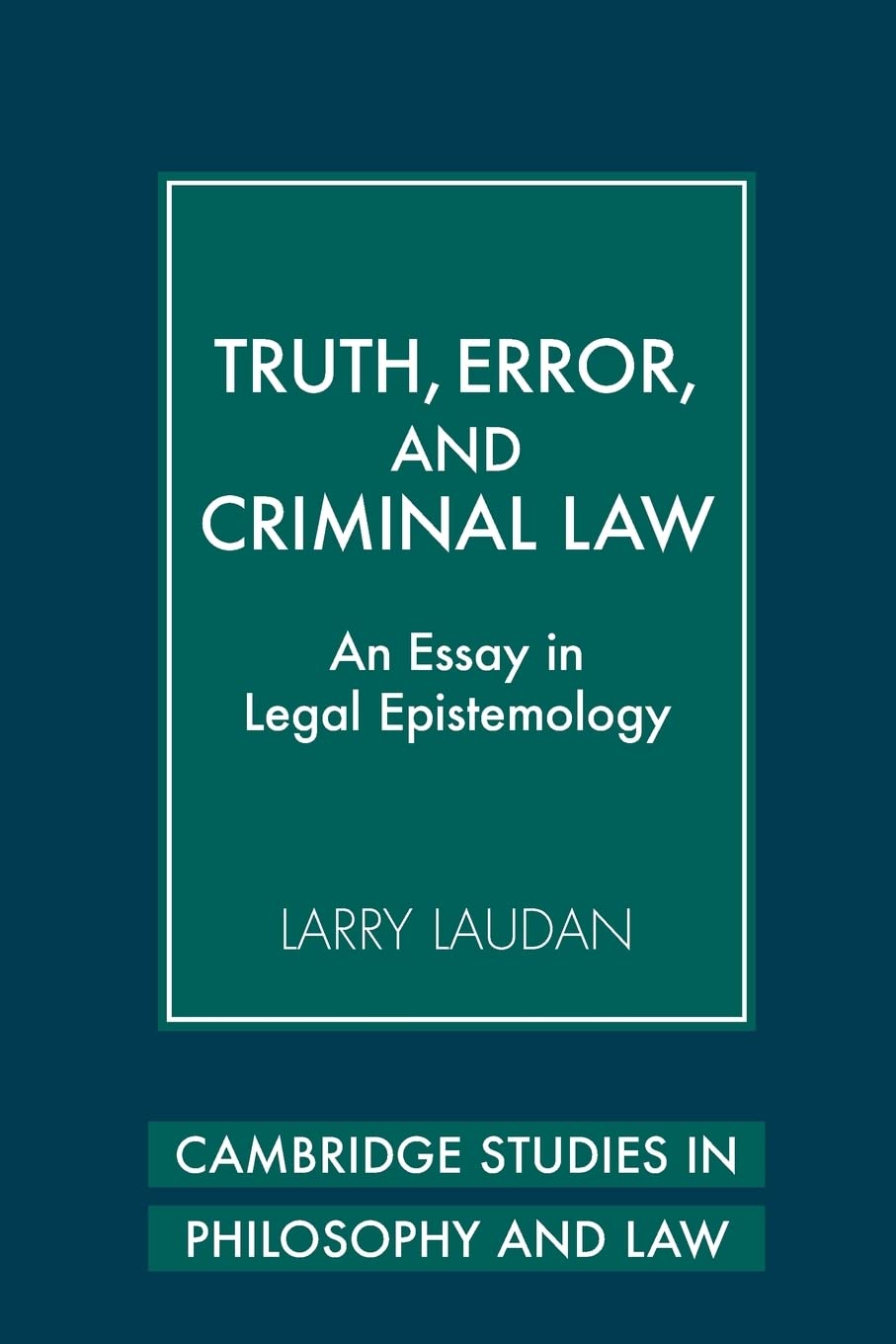
Truth, Error, And Criminal Law: An Essay In Legal Epistemology (Cambridge Studies In Philosophy And Law)
Sold by Ergodebooks, an authorized reseller.
Returns accepted within 30 days | support@ergodebooks.com
Shipping Information
- Free Standard Shipping — United States only
- Processing Time: 3–5 business days
- Estimated Delivery: 6–10 business days after dispatch
- Double-boxed, fully insured & discreetly packaged
- Tracking number sent via email once dispatched
Returns & Refund
Returns accepted within 30 days of delivery.
Damaged or Defective Item
Free return shipping + replacement or full refund
Wrong Item Received
Free return shipping + replacement or full refund
Change of Mind
Return shipping at customer's expense · 25% restocking fee applies
Payment Option

This Book Treats Problems In The Epistemology Of The Law. Beginning With The Premise That The Principal Function Of A Criminal Trial Is To Find Out The Truth About A Crime, Larry Laudan Examines The Rules Of Evidence And Procedure That Would Be Appropriate If The Discovery Of The Truth Were, As Higher Courts Routinely Claim, The Overriding Aim Of The Criminal Justice System. Laudan Mounts A Systematic Critique Of Existing Rules And Procedures That Are Obstacles To That Quest. He Also Examines Issues Of Error Distribution By Offering The First Integrated Analysis Of The Various Mechanismsthe Standard Of Proof, The Benefit Of The Doubt, The Presumption Of Innocence And The Burden Of Prooffor Implementing Societys View About The Relative Importance Of The Errors That Can Occur In A Trial.
⚠️ WARNING (California Proposition 65):
This product may contain chemicals known to the State of California to cause cancer, birth defects, or other reproductive harm.
For more information, please visit www.P65Warnings.ca.gov.
- Q: What is the size and binding of this book? A: The book measures five point ninety-eight inches by eight point ninety-eight inches and has a paperback binding.
- Q: How many pages does this book have? A: This book contains two hundred fifty-six pages, providing a comprehensive exploration of legal epistemology.
- Q: Who is the author of the book? A: The author of the book is Larry Laudan, known for his work in legal philosophy.
- Q: What is the main topic of the book? A: The book discusses the epistemology of law, focusing on truth discovery in criminal trials.
- Q: Is this book suitable for beginners in legal studies? A: Yes, this book is suitable for beginners as it provides foundational insights into legal epistemology.
- Q: What are the key themes explored in the book? A: Key themes include truth, error distribution, and the mechanics of criminal trials.
- Q: What is the condition of the book? A: The book is categorized as a used book in good condition, making it a valuable resource.
- Q: Is this book appropriate for academic use? A: Yes, this book is appropriate for academic use, particularly in law and philosophy courses.
- Q: How should I store this book to keep it in good condition? A: Store the book upright in a dry place away from direct sunlight to maintain its condition.
- Q: Can I return the book if I'm not satisfied? A: Yes, you can return the book within the return policy period if you are not satisfied.
- Q: What should I do if the book arrives damaged? A: If the book arrives damaged, contact customer support for assistance with a return or replacement.
- Q: Does the book cover current laws and procedures? A: The book critiques existing rules and procedures, which may include references to current laws.
- Q: Is this book accessible for non-lawyers? A: Yes, the writing is accessible and can be understood by non-lawyers interested in legal philosophy.
- Q: What type of illustrations are included in the book? A: The book features black and white illustrations, enhancing the discussion of legal concepts.
- Q: Are there any references to historical cases in the book? A: Yes, the book references various historical cases to illustrate points about truth and error in law.