
Title
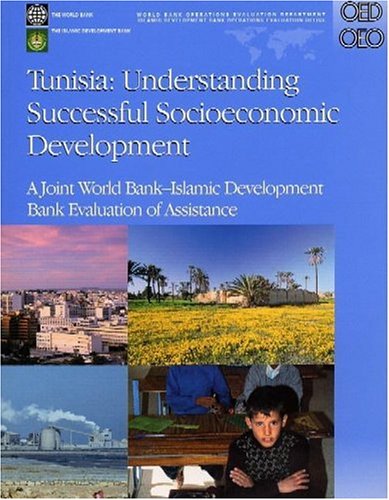
Tunisia: Understanding Successful Socioeconomic Development (Independent Evaluation Group Studies),New
Sold by Ergodebooks, an authorized reseller.
Returns accepted within 30 days | support@ergodebooks.com
Shipping Information
- Free Standard Shipping — United States only
- Processing Time: 3–5 business days
- Estimated Delivery: 6–10 business days after dispatch
- Double-boxed, fully insured & discreetly packaged
- Tracking number sent via email once dispatched
Returns & Refund
Returns accepted within 30 days of delivery.
Damaged or Defective Item
Free return shipping + replacement or full refund
Wrong Item Received
Free return shipping + replacement or full refund
Change of Mind
Return shipping at customer's expense · 25% restocking fee applies
Payment Option

Tunisia has successfully shifted from resourcebased exports dominated by oil and gas to manufactures and services. Real GDP growth has been consistently rising and Tunisians today enjoy more than twoandahalf times the real incomes that their parents had thirty years ago. Rapid growth made possible a remarkable improvement in social indicators and a decline in the poverty rate from 40 percent in 1970 to 4 percent in 2000; with the remaining poverty predominately rural. The Bank's strategy since 1990 has been to support macroeconomic stabilization, promarket structural reforms to foster growth, and social programs as well as human development. Despite significant development progress and the satisfactory outcome of the Bank's assistance program, shortfalls in some areas, combined with the more competitive environment that Tunisia will likely face in the future, pose risks to sustaining its remarkable development performance. This evaluation recommends that the Bank should continue to support improving the environment for private sector development and enhancing competitiveness, as the country seeks to integrate more into the global economy. Future Bank programs should also help strengthen rural institutions to support efficient output and input markets (for example, land and rural finance) while maintaining social and political stability through better targeted safety nets. Finally, the Bank should also fill the gaps in core diagnostic economic and sector work by completing a public expenditure review, with the aim to help build capacity to prioritize public spending and provide the basis for measures to efficiently address education expansion. This Country Assistance Evaluation was prepared in collaboration with the Islamic Development Bank.
⚠️ WARNING (California Proposition 65):
This product may contain chemicals known to the State of California to cause cancer, birth defects, or other reproductive harm.
For more information, please visit www.P65Warnings.ca.gov.