
Title
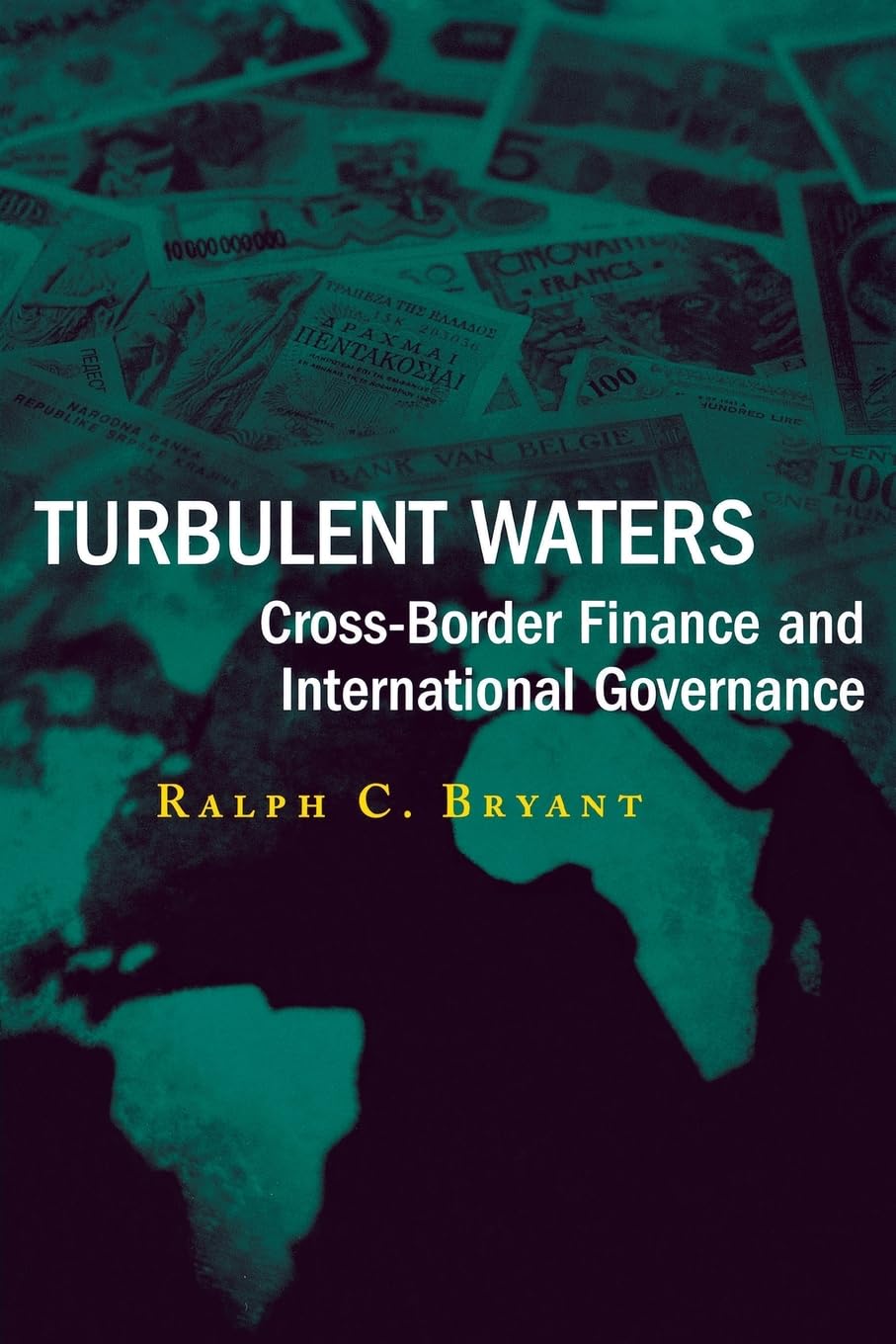
Turbulent Waters: Crossborder Finance And International Governance,Used
Sold by Ergodebooks, an authorized reseller.
Returns accepted within 30 days | support@ergodebooks.com
Shipping Information
- Free Standard Shipping — United States only
- Processing Time: 3–5 business days
- Estimated Delivery: 6–10 business days after dispatch
- Double-boxed, fully insured & discreetly packaged
- Tracking number sent via email once dispatched
Returns & Refund
Returns accepted within 30 days of delivery.
Damaged or Defective Item
Free return shipping + replacement or full refund
Wrong Item Received
Free return shipping + replacement or full refund
Change of Mind
Return shipping at customer's expense · 25% restocking fee applies
Payment Option

Today's world is organized politically into nation states with sovereign national governments. But as Ralph C. Bryant explains in Turbulent Waters, the world's economic structure is outgrowing its political structure. The economic links among nations have increased more rapidly than economic activity itself. As economic integration has proceeded, borders have become more porous, differences among national economies have eroded, and the policy autonomy of national governments has been undermined. Collectivegovernance problems increasingly spill across national borders and thus grow in importance relative to problems of domestic governance. The evolving need for international cooperation and crossborder collective governance is likely to be the single most prominent feature of world politics and economics for at least the next half century. The progressive integration of the world economy, often called ''globalization,'' has been especially dramatic for financial activity. Crossborder financial transactions facilitate saving and investment and thereby advance the wellbeing of individuals. But they can also generate turbulence and instability. Most individuals are unsure whether financial globalization promotes or threatens prosperity for a majority of the world's people. Bryant explains basic concepts about financial activity and collective governance, distills their international dimensions, and enables general readers to acquire a solid grasp of the key policy issues that national governments must resolve. He provides fresh insights about what is often termed the international financial architecture. But he also casts his net far wider: the book's ambitious goal is no less than to outline a pragmatically sound vision for the evolution of international governance for the world economy and financial system.'
⚠️ WARNING (California Proposition 65):
This product may contain chemicals known to the State of California to cause cancer, birth defects, or other reproductive harm.
For more information, please visit www.P65Warnings.ca.gov.