
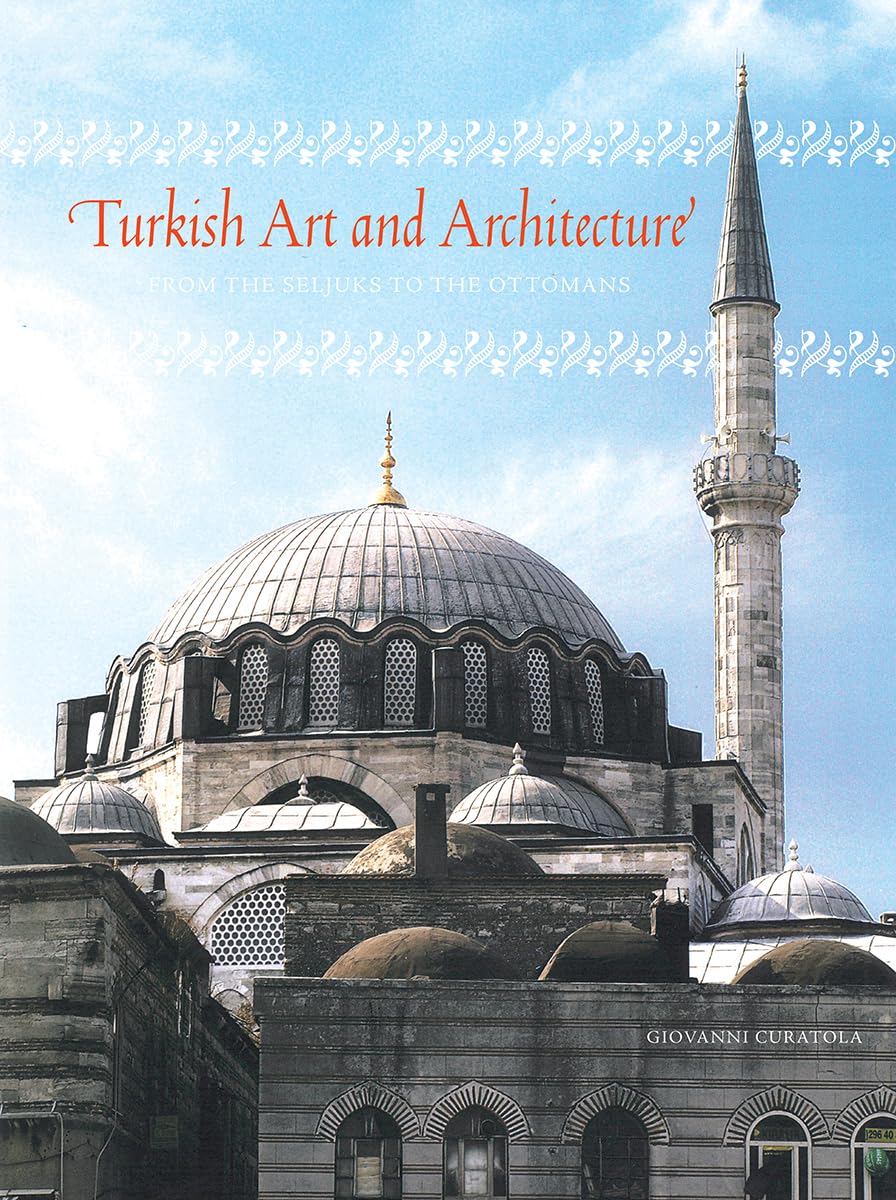
Title
Turkish Art And Architecture: From The Seljuks To The Ottomans,Used
Sold by Ergodebooks, an authorized reseller.
Returns accepted within 30 days | support@ergodebooks.com
Shipping Information
- Free Standard Shipping — United States only
- Processing Time: 3–5 business days
- Estimated Delivery: 6–10 business days after dispatch
- Double-boxed, fully insured & discreetly packaged
- Tracking number sent via email once dispatched
Returns & Refund
Returns accepted within 30 days of delivery.
Damaged or Defective Item
Free return shipping + replacement or full refund
Wrong Item Received
Free return shipping + replacement or full refund
Change of Mind
Return shipping at customer's expense · 25% restocking fee applies
Payment Option

This Vibrantly Illustrated Volume Chronicles Nearly A Millennium Of Islamic Art And Architecture In Turkey.Illustrated With Some 250 Attractive And Wellchosen Color Photographs, Turkish Art And Architecture Is Fascinating Reading For Anyone With An Interest In Turkey, And An Essential Reference For Any Student Of Islamic Art And Architecture.The Anatolian Peninsula, One Of The Oldest Seats Of Civilization, Has Been Ruled By A Succession Of Great Powers, Including The Romans And Their Successors In The East, The Byzantines. Its Islamic Era Began In 1071, When The Seljuk Turks, Nomads From Central Asia Who Had Already Taken Control Of Persia, Defeated The Byzantine Army At Manzikert And Moved West, Creating A New Sultanate In Anatolia. The Seljuks Were Eventually Succeeded In This Region By The Ottoman Turks, Who Crossed The Bosphorus To Conquer An Exhausted Constantinople In 1453, And Went On To Extend Their Power Far Beyond The Borders Of Modern Turkey, Establishing An Empire That Endured Until The Early Twentieth Century.Ruling Over A Land That Had Always Been At The Crossroads Of East And West, These Islamic Dynasties Developed A Cosmopolitan Art And Architecture. As Art Historian Giovanni Curatola Demonstrates In This Insightful New Book, They Combined Elements Of The Prestigious Persian Style And Memories Of Their Nomadic Past With Local Mediterranean Traditions, And Also Adopted Local Building Materials, Such As Stone And Wood. Curatola Introduces Us First To The New Types Of Buildings Introduced By The Seljuks?Like The Caravansary And The Trbe, Or Mausoleum?And Then To The Sophisticated Architectural Achievements Of The Ottomans, Which Culminated In The Great Domed Mosques Constructed By The Master Builder Mimar Sinan (D. 1588). He Also Traces The History Of The Decorative Arts In Turkey, Which Included Lavishly Ornamented Carpets, Manuscripts, Armor, And Ceramics.
⚠️ WARNING (California Proposition 65):
This product may contain chemicals known to the State of California to cause cancer, birth defects, or other reproductive harm.
For more information, please visit www.P65Warnings.ca.gov.