
Title
Twentiethcentury Europe
Sold by Ergodebooks, an authorized reseller.
Returns accepted within 30 days | support@ergodebooks.com
Shipping Information
- Free Standard Shipping — United States only
- Processing Time: 3–5 business days
- Estimated Delivery: 6–10 business days after dispatch
- Double-boxed, fully insured & discreetly packaged
- Tracking number sent via email once dispatched
Returns & Refund
Returns accepted within 30 days of delivery.
Damaged or Defective Item
Free return shipping + replacement or full refund
Wrong Item Received
Free return shipping + replacement or full refund
Change of Mind
Return shipping at customer's expense · 25% restocking fee applies
Payment Option

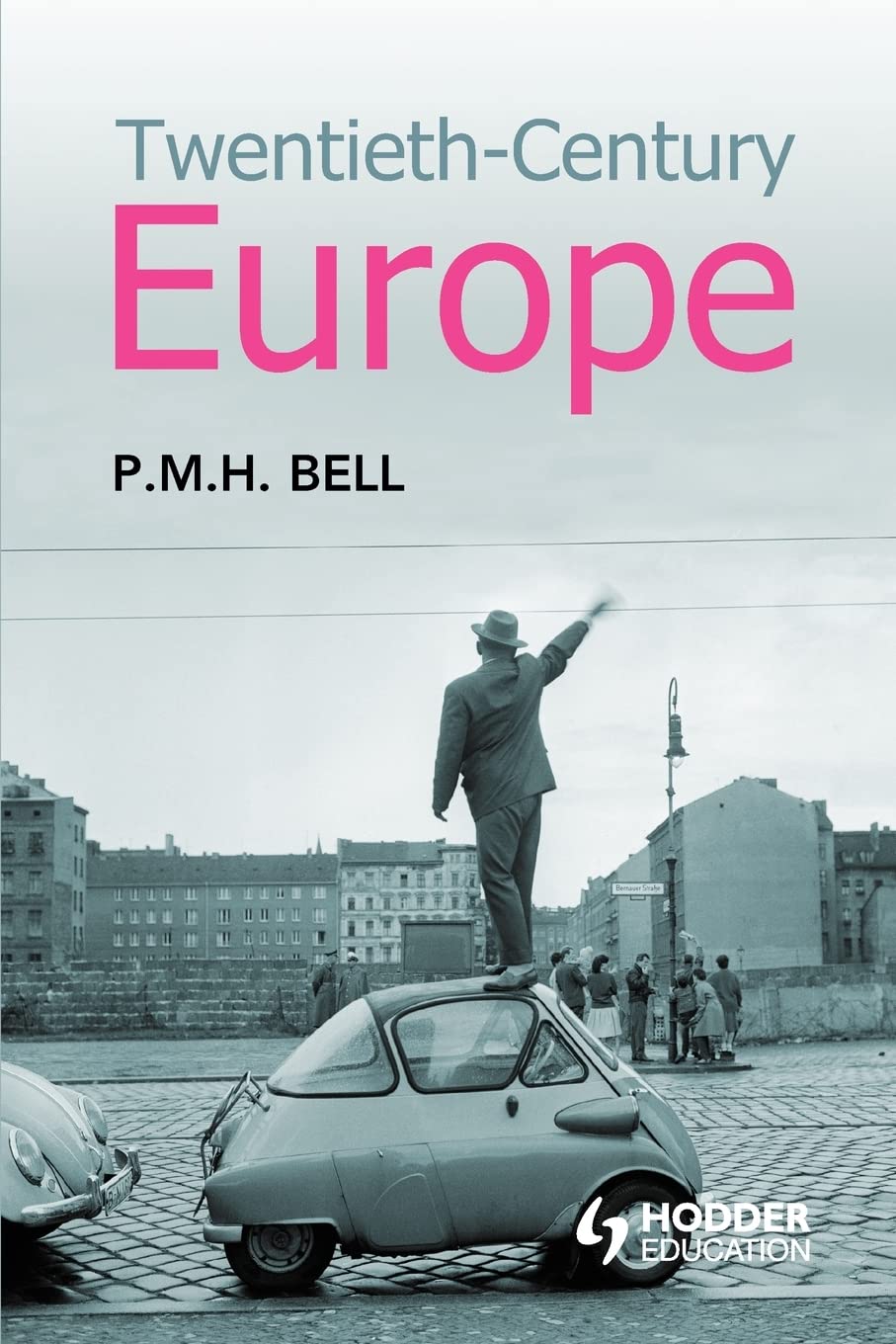
This insightful study explores the proposition that the idea of European unity makes sense when there is more that unites Europe than divides it, and then asks when that has been true during the past hundred years. Providing the historical context necessary to fully understand the complexity surrounding the European Union beginning with the fundamental definition of what 'Europe' means, the book cites specific examples of European cooperation during the past hundred years with particular attention to the last decade of the twentieth century. By emphasizing the vital dimension of historical perspective over more immediate European integration issues such as the euro and constitution, the author demonstrates that Europe's complex history is as much about the destinies and competing claims of the smaller nations as of the larger states. P.M.H. Bell was formerly Reader in History at the University of Liverpool. This insightful study explores the proposition that the idea of European unity makes sense when there is more that unites Europe than divides it, and then asks when that has been true during the past hundred years. Providing the historical context necessary to fully understand the complexity surrounding the European Union beginning with the fundamental definition of what 'Europe' means, the book cites specific examples of European cooperation during the past hundred years with particular attention to the last decade of the twentieth century. By emphasizing the vital dimension of historical perspective over more immediate European integration issues such as the euro and constitution, the author demonstrates that Europe's complex history is as much about the destinies and competing claims of the smaller nations as of the larger states. This insightful study explores the proposition that the idea of European unity makes sense when there is more that unites Europe than divides it, and then asks when that has been true during the past hundred years and provides the historical context necessary to fully understand the complexity surrounding the European Union.
⚠️ WARNING (California Proposition 65):
This product may contain chemicals known to the State of California to cause cancer, birth defects, or other reproductive harm.
For more information, please visit www.P65Warnings.ca.gov.
- Q: How many pages does 'Twentieth-Century Europe' have? A: This book has three hundred fifty-two pages. It offers a comprehensive exploration of European unity and historical context.
- Q: What is the binding type of 'Twentieth-Century Europe'? A: This book is available in paperback binding. It's designed for easy handling and reading.
- Q: Who is the author of 'Twentieth-Century Europe'? A: The author is P.M.H. Bell. He has extensive expertise in European history.
- Q: What is the size of 'Twentieth-Century Europe'? A: The dimensions are nine point one inches in length, six point one inches in height, and zero point six inches in width. It’s a compact book for easy storage.
- Q: What is the main theme of 'Twentieth-Century Europe'? A: The main theme explores European unity and cooperation over the past hundred years. It examines how these aspects have shaped the continent's history.
- Q: Who published 'Twentieth-Century Europe'? A: It is published by Bloomsbury USA. Bloomsbury is known for its academic and literary contributions.
- Q: Is 'Twentieth-Century Europe' suitable for academic study? A: Yes, it is suitable for academic study. The book provides in-depth analysis and historical context relevant for scholars and students.
- Q: Can 'Twentieth-Century Europe' be used for general readers? A: Yes, general readers can benefit from it. The writing is accessible and aims to engage a broader audience interested in European history.
- Q: Does 'Twentieth-Century Europe' cover the European Union? A: Yes, it covers the complexities surrounding the European Union. The book discusses the historical context and integration issues.
- Q: What kind of historical perspective does 'Twentieth-Century Europe' provide? A: It provides a vital historical perspective on European unity and cooperation. The author emphasizes the significance of smaller nations alongside larger states.
- Q: What specific examples of European cooperation are mentioned in the book? A: The book cites numerous historical instances of cooperation among European nations. It particularly highlights events from the last decade of the twentieth century.
- Q: Is there a focus on present-day European issues in 'Twentieth-Century Europe'? A: No, the book emphasizes historical context over immediate issues. It aims to provide a deeper understanding of Europe’s past.
- Q: What makes 'Twentieth-Century Europe' unique compared to other history books? A: Its focus on the idea of unity and the interplay between smaller and larger nations makes it unique. It presents a comprehensive view of European history.
- Q: Are there any illustrations in 'Twentieth-Century Europe'? A: Yes, it is illustrated. The visuals enhance the understanding of the historical content presented in the book.
- Q: Where can I purchase 'Twentieth-Century Europe'? A: You can purchase it at various online retailers or local bookstores. Check with major book distributors for availability.