If you have any questions, you are always welcome to contact us. We'll get back to you as soon as possible, withing 24 hours on weekdays.
Customer service
All questions about your order, return and delivery must be sent to our customer service team by e-mail at yourstore@yourdomain.com
Sale & Press
If you are interested in selling our products, need more information about our brand or wish to make a collaboration, please contact us at press@yourdomain.com
Help
If you have any questions, you are always welcome to contact us. We'll get back to you as soon as possible, withing 24 hours on weekdays.
Customer service
All questions about your order, return and delivery must be sent to our customer service team by e-mail at yourstore@yourdomain.com
Sale & Press
If you are interested in selling our products, need more information about our brand or wish to make a collaboration, please contact us at press@yourdomain.com
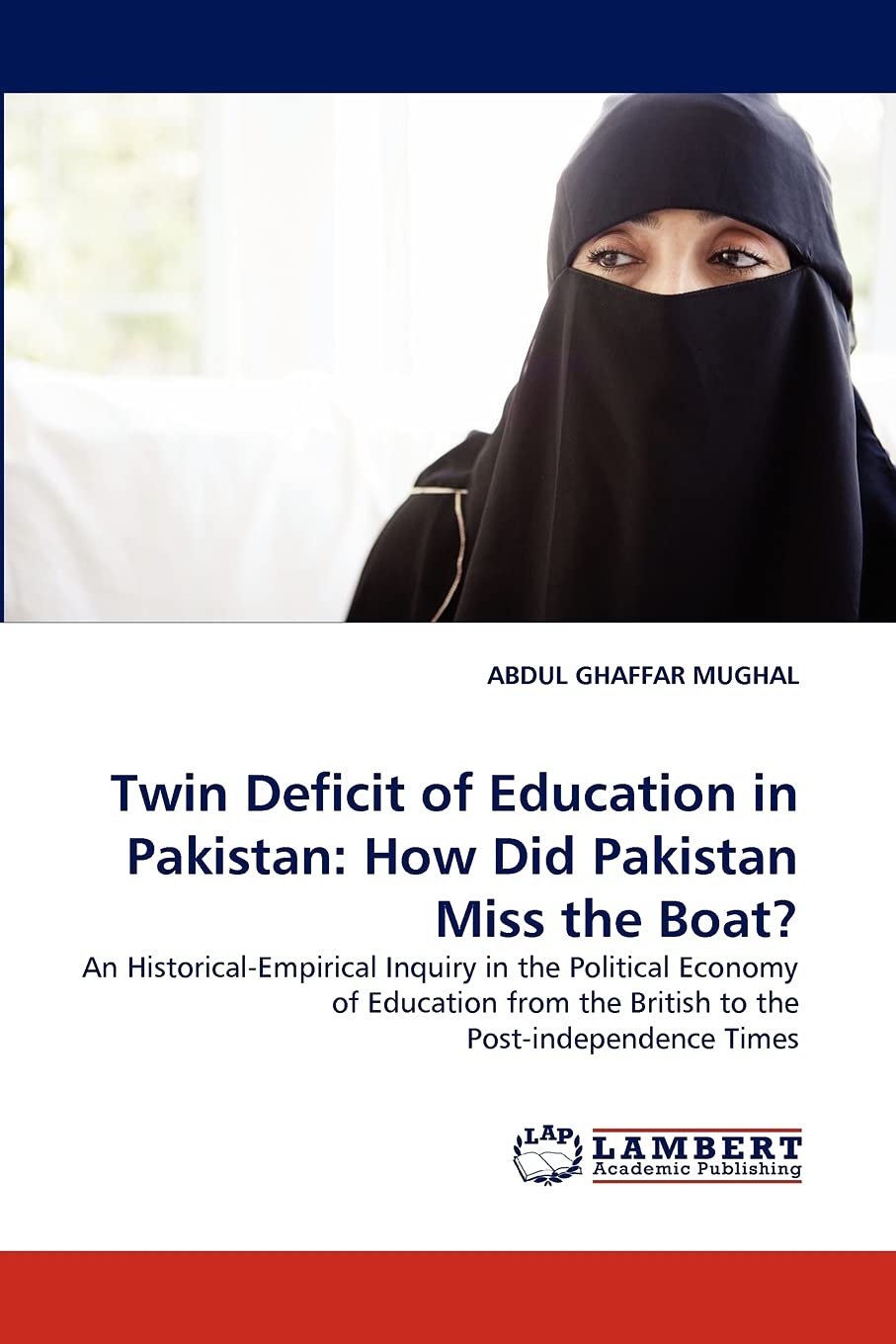
This book addresses the central puzzle of Pakistan's educational experience, i.e., its relatively high growth rate of per capita income for a developing country at the same time that its education sector continues to suffer from a severe twin deficit: a very low overall level of educational attainment of the population, and a particularly low level of educational attainment of women. Ghaffar Mughal makes three significant contributions to the literature: a) first, he determines the quantitative facts regarding the timing and magnitude of changes in education during the colonial period in the areas that now constitute Pakistan; b) second, using these facts, he assesses the role of the private versus the public sector in accounting for the twin deficits of education in Pakistan during the colonial and the postcolonial period; third, he refines the time lag theory of Muslim education in the IndoPak Subcontinent. His profound historicalempirical analysis shows that certain structural biases introduced during the colonial era continue to militate against the active commitment of the public sector to the education of the masses, in general, and, the education of women, in particular.
⚠️ WARNING (California Proposition 65):
This product may contain chemicals known to the State of California to cause cancer,
birth defects, or other reproductive harm.
For MAP (Minimum Advertised Price) violations and Intellectual Property (IP) or Trademark concerns, please contact:
support@ergodebooks.com
⚠️ California Proposition 65 Warning: Some products sold on this website may expose you to chemicals known to the State of California to cause cancer, birth defects, or other reproductive harm. For more information, visit www.P65Warnings.ca.gov.