If you have any questions, you are always welcome to contact us. We'll get back to you as soon as possible, withing 24 hours on weekdays.
Customer service
All questions about your order, return and delivery must be sent to our customer service team by e-mail at yourstore@yourdomain.com
Sale & Press
If you are interested in selling our products, need more information about our brand or wish to make a collaboration, please contact us at press@yourdomain.com
Help
If you have any questions, you are always welcome to contact us. We'll get back to you as soon as possible, withing 24 hours on weekdays.
Customer service
All questions about your order, return and delivery must be sent to our customer service team by e-mail at yourstore@yourdomain.com
Sale & Press
If you are interested in selling our products, need more information about our brand or wish to make a collaboration, please contact us at press@yourdomain.com
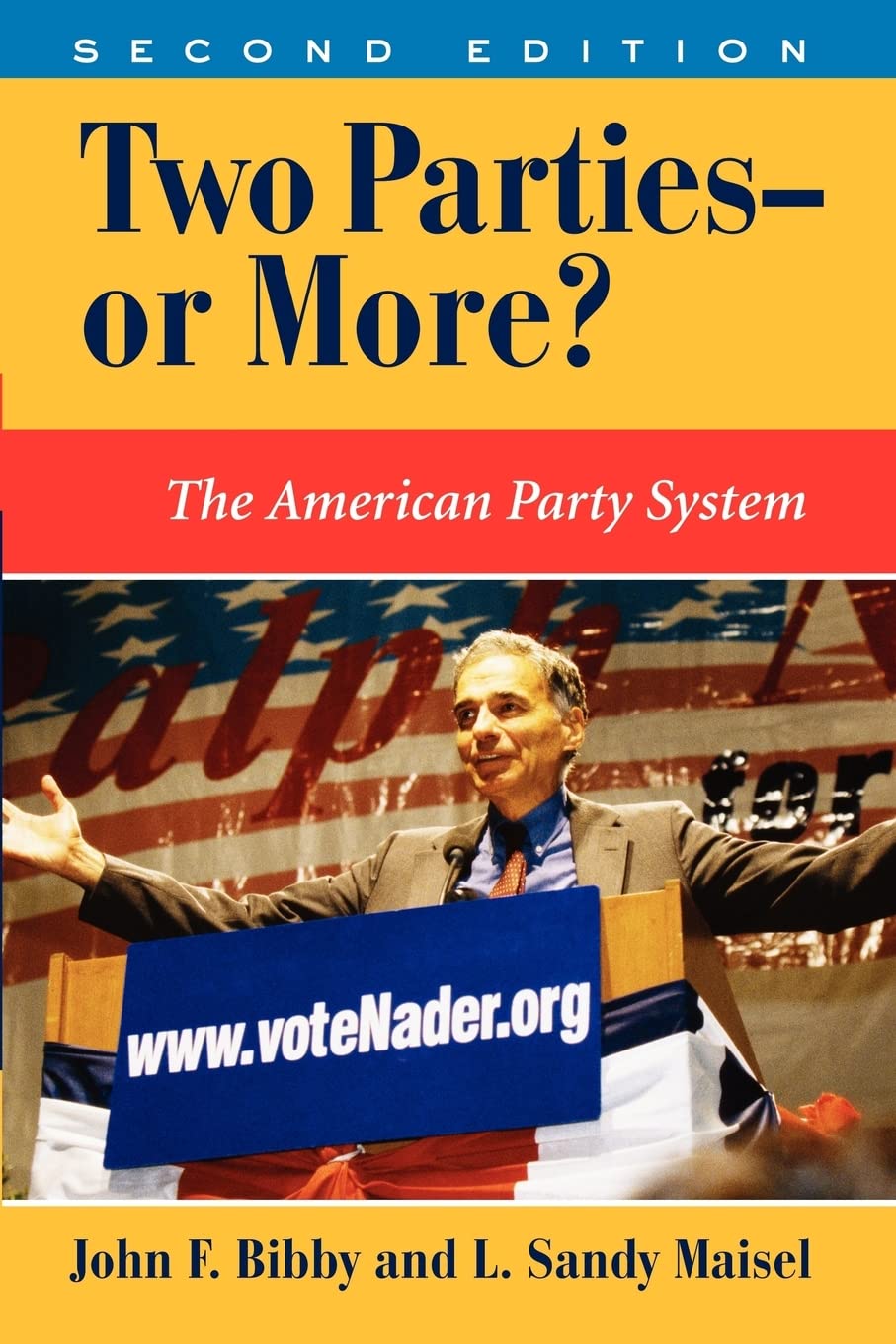
Students of American government are faced with an enduring dilemma: Why two parties? Why has this system remained largely intact while around the world democracies support multiparty systems? Should our twoparty system continue as we enter the new millennium? This newly revised and updated edition of Two PartiesOr More? answers these questions by placing the dilemma in the context of recent elections and the environment in which all parties must function. The text provides students with a historical overview of minor parties and their impact on politics. By focusing on Ross Perot's efforts in 1992 and 1996 and the difficulty the Reform party faced in 2000, Jesse Ventura's gubernatorial victory in Minnesota, and Ralph Nader's Green party campaign for the presidency in 2000, the text lays out the current dilemma regarding third parties and explores the extent and cause of the current dissatisfaction with the two major parties. The authors conclude with predictions about the future of thirdparty politics in the states and the nation. The text is enhanced with a glossary, discussion questions, and an appendix of important third parties in presidential elections and recent officeholders who were neither Democrats nor Republicans. The revised edition highlights the implications of recent successes (Angus King in Maine in 1994 and 1998, Ventura in Minnesota, Perot in 1992, and Nader in 2000) and failures (the Reform party in 2000 and fewer third party winners in the states) of third party efforts for the future of America's traditionally twoparty system.
⚠️ WARNING (California Proposition 65):
This product may contain chemicals known to the State of California to cause cancer,
birth defects, or other reproductive harm.
For MAP (Minimum Advertised Price) violations and Intellectual Property (IP) or Trademark concerns, please contact:
support@ergodebooks.com
⚠️ California Proposition 65 Warning: Some products sold on this website may expose you to chemicals known to the State of California to cause cancer, birth defects, or other reproductive harm. For more information, visit www.P65Warnings.ca.gov.