
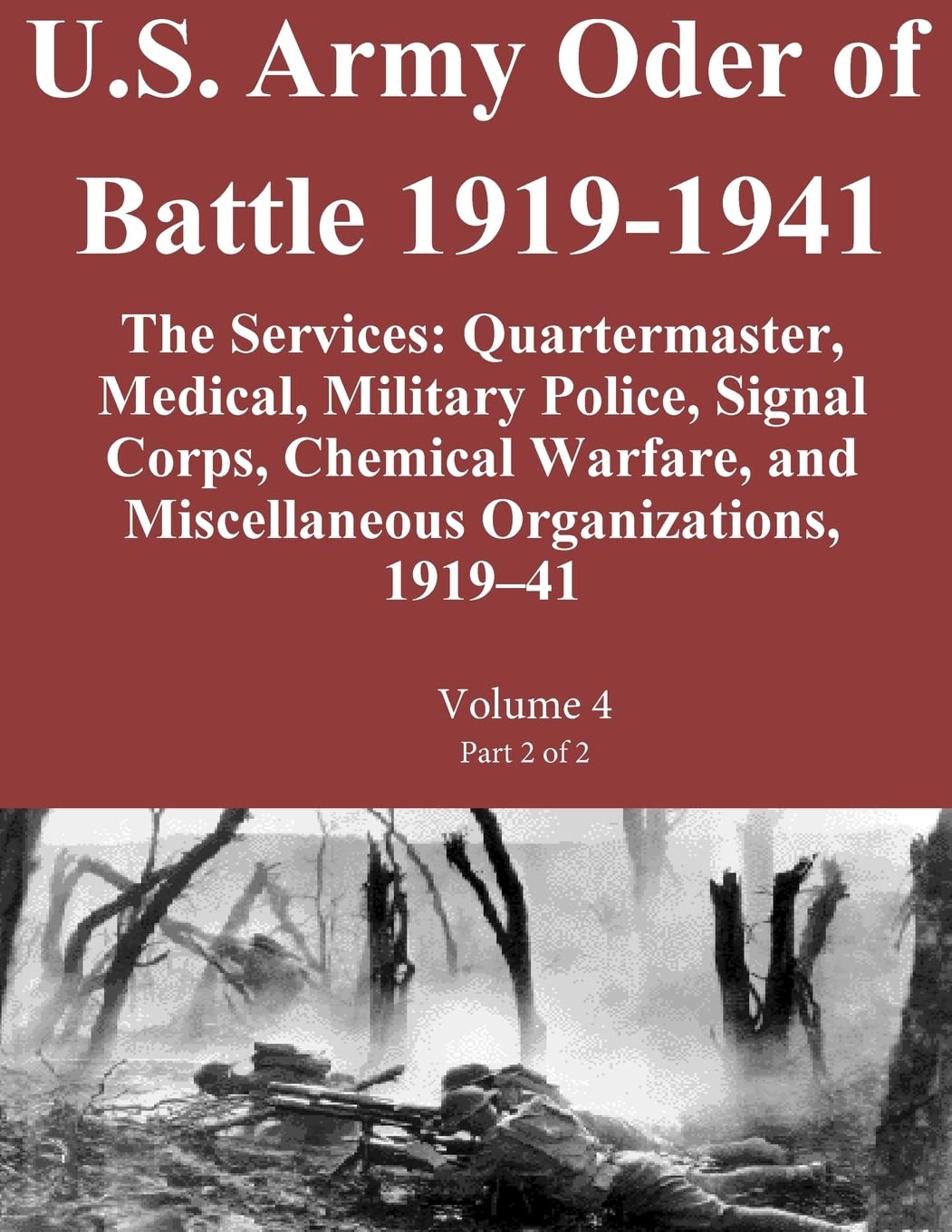
Title
U.S. Army Oder Of Battle 19191941 The Services: Quartermaster, Medical, Military Police, Signal Corps, Chemical Warfare, And Mi
Sold by Ergodebooks, an authorized reseller.
Returns accepted within 30 days | support@ergodebooks.com
Shipping Information
- Free Standard Shipping — United States only
- Processing Time: 3–5 business days
- Estimated Delivery: 6–10 business days after dispatch
- Double-boxed, fully insured & discreetly packaged
- Tracking number sent via email once dispatched
Returns & Refund
Returns accepted within 30 days of delivery.
Damaged or Defective Item
Free return shipping + replacement or full refund
Wrong Item Received
Free return shipping + replacement or full refund
Change of Mind
Return shipping at customer's expense · 25% restocking fee applies
Payment Option

The Purposes Of Us Army Order Of Battle 19191941 Are Threefold. The First Is To Fill A Void In The Published Record Of Us Army Units Documented By Order Of Battle Of The United States Land Forces In The World War Published By The Center Of Military History And Mr. Shelby L. Stantons Order Of Battle, U.S. Army World War Ii. The Second Is To Provide Army Command Historians, Unit Historians, And Other Individuals Who Are Trying To Research Specific Unit Histories A Basic Overview Of What These Units Were Doing In The Interwar Period, Where The Units Were Located, And Who Commanded Them. The Third Is To Provide A Private Individual Who Had A Relative Who Served During This Period, And Who Wishes To Know What That Service May Have Consisted Of, An Account Of The Major Activities In Which The Relatives Unit Was Involved. The Scope Of The Work Covers Units From The Size Of Separate Battalions From All Arms And Services To Field Armies, As Well As The Actual Order Of Battle Of Each As Applicable.Each Unit Is Represented By A Unit Entry Block. The Entries Contain A Host Of Information That Is Standardized In Its Presentation As Far As Possible. Each Entry Includes The Unit Title And Type, The Headquarters To Which The Unit Was Assigned, The Geographical Area To Which The Unit Was Allotted (If National Guard Or Organized Reserve), The Units Headquarters Location, The Units Physical Location (Or The Units Headquarters Location If Dispersed) On 7 December 1941, A Unit Service Narrative, The Units Organization Day, The Units Status As Of 2001, And A Chronological Listing Of The Units Commanding Officers. Depending On The Type Of Unit, Additional Information May Include A Listing Of Subordinate Units And Their Years Of Assignment; Snapshot Orders Of Battle For Divisions, Corps, And Armies For Selected Years; And The Subordinate Components Of Nonstandard Units Such As Harbor Defense Commands. Also Included In This Work Are The Headquarters, A Unit Service Narrative, Commanders, And A Major Posts, Camps, Stations, Airfields, And National Guard And Organized Reserve Training Facilities Section For Each Of The Nine Corps Areas And Three Overseas Departments. Though These Were Not Tactical Headquarters In The Traditional Sense, Their Importance To This Period, And To This Project, Were Such That I Felt Compelled To Add Their Information.
⚠️ WARNING (California Proposition 65):
This product may contain chemicals known to the State of California to cause cancer, birth defects, or other reproductive harm.
For more information, please visit www.P65Warnings.ca.gov.
- Q: How many pages does this book have? A: This book has five hundred pages. It provides a comprehensive overview of U.S. Army units from 1919 to 1941.
- Q: What is the binding type of this book? A: This book is paperback bound. Paperback binding is lightweight and flexible, making it easy to handle.
- Q: What are the dimensions of this book? A: The dimensions of this book are eight and a half inches by eleven inches by one point fourteen inches. These dimensions make it suitable for both reading and reference.
- Q: Who is the author of this book? A: The author of this book is Steven E. Clay. He provides detailed historical insights into U.S. Army operations.
- Q: What is the main focus of this book? A: The main focus of this book is the U.S. Army Order of Battle between 1919 and 1941. It documents unit histories and activities during the interwar period.
- Q: How do I use this book for research? A: You can use this book by referencing the unit entries for historical research. It provides detailed narratives and unit organization for specific Army units.
- Q: Is this book suitable for historians? A: Yes, this book is suitable for historians. It offers a basic overview and detailed information about U.S. Army units during the specified period.
- Q: Can this book help me learn about a specific Army unit? A: Yes, this book can help you learn about a specific Army unit. Each entry includes information on unit activities, locations, and commanders.
- Q: Is this book appropriate for casual readers? A: Yes, this book is appropriate for casual readers interested in military history. It provides accessible information about the U.S. Army's structure during the interwar years.
- Q: How should I store this book to keep it in good condition? A: You should store this book in a cool, dry place away from direct sunlight. This helps prevent damage to the pages and binding.
- Q: What is the shelf-life of this book? A: This book does not have a shelf-life in the traditional sense. With proper care, it can last for many years as a reference.
- Q: How do I clean this book if it gets dirty? A: You can clean this book by gently wiping the cover with a soft, dry cloth. Avoid using liquids that could damage the paper.
- Q: Can I return this book if I'm not satisfied? A: Yes, you can return this book if you're not satisfied, depending on the retailer's return policy. Always check the specific terms before purchase.
- Q: What if the book arrives damaged? A: If the book arrives damaged, contact customer support immediately. Most retailers offer replacements or refunds for damaged items.
- Q: Is this book a good gift for a military history enthusiast? A: Yes, this book is an excellent gift for military history enthusiasts. It offers detailed insights into the U.S. Army's historical operations.