If you have any questions, you are always welcome to contact us. We'll get back to you as soon as possible, withing 24 hours on weekdays.
Customer service
All questions about your order, return and delivery must be sent to our customer service team by e-mail at yourstore@yourdomain.com
Sale & Press
If you are interested in selling our products, need more information about our brand or wish to make a collaboration, please contact us at press@yourdomain.com
Help
If you have any questions, you are always welcome to contact us. We'll get back to you as soon as possible, withing 24 hours on weekdays.
Customer service
All questions about your order, return and delivery must be sent to our customer service team by e-mail at yourstore@yourdomain.com
Sale & Press
If you are interested in selling our products, need more information about our brand or wish to make a collaboration, please contact us at press@yourdomain.com
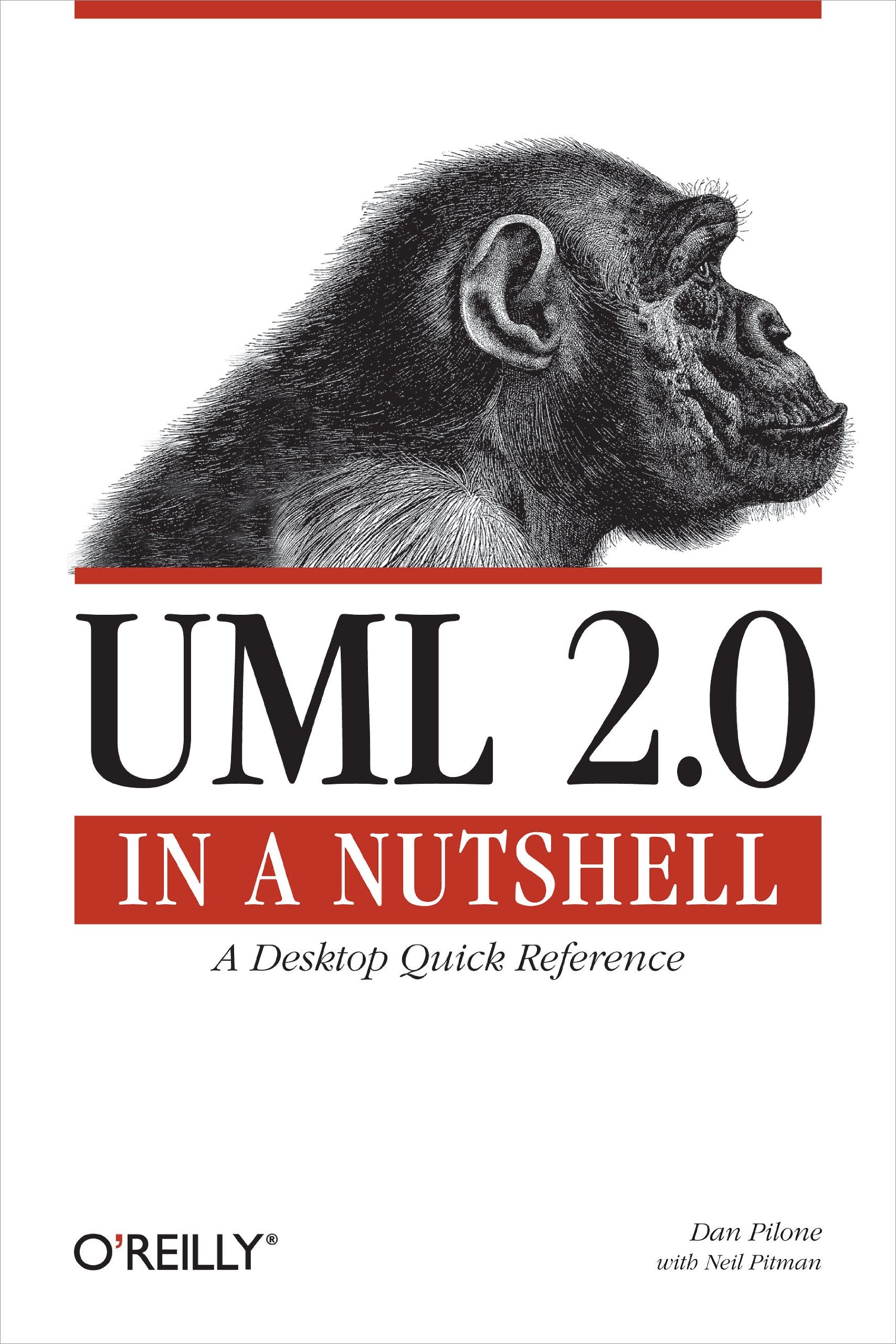
System developers have used modeling languages for decades to specify, visualize, construct, and document systems. The Unified Modeling Language (UML) is one of those languages. UML makes it possible for team members to collaborate by providing a common language that applies to a multitude of different systems. Essentially, it enables you to communicate solutions in a consistent, toolsupported language. Today, UML has become the standard method for modeling software systems, which means you're probably confronting this rich and expressive language more than ever before. And even though you may not write UML diagrams yourself, you'll still need to interpret diagrams written by others. UML 2.0 in a Nutshell from O'Reilly feels your pain. It's been crafted for professionals like you who must read, create, and understand system artifacts expressed using UML. Furthermore, it's been fully revised to cover version 2.0 of the language. This comprehensive new edition not only provides a quickreference to all UML 2.0 diagram types, it also explains key concepts in a way that appeals to readers already familiar with UML or objectoriented programming concepts. Topics include: The role and value of UML in projects The objectoriented paradigm and its relation to the UML An integrated approach to UML diagrams Class and Object, Use Case, Sequence, Collaboration, Statechart, Activity, Component, and Deployment Diagrams Extension Mechanisms The Object Constraint Language (OCL) If you're new to UML, a tutorial with realistic examples has even been included to help you quickly familiarize yourself with the system.
⚠️ WARNING (California Proposition 65):
This product may contain chemicals known to the State of California to cause cancer,
birth defects, or other reproductive harm.
For MAP (Minimum Advertised Price) violations and Intellectual Property (IP) or Trademark concerns, please contact:
support@ergodebooks.com
⚠️ California Proposition 65 Warning: Some products sold on this website may expose you to chemicals known to the State of California to cause cancer, birth defects, or other reproductive harm. For more information, visit www.P65Warnings.ca.gov.