
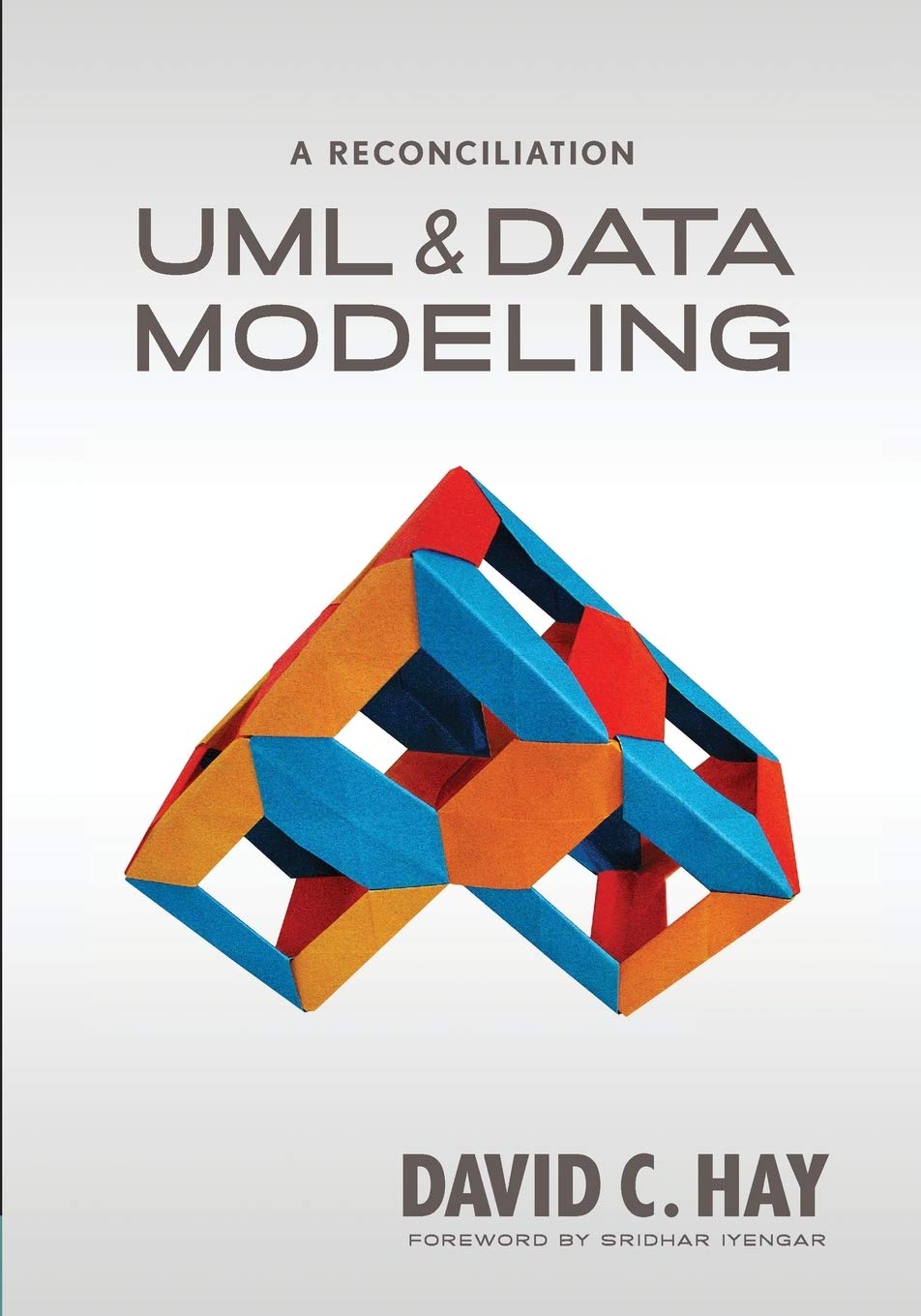
Title
UML and Data Modeling: A Reconciliation,Used
Sold by Ergodebooks, an authorized reseller.
Returns accepted within 30 days | support@ergodebooks.com
Shipping Information
- Free Standard Shipping — United States only
- Processing Time: 3–5 business days
- Estimated Delivery: 6–10 business days after dispatch
- Double-boxed, fully insured & discreetly packaged
- Tracking number sent via email once dispatched
Returns & Refund
Returns accepted within 30 days of delivery.
Damaged or Defective Item
Free return shipping + replacement or full refund
Wrong Item Received
Free return shipping + replacement or full refund
Change of Mind
Return shipping at customer's expense · 25% restocking fee applies
Payment Option

Here you will learn how to develop an attractive, easily readable, conceptual, businessoriented entity/relationship model, using a variation on the UML Class Model notation.This book has two audiences: Data modelers (both analysts and database designers) who are convinced that UML has nothing to do with them; and UML experts who don't realize that architectural data modeling really is different from object modeling (and that the differences are important).David Hay's objective is to finally bring these two groups together in peace.Here all modelers will receive guidance on how to produce a high quality (that is, readable) entity/relationship model to describe the data architecture of an organization. The notation involved happens to be the one for class models in the Unified Modeling Language, even though UML was originally developed to support objectoriented design. Designers have a different view of the world from those who develop businessoriented conceptual data models, which means that to use UML for architectural modeling requires some adjustments. These adjustments are described in this book.David Hay is the author of Enterprise Model Patterns: Describing the World, a comprehensive model of a generic enterprise. The diagrams were at various levels of abstraction, and they were all rendered in the slightly modified version of UML Class Diagrams presented here. This book is a handbook to describe how to build models such as these. By way of background, an appendix provides a history of the two groups, revealing the sources of their different attitudes towards the system development process.If you are an oldschool ER modeler and now find yourself having to come up to speed on UML to get that next job (or keep the current one), this is your guidebook to success. If you are a long time object oriented programmer who has to interact with data modelers, this book is for you too. David has done the hard work of mapping out how to do a logical entity relationship model using standard (and accepted) UML diagram components. This book shows you stepbystep, with ample examples, how to get from here to there with the least pain possible for all concerned.Kent GrazianoCertified Data Vault Master and Oracle ACEPastPresident of ODTUG & RMOUGBrilliantly organized: three books hidden in one cohesive work. Not withstanding the tremendous value provided by crosstraining data architects/modelers and object modelers/architects, making each better at what they do, Appendix B presents an absolutely awesome concise, yet detailed, history of modeling objects and data that clearly documents the differences in the approaches over the years and helps bring it all into perspective. This book is packed with useful information. Even the footnotes add clarity and offer interesting and often humorous editorial insight making it a fun read. Whatever viewpoint the reader is coming from this book has something to offer as long as the reader maintains an open mind.Roland BergSenior ArchitectDiligent Consulting, Inc. San Antonio, Texas
⚠️ WARNING (California Proposition 65):
This product may contain chemicals known to the State of California to cause cancer, birth defects, or other reproductive harm.
For more information, please visit www.P65Warnings.ca.gov.