
Title
Uncertainty Analysis of Ship Powering Prediction Methods: A sensitivity study using Monte Carlo Simulation followed by an analys,Used
Sold by Ergodebooks, an authorized reseller.
Returns accepted within 30 days | support@ergodebooks.com
Shipping Information
- Free Standard Shipping — United States only
- Processing Time: 3–5 business days
- Estimated Delivery: 6–10 business days after dispatch
- Double-boxed, fully insured & discreetly packaged
- Tracking number sent via email once dispatched
Returns & Refund
Returns accepted within 30 days of delivery.
Damaged or Defective Item
Free return shipping + replacement or full refund
Wrong Item Received
Free return shipping + replacement or full refund
Change of Mind
Return shipping at customer's expense · 25% restocking fee applies
Payment Option

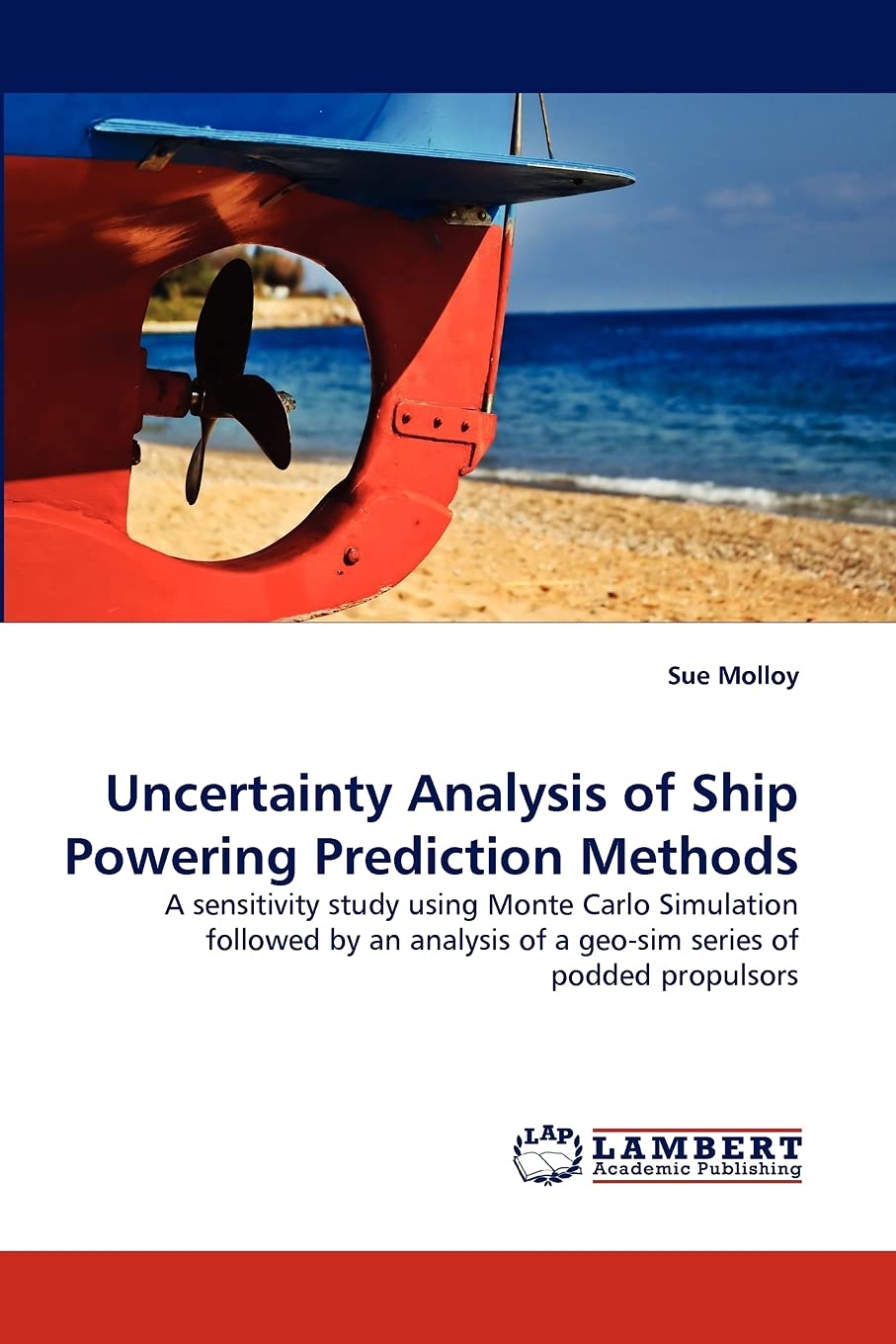
Model towing tank testing is used to predict the powering required for fullscale vessels. Uncertainty analysis has up to this point focused on potential errors in the model data from the tests performed. The overall sensitivity of predicted power from this and other prediction methods to variations in inputs from the model tests and from elements such as the frictional resistance coefficient or correlation allowance needs to be determined. Rather than setting up a series of data reduction equations, a Monte Carlo simulation was used and the entire method was used as the data reduction equation in the uncertainty analysis. Several different extrapolation methods were studied to assess variation in powering prediction methods resulting from variation in input data and from the variation of the details of the extrapolation. Methods of reducing the uncertainty in the predicted power from the ITTC 1978 method were proposed. An analysis of model testing work on a geometrically similar series of podded propulsors follows the powering prediction work.
⚠️ WARNING (California Proposition 65):
This product may contain chemicals known to the State of California to cause cancer, birth defects, or other reproductive harm.
For more information, please visit www.P65Warnings.ca.gov.