
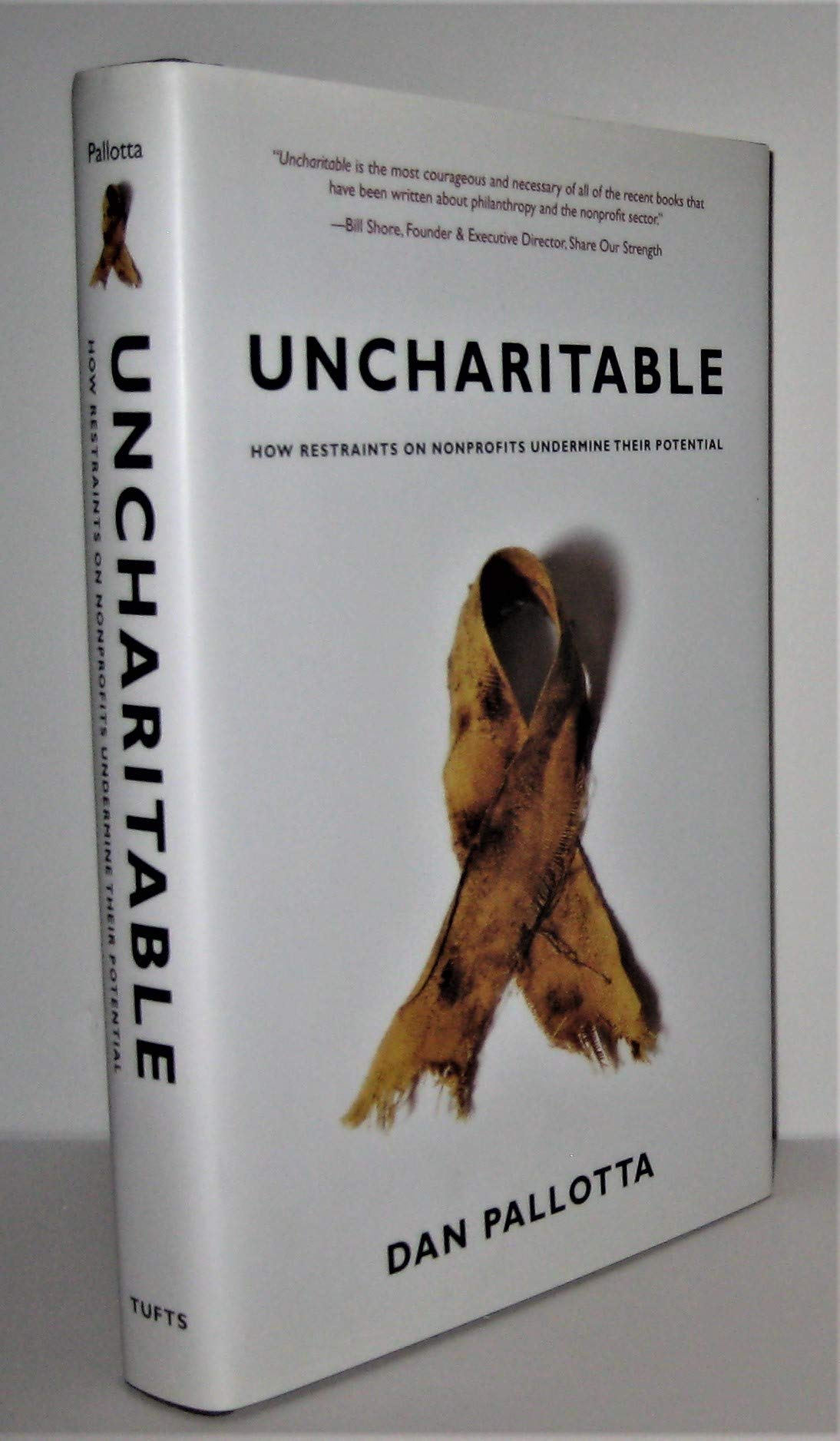
Title
Uncharitable: How Restraints On Nonprofits Undermine Their Potential (Civil Society: Historical And Contemporary Perspectives)
Sold by Ergodebooks, an authorized reseller.
Returns accepted within 30 days | support@ergodebooks.com
Shipping Information
- Free Standard Shipping — United States only
- Processing Time: 3–5 business days
- Estimated Delivery: 6–10 business days after dispatch
- Double-boxed, fully insured & discreetly packaged
- Tracking number sent via email once dispatched
Returns & Refund
Returns accepted within 30 days of delivery.
Damaged or Defective Item
Free return shipping + replacement or full refund
Wrong Item Received
Free return shipping + replacement or full refund
Change of Mind
Return shipping at customer's expense · 25% restocking fee applies
Payment Option

Uncharitable Is An Unorthodox Call To Arms, Inviting Us To Think Beyond Nonprofit Ideology And Bring Economic Freedom To The Causes We Love. Author Dan Pallotta Argues That Nonprofit Ideology Is A Religious Edifice That Acts As A Strict Regulatory Mechanism On Natural Economic Law, Thereby Putting The Nonprofit Sector At An Extreme Disadvantage Visavis The Forprofit Sector. In Other Words, The Very System Long Cherished As The Hallmark Of American Compassion Undermines Itself. This Irrational System, Pallotta Explains, Has Its Roots In 400Yearold Puritan Ethics That Banished Selfinterest From The Realm Of Charity.Today, Nonprofit Ideology Creates An Economic Apartheid That Acts Against Charity'S Selfinterest. While The Forprofit Sector Is Permitted To Use All The Tools Of Capitalism To Advance The Sale Of Consumer Goods, The Nonprofit Sector Is Prohibited From Using Any Of Them To Fight Hunger Or Disease. Capitalism Is Blamed For Creating The Inequities In Our Society, But Charity, By Its Own Ideology, Is Prohibited From Using Capitalism'S Tools To Rectify Them, Creating The Most Extreme Injustice. By Ridding Ourselves Of These Obsolete Ideas, Pallotta Theorizes, We Can Dramatically Accelerate Progress On The Most Urgent Social Issues Of Our Time. Pallotta Has Written An Important, Provocative, Timely, And Accessible Book That Seeks To Remedy This Wrong And That Will Forever Change The Way You Think About Charity.
⚠️ WARNING (California Proposition 65):
This product may contain chemicals known to the State of California to cause cancer, birth defects, or other reproductive harm.
For more information, please visit www.P65Warnings.ca.gov.
- Q: How many pages does the book have? A: The book has three hundred twelve pages. This length allows for an in-depth exploration of nonprofit ideology and its critiques.
- Q: What are the dimensions of the book? A: The book measures six point twenty-six inches in length, one inch in width, and nine point twenty-five inches in height. These dimensions make it a standard hardcover size.
- Q: What type of binding does this book have? A: The book features a hardcover binding. This type of binding is durable and ideal for long-term use.
- Q: Who is the author of this book? A: The author is Dan Pallotta. He is known for his provocative ideas about charity and the nonprofit sector.
- Q: What is the main topic of the book? A: The main topic is the critique of nonprofit ideology. It discusses how traditional views on charity can hinder progress.
- Q: Is this book suitable for beginners in nonprofit studies? A: Yes, the book is suitable for beginners. Its accessible language and clear arguments make it easy to understand.
- Q: How does the author suggest we change nonprofit practices? A: The author suggests ridding ourselves of outdated ideas. He believes this can accelerate progress on social issues.
- Q: Is this book appropriate for academic use? A: Yes, the book is appropriate for academic use. It provides critical insights that can support research in nonprofit studies.
- Q: How should I store this book? A: Store the book in a cool, dry place. Keeping it away from direct sunlight can prevent fading and damage.
- Q: Can I lend this book to others? A: Yes, you can lend the book to others. Just ensure it is returned in good condition to maintain its quality.
- Q: What is the recommended way to clean this book? A: To clean the book, use a soft, dry cloth. Avoid using water or cleaners that could damage the pages or cover.
- Q: What should I do if the book arrives damaged? A: If the book arrives damaged, contact the seller immediately for a return or exchange. Keep all packaging for reference.
- Q: Does the book have any adult content? A: No, the book does not contain adult content. It focuses on charitable practices and nonprofit critiques.
- Q: Is the book available in digital format? A: Availability in digital format may vary. Check with your preferred retailer for options.
- Q: How can this book help in understanding charity? A: This book helps by challenging conventional views on charity. It encourages readers to rethink how nonprofits operate.
- Q: Are there any specific case studies in the book? A: Yes, the book includes various case studies that illustrate the challenges faced by nonprofits. These examples help contextualize the author's arguments.