
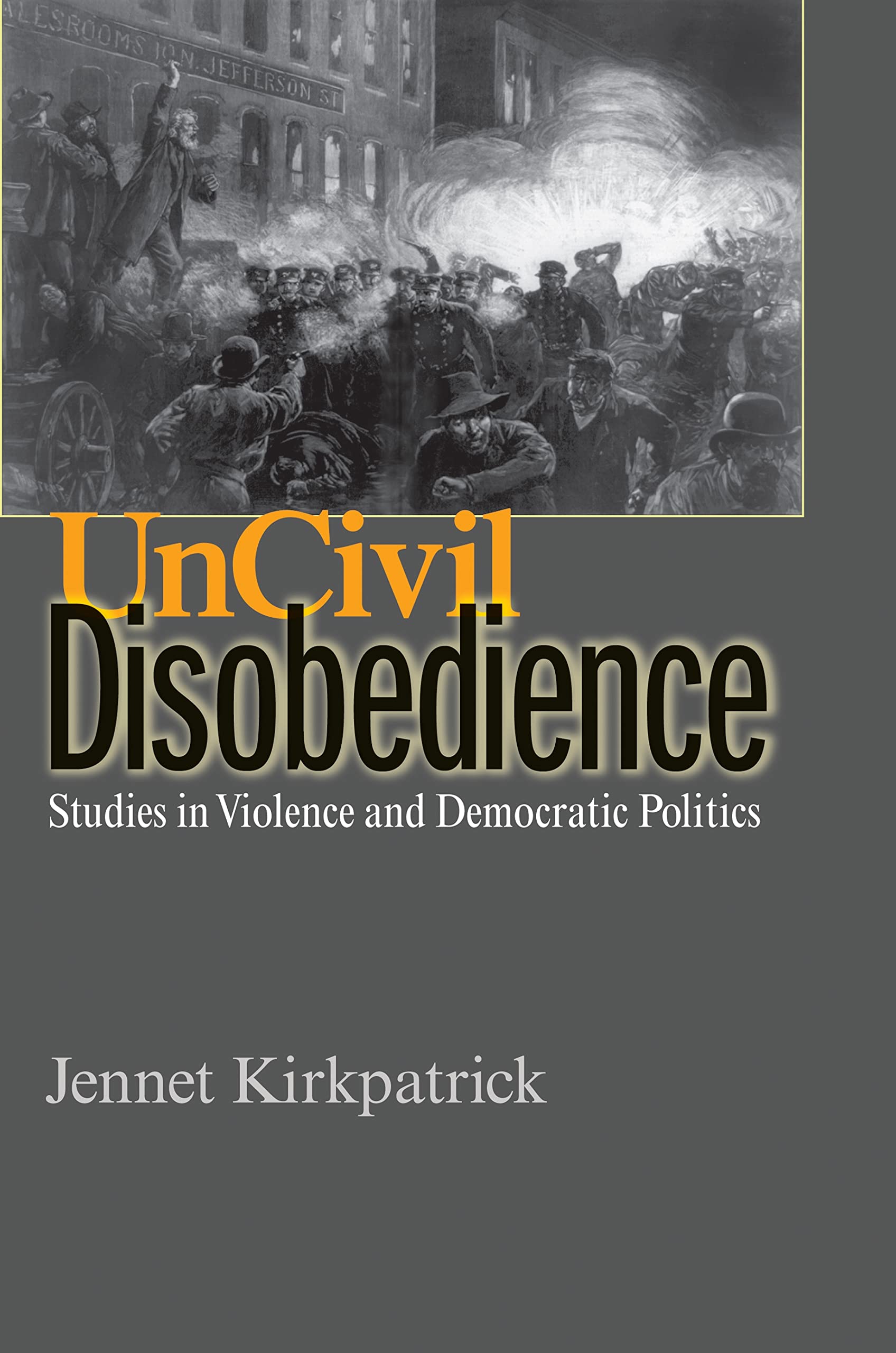
Title
Uncivil Disobedience: Studies In Violence And Democratic Politics
Sold by Ergodebooks, an authorized reseller.
Returns accepted within 30 days | support@ergodebooks.com
Shipping Information
- Free Standard Shipping — United States only
- Processing Time: 3–5 business days
- Estimated Delivery: 6–10 business days after dispatch
- Double-boxed, fully insured & discreetly packaged
- Tracking number sent via email once dispatched
Returns & Refund
Returns accepted within 30 days of delivery.
Damaged or Defective Item
Free return shipping + replacement or full refund
Wrong Item Received
Free return shipping + replacement or full refund
Change of Mind
Return shipping at customer's expense · 25% restocking fee applies
Payment Option

Uncivil Disobedience Examines The Roles Violence And Terrorism Have Played In The Exercise Of Democratic Ideals In America. Jennet Kirkpatrick Explores How Crowds, Rallying Behind The Principle Of Popular Sovereignty And Desiring To Make Law Conform To Justice, Can Disdain Law And Engage In Violence. She Exposes The Hazards Of Democracy That Arise When Citizens Seek To Control Government Directly, And Demonstrates The Importance Of Laws And Institutions As Limitations On The Will Of The People.Kirkpatrick Looks At Some Of The Most Explosive Instances Of Uncivil Disobedience In American History: The Contemporary Militia Movement, Southern Lynch Mobs, Frontier Vigilantism, And Militant Abolitionism. She Argues That The Groups Behind These Violent Episodes Are Often Motivated By Admirable Democratic Ideas Of Popular Power And Autonomy. Kirkpatrick Shows How, In This Respect, They Are Not So Unlike The Muchadmired Adherents Of Nonviolent Civil Disobedience, Yet She Reveals How Those Who Engage In Violent Disobedience Use These Admirable Democratic Principles As A Justification For Terrorism And Killing. She Uses A Bottomup Analysis Of Events To Explain How This Transformation Takes Place, Paying Close Attention To What Members Of These Groups Do And How They Think About The Relationship Between Citizens And The Law.Uncivil Disobedience Calls For A New Vision Of Liberal Democracy Where The Rule Of The People And The Rule Of Law Are Recognized As Fundamental Ideals, And Where Neither Is Triumphant Or Transcendent.
⚠️ WARNING (California Proposition 65):
This product may contain chemicals known to the State of California to cause cancer, birth defects, or other reproductive harm.
For more information, please visit www.P65Warnings.ca.gov.
- Q: How many pages does this book have? A: This book has one hundred sixty-eight pages. It provides an in-depth analysis of democracy and violence in America.
- Q: What is the binding type of this book? A: This book is paperback bound. This makes it lightweight and easy to handle, suitable for both casual and academic reading.
- Q: Who is the author of this book? A: The author of this book is Jennet Kirkpatrick. She explores the relationship between violence and democratic politics in her studies.
- Q: What is the size of the book? A: The book measures six inches in length, zero point five one inches in width, and nine point zero two inches in height. These dimensions make it a portable read.
- Q: What category does this book belong to? A: This book belongs to the category of United States history. It focuses on democratic ideals and the role of violence within them.
- Q: How can I use this book for research? A: You can use this book as a scholarly resource on democracy and violence. It provides insights that are beneficial for academic studies or discussions.
- Q: Is this book suitable for beginners in political science? A: Yes, this book is suitable for beginners. It offers accessible discussions on complex themes related to democracy and violence.
- Q: What themes are explored in this book? A: The themes explored include violence, terrorism, democratic ideals, and the balance between popular sovereignty and the rule of law. These themes are critical for understanding American politics.
- Q: Can this book be used for a college course? A: Yes, this book can be used for a college course. It's relevant for courses focusing on political science, history, and social justice.
- Q: How should I care for this paperback book? A: To care for this paperback book, keep it in a dry place and avoid exposure to direct sunlight. This will help preserve its condition over time.
- Q: Is this book safe for all ages? A: No, this book is not specifically categorized for all ages. It's more suitable for mature readers due to its themes of violence and terrorism.
- Q: What if the book arrives damaged? A: If the book arrives damaged, you should contact the seller for a return or replacement. Most sellers have policies in place for such issues.
- Q: How do I store this book to keep it in good condition? A: Store this book upright on a shelf or in a bookcase. Avoid stacking heavy items on top of it to prevent damage.
- Q: What is the main argument of this book? A: The main argument of this book is that democracy can lead to violence and that citizens might justify uncivil disobedience through democratic ideals.
- Q: Are there any notable historical examples discussed? A: Yes, notable historical examples include the militia movement, lynch mobs, and vigilantism. These cases illustrate the book's themes effectively.
- Q: Does this book include references or citations? A: Yes, this book includes references and citations. This adds credibility and allows readers to explore the topics further.