
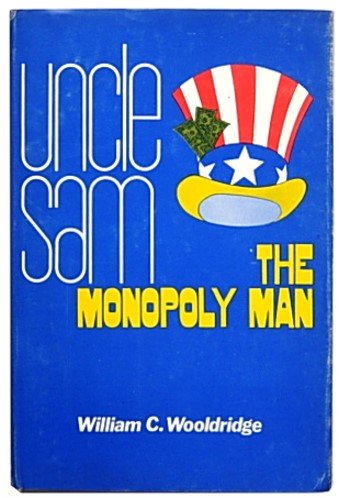
Title
Uncle Sam, The Monopoly Man
Sold by Ergodebooks, an authorized reseller.
Returns accepted within 30 days | support@ergodebooks.com
Shipping Information
- Free Standard Shipping — United States only
- Processing Time: 3–5 business days
- Estimated Delivery: 6–10 business days after dispatch
- Double-boxed, fully insured & discreetly packaged
- Tracking number sent via email once dispatched
Returns & Refund
Returns accepted within 30 days of delivery.
Damaged or Defective Item
Free return shipping + replacement or full refund
Wrong Item Received
Free return shipping + replacement or full refund
Change of Mind
Return shipping at customer's expense · 25% restocking fee applies
Payment Option

Review: Uncle Sam, The Monopoly Man Editorial Review Kirkus Reviews This Book Signals That Growing Merger Between The Forces Of Conservatism And Radicalism In The Face Of An Unwieldy Bureaucratic Technocracy. Wooldridge'S Argument Is That Uncle Sam Is An Incompetent Administrator Of Many Of His Citizens' Dally Affairs. He Takes The Traditional View That The Incentives Of Individual Competition Inspire The Highest Human Motivation. Wooldridge Examines Various Public Institutions Such As The Post Office, Schools, Law Enforcement Agencies, And Justice System, And He Attempts To Show How Private Endeavor In These Areas Has Historically Proved Not Only More Efficient But More Equitable As Well. Where The U.S. Post Office Has Bungled The Mails At Great Financial Loss, He Asserts, Private Businessmen Have Carried Them Swiftly And Reliably For Fun And Profit. Public Schools' Centralized Mess Has Failed One Black Dropout After Another, But The Urban League'S Privately Endowed Street Academy Caters Especially To Ghetto Kids' Needs And Thereby Salvages Their Chance For Success. When The Public Police Monopoly Is Negligent Or Abusive Of Its Powers, The Black Panthers Or The Jewish Defense League Are Fully Entitled If Not Obliged To Assume The Responsibility Of Protection Of Their Communities. Wooldridge'S Belief Is That The Consensus View Of The Public Interest Must Yield To A Pluralistic Interest Approach. The Style Here Is Often Tedious If Not Deadly, But He Argues Rigorously And Provides Substantial Documentation.
⚠️ WARNING (California Proposition 65):
This product may contain chemicals known to the State of California to cause cancer, birth defects, or other reproductive harm.
For more information, please visit www.P65Warnings.ca.gov.
- Q: How many pages does the book have? A: This book has one hundred sixty pages. It provides an in-depth analysis of the themes surrounding conservatism and radicalism.
- Q: What is the binding type of this book? A: The book is available in hardcover binding. This ensures durability and a premium feel for readers.
- Q: Who is the author of 'Uncle Sam, the monopoly man'? A: The author is William C Wooldridge. He explores various public institutions and their efficiencies compared to private endeavors.
- Q: What topics are covered in this book? A: The book discusses the merger of conservatism and radicalism in relation to bureaucracy. It critiques public institutions and promotes a pluralistic interest approach.
- Q: What is the main argument presented in the book? A: The main argument is that private endeavors often outperform public institutions. Wooldridge supports this with historical examples and rigorous documentation.
- Q: Is this book suitable for all ages? A: The book is not specifically marked for younger readers. It covers complex themes that may be more suitable for adults and older teens.
- Q: How should I care for this hardcover book? A: To keep the book in good condition, store it upright in a cool, dry place. Avoid exposure to direct sunlight or moisture.
- Q: Can I clean the book if it gets dirty? A: Yes, you can clean the book. Use a soft, dry cloth to gently wipe the cover and pages, avoiding any liquids.
- Q: What if the book arrives damaged? A: If the book arrives damaged, you should contact the seller for a replacement or return. Most sellers have a policy for such issues.
- Q: Is there a warranty for this book? A: No, books typically do not come with a warranty. However, check with the retailer for their return policy.
- Q: How does this book compare to others in its genre? A: This book is unique in its focus on the intersection of public and private sector efficiency in management and leadership.
- Q: Is this book recommended for management students? A: Yes, this book is highly recommended for management students. It provides valuable insights on public versus private sector effectiveness.
- Q: What makes this book a good choice for readers interested in leadership? A: This book offers critical analysis and historical examples of leadership within various public institutions, making it informative for aspiring leaders.
- Q: Are there any specific institutions discussed in the book? A: Yes, institutions like the Post Office, schools, and law enforcement are discussed. Wooldridge critiques their performance and compares them to private alternatives.
- Q: What themes should I expect in this book? A: Expect themes of efficiency, competition, public interest, and the critique of bureaucratic systems throughout the book.
- Q: Is there a review or critique available for this book? A: Yes, there are reviews available, including one from Kirkus Reviews that highlights its rigorous arguments and documentation.