
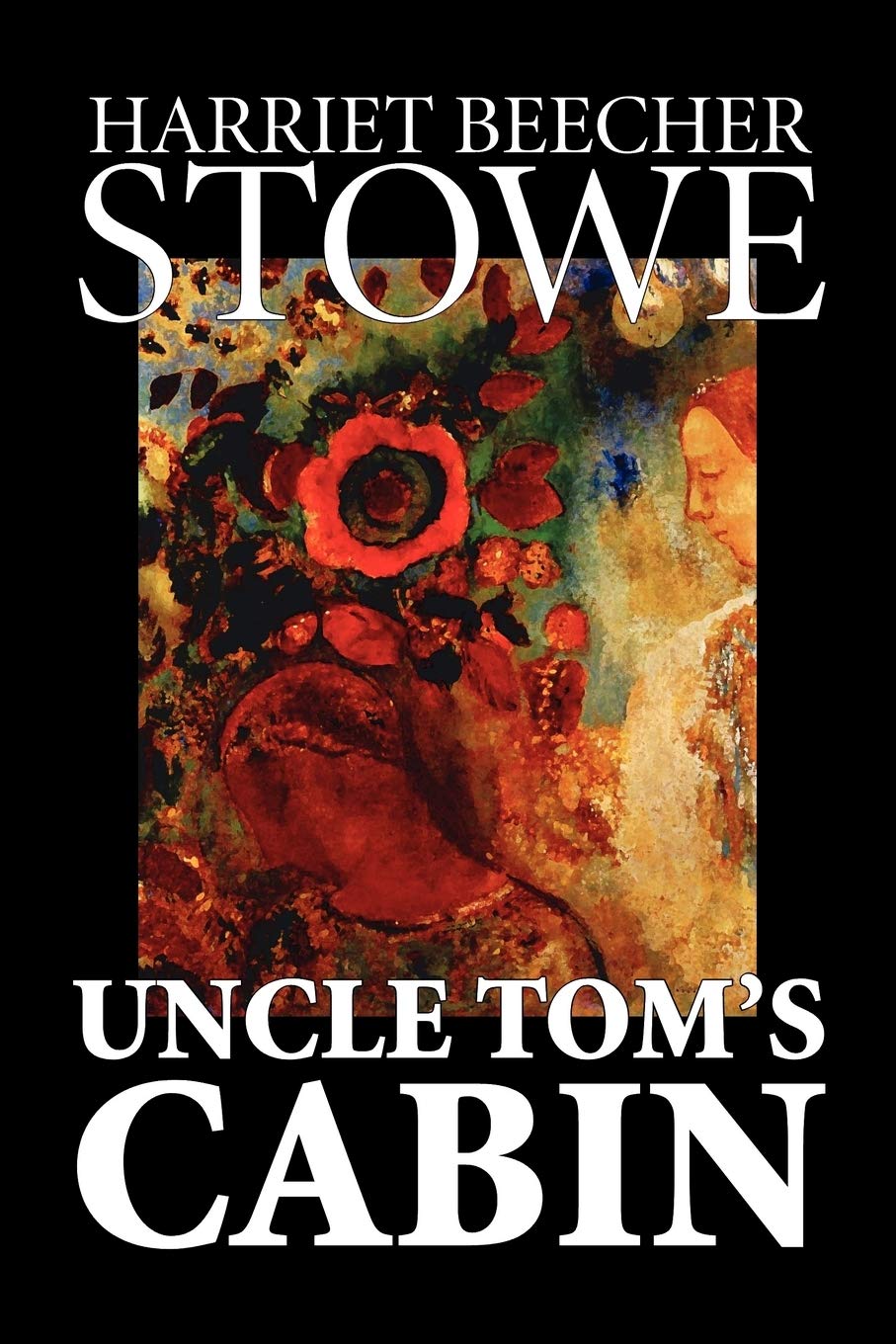
Title
Uncle Tom's Cabin by Harriet Beecher Stowe, Fiction, Classics,Used
Sold by Ergodebooks, an authorized reseller.
Returns accepted within 30 days | support@ergodebooks.com
Shipping Information
- Free Standard Shipping — United States only
- Processing Time: 3–5 business days
- Estimated Delivery: 6–10 business days after dispatch
- Double-boxed, fully insured & discreetly packaged
- Tracking number sent via email once dispatched
Returns & Refund
Returns accepted within 30 days of delivery.
Damaged or Defective Item
Free return shipping + replacement or full refund
Wrong Item Received
Free return shipping + replacement or full refund
Change of Mind
Return shipping at customer's expense · 25% restocking fee applies
Payment Option

Product Description His conversation was in free and easy defiance of Murray's Grammar and was garnished at convenient intervals with various profane expressions, which not even the desire to be graphic in our account shall induce us to transcribe. His companion, Mr. Shelby, had the appearance of a gentleman; and the arrangements of the house, and the general air of the housekeeping, indicated easy, and even opulent circumstances. As we before stated, the two were in the midst of an earnest conversation. "That is the way I should arrange the matter," said Mr. Shelby. "I can't make trade that way I positively can't, Mr. Shelby," said the other, holding up a glass of wine between his eye and the light. "Why, the fact is, Haley, Tom is an uncommon fellow; he is certainly worth that sum anywhere, steady, honest, capable, manages my whole farm like a clock. Tom is a good, steady, sensible, pious fellow. He got religion at a campmeeting, four years ago; and I believe he really did get it. I've trusted him, since then, with everything I have, money, house, horses, and let him come and go round the country; and I always found him true and square in everything." "Some folks don't believe there is pious niggers Shelby," said Haley, with a candid flourish of his hand, "but I do." About the Author Harriet Elisabeth Beecher Stowe (1811 1896) was an American abolitionist and author. She came from the Beecher family, a famous religious family and is best known for her novel Uncle Tom's Cabin (1852), which depicts the harsh conditions for enslaved African Americans. The book reached millions as a novel and play and became influential in the United States and Great Britain, energizing antislavery forces in the American North, while provoking widespread anger in the South. Stowe wrote 30 books, including novels, three travel memoirs and collections of articles and letters. She was influential for both her writings and her public stances on social issues of the day. In 1832, at the age of 21, Harriet Beecher moved to Cincinnati. There, she also joined the SemiColon Club, a literary salon and social club whose members included the Beecher sisters, Caroline Lee Hentz, Salmon P. Chase (future governor of the state and Secretary of Treasury under President Lincoln), Emily Blackwell and others. Cincinnati's trade and shipping business on the Ohio River was booming, drawing numerous migrants from different parts of the country, including many free blacks, as well as Irish immigrants who worked on the state's canals and railroads. Areas of the city had been wrecked in the Cincinnati riots of 1829, when ethnic Irish attacked blacks, trying to push competitors out of the city. Beecher met a number of African Americans who had suffered in those attacks and their experience contributed to her later writing about slavery. It was in the literary club that she met Calvin Ellis Stowe, a widower who was a professor at the seminary. The two married on January 6, 1836. He was an ardent critic of slavery and the Stowes supported the Underground Railroad, temporarily housing several fugitive slaves in their home. Most slaves continued north to secure freedom in Canada. The Stowes had seven children together, including twin daughters. n 1850, Congress passed the Fugitive Slave Law, prohibiting assistance to fugitives and strengthening sanctions even in free states. At the time, Stowe had moved with her family to Brunswick, Maine, where her husband was now teaching at Bowdoin College. Shortly after in June, 1851, when she was 40, the first installment of her Uncle Tom's Cabin was published in serial form in the newspaper The National Era. She originally used the subtitle The Man That Was A Thing, but it was soon changed to Life Among the Lowly. Installments were published weekly from June 5, 1851, to April 1, 1852. For the newspaper serialization of her novel, Stowe was paid $400. Uncle Tom's Cabin was published in book form on March 2
⚠️ WARNING (California Proposition 65):
This product may contain chemicals known to the State of California to cause cancer, birth defects, or other reproductive harm.
For more information, please visit www.P65Warnings.ca.gov.