
Title
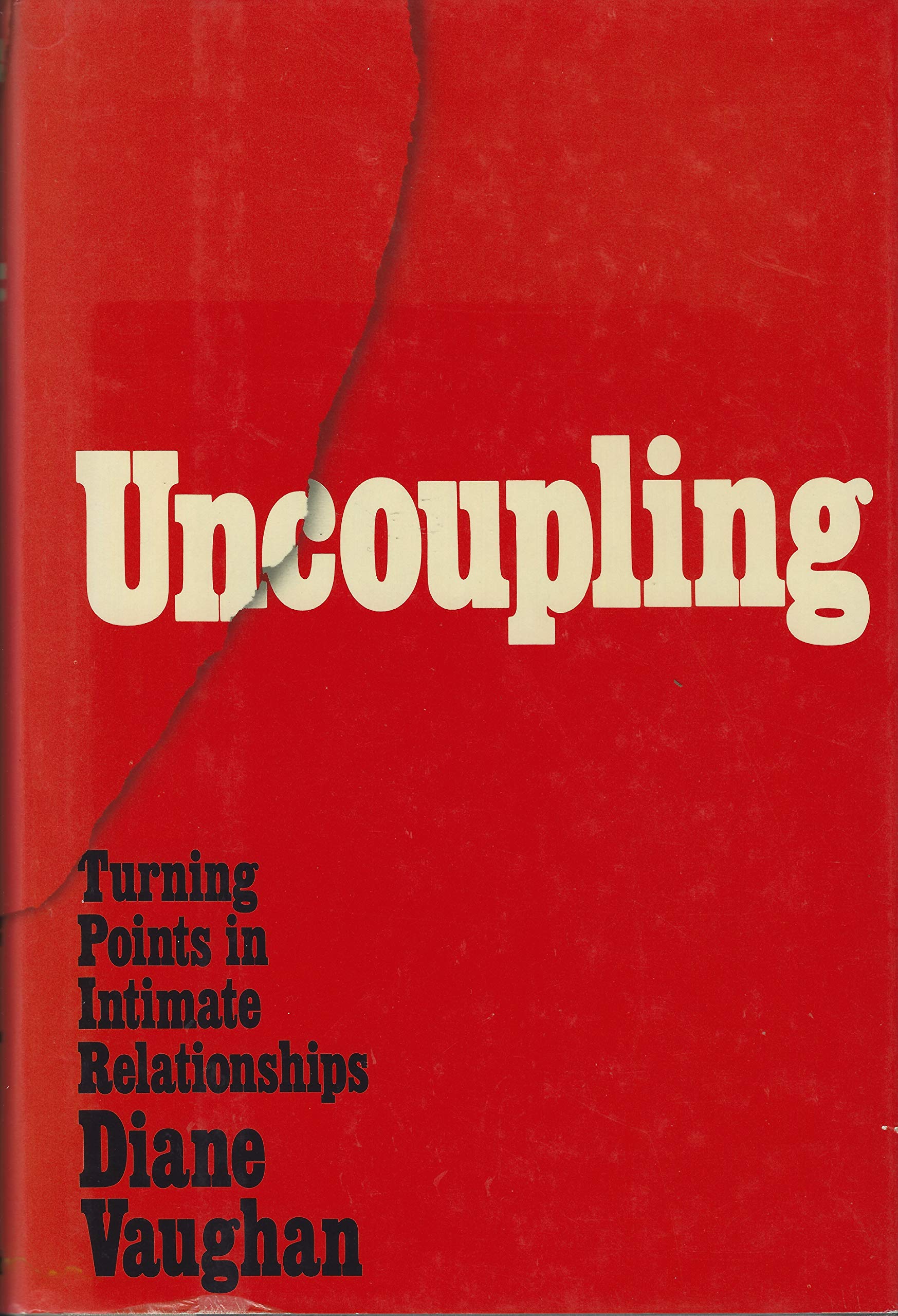
Uncoupling: Turning Points in Intimate Relationships,New
Processing time: 1-3 days
US Orders Ships in: 3-5 days
International Orders Ships in: 8-12 days
Return Policy: 15-days return on defective items
Payment Option

Many books explain why relationships end, but never before has a book shown in riveting stepbystep detail precisely how they end. Through extensive interviews and original research, Diane Vaughan reveals the underlying pattern beneath every disintegrating relationship. This is agroundbreaking book that will help anyone who has ever left a relationshipor been leftto understand 'what happened'. Perhaps even more important, it will help some people who don't even know their relationship is in trouble to see what is happening. Armed with a new awareness of what is usuallyan unconscious processuntil it's too latethe partners acquire the ability to either live with it, control it, or change it. Vaughan shows that no matter what the characteristics of the couple involved, rich or poor, straight or gay, married or not, and whether they've been together 18 months or18 years, the dynamics of the uncoupling process are essentially the same. The key to understanding how two people separate, according to Vaughan, is the role they assume in the leavetaking. Most often, one partnerthe initiatorwants out of a relationship while the other wants the relationshipto continue. Although both people must go through the same steps in altering their perceptions of each other and themselves, they do so at different times. By the time the stillloving partner realizes the relationship is in serious trouble, the initiator is already gone in a number of ways.Uncoupling begins with the initiator's first secret awareness of discomfort, depicts his or her search for a confidant (who is selected is a telling factor), and reveals the subtle, often barely perceptible signalling of his discontent to the partner. Vaughan traces the initiator's groping for andtesting of a new single identity and depicts the initiator's confrontation with the partner. She shows how two people try and why trying often fails. Finally, she explains how the partner makes his or her own transition out of the relationship. Replete with case histories, many poignant, the bookprovides answers to many puzzling questions: why one person can sometimes take the end of a longterm relationship so calmly...why counseling so often fails...why one member of a couple can be so much better prepared for a single life than the other...why some people never psychologicallyseparate...and much more.
⚠️ WARNING (California Proposition 65):
This product may contain chemicals known to the State of California to cause cancer, birth defects, or other reproductive harm.
For more information, please visit www.P65Warnings.ca.gov.
- Q: How many pages does the book have? A: This book has two hundred fifty-nine pages. It provides detailed insights into the dynamics of intimate relationships.
- Q: What is the binding type of this book? A: The book is hardcover. This type of binding adds durability and a premium feel.
- Q: What are the dimensions of the book? A: The book measures nine point four nine inches in length, one point zero two inches in width, and six point five inches in height.
- Q: Who is the author of the book? A: The author is Diane Vaughan. She is known for her extensive research in relationship dynamics.
- Q: What genre does this book belong to? A: This book falls under Interpersonal Relations. It examines the intricacies of how relationships end.
- Q: How can I apply the insights from this book? A: You can apply the insights by reflecting on your own relationship dynamics. It’s designed to help both partners understand the uncoupling process.
- Q: Is this book suitable for understanding my own relationship issues? A: Yes, this book is suitable for understanding your own relationship issues. It provides a framework for recognizing potential problems.
- Q: What type of readers would benefit from this book? A: This book benefits anyone interested in relationship dynamics, including individuals and couples. It is particularly useful for those experiencing relationship challenges.
- Q: How should I care for this hardcover book? A: To care for this book, keep it in a dry place and avoid exposure to direct sunlight. This will help preserve its condition.
- Q: Is there a recommended way to store this book? A: Yes, store this book upright on a shelf or in a bookcase. This prevents warping and damage to the spine.
- Q: What should I do if the book arrives damaged? A: If the book arrives damaged, you should contact the seller for a return or replacement. Most reputable sellers have clear return policies.
- Q: Can I return this book if I don't find it useful? A: Yes, you can typically return the book if you find it not useful. Check the seller's return policy for specific details.
- Q: What if I have questions while reading the book? A: If you have questions while reading, consider joining a discussion group or online forum. Engaging with others can enhance understanding.
- Q: Is there a specific audience for this book? A: The specific audience includes individuals and couples experiencing relationship difficulties. It addresses both initiators and partners.
- Q: How does this book compare to other relationship guides? A: This book uniquely focuses on the process of uncoupling, unlike many guides that emphasize reconciliation. It provides a detailed analysis of relationship endings.