
Title
Under The Blade: The Conversion Of Agricultural Landscapes,Used
Sold by Ergodebooks, an authorized reseller.
Returns accepted within 30 days | support@ergodebooks.com
Shipping Information
- Free Standard Shipping — United States only
- Processing Time: 3–5 business days
- Estimated Delivery: 6–10 business days after dispatch
- Double-boxed, fully insured & discreetly packaged
- Tracking number sent via email once dispatched
Returns & Refund
Returns accepted within 30 days of delivery.
Damaged or Defective Item
Free return shipping + replacement or full refund
Wrong Item Received
Free return shipping + replacement or full refund
Change of Mind
Return shipping at customer's expense · 25% restocking fee applies
Payment Option

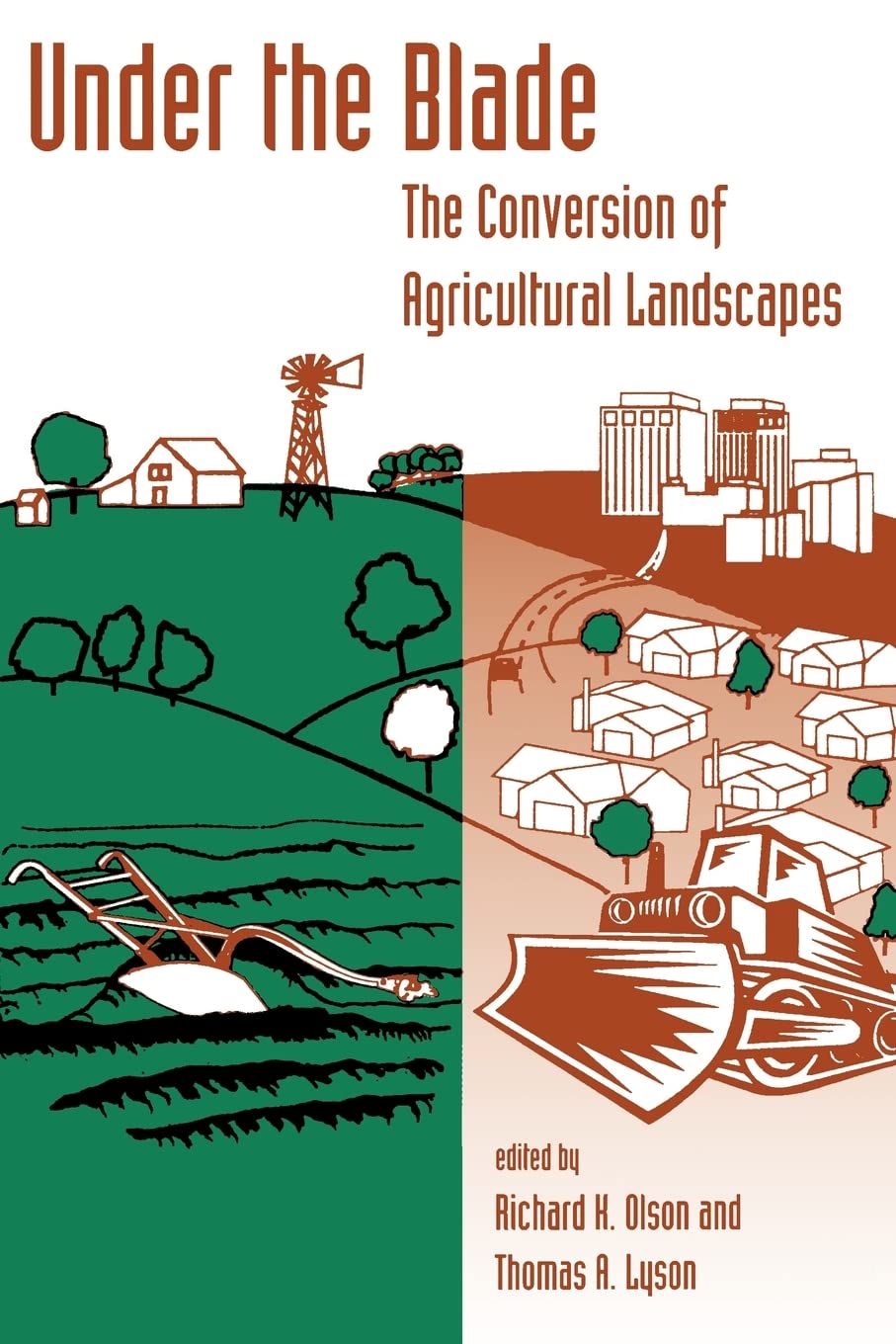
In 1998, the last farm in Des Plaines, Illinois was subdivided. Seven acres along the Niobrara River in northcentral Nebraska sold for 5700 per acre, twenty times the price for agricultural use. Waukesha County, Wisconsin, although still largely in agriculture, has been almost entirely zoned for small lot subdivisions. Nationwide, the cumulative effect of thousands of individual land use decisions is an orgiastic devouring of the countryside that consumes at least 1.4 million acres of rural land each year, and fragments a much larger area. The effects on landscape functions include loss of agricultural production, water pollution, increases in local runoff and flooding, loss of habitat and biodiversity, and the loss of natural beauty. In exchange we get malls, retail strips, and an ugly sprawl that degrades people and community. How have we come to this, and more importantly, how might we find a better, sustainable approach to the use of land? Land use decisions are the result of complex interactions among law, economics, landscape characteristics, population growth, social and political forces, ethics, and aesthetics. Under the Blade: The Conversion of Agricultural Landscapes examines the loss of farmland and other rural lands from each of these perspectives, and shows how interactions among different factors greatly complicate sustainable land management. Included throughout the seven main chapters of the book are descriptions of some of the tools and strategies that can be used to preserve farmland and guide development. The application of these tools is illustrated by 22 case studies of towns and regions throughout the United States, each with a somewhat different challenge, response, and degree of success (or failure).Dietrich Bonhoeffer, a Protestant theologian hanged by the Nazis in 1945, stated that ?the ultimate test of a moral society is the kind of world that it leaves to its children.? Our current choices in the use of the land are among the most important factors shaping that future world, and Under the Blade demonstrates that the quality of that future is far from certain.
⚠️ WARNING (California Proposition 65):
This product may contain chemicals known to the State of California to cause cancer, birth defects, or other reproductive harm.
For more information, please visit www.P65Warnings.ca.gov.