
Title
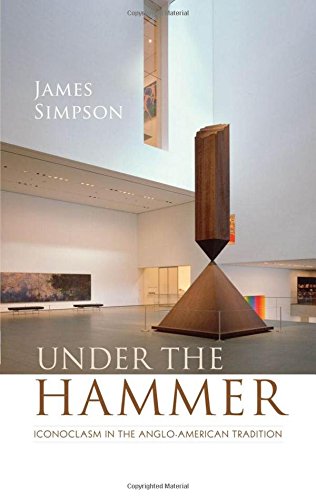
Under the Hammer: Iconoclasm in the AngloAmerican Tradition (Clarendon Lectures in English),Used
Sold by Ergodebooks, an authorized reseller.
Returns accepted within 30 days | support@ergodebooks.com
Shipping Information
- Free Standard Shipping — United States only
- Processing Time: 3–5 business days
- Estimated Delivery: 6–10 business days after dispatch
- Double-boxed, fully insured & discreetly packaged
- Tracking number sent via email once dispatched
Returns & Refund
Returns accepted within 30 days of delivery.
Damaged or Defective Item
Free return shipping + replacement or full refund
Wrong Item Received
Free return shipping + replacement or full refund
Change of Mind
Return shipping at customer's expense · 25% restocking fee applies
Payment Option

When we think of breaking images, we assume that it happens somewhere else. We also tend to think of iconoclasts as barbaric. Iconoclasts are people like the Taliban, who blew up Buddhist statues in 2001. We tend, that is, to look with horror on iconoclasm.This book argues instead that iconoclasm is a central strand of AngloAmerican modernity. Our horror at the destruction of art derives in part from the fact that we too did, and still do, that. This is most obviously true of England's iconoclastic century between 1538 and 1643. That century of legislated early modern image breaking, exceptional in Europe for its jurisdictional extension and duration, stands at the core of this book. That's when written texts, especially poems, rather than visual images became our living monuments.Surely, though, the story of image breaking stops in the eighteenth century, with its enlightened cultivation of the visual arts and the art market. Not so, argues Under the Hammer: once started, iconoclasm is difficult to stop. It ripples through cultures, into the psyche, and it ripples through history. Museums may have protected images from the iconoclast's hammer, but also subject images to metaphorical iconoclasm. Aesthetics may have drawn a protective circle around the image, but as it did so, it also neutralised the image.The ripple effect also continues across the Atlantic, into puritan culture, into twentiethcentury American Abstract Expressionism, and into the puritan temple of modern art. That, in fact, is where this book starts, with midtwentiethcentury abstract painting: the image has survived, just, but it bears the scars of a 500 year history.
⚠️ WARNING (California Proposition 65):
This product may contain chemicals known to the State of California to cause cancer, birth defects, or other reproductive harm.
For more information, please visit www.P65Warnings.ca.gov.