If you have any questions, you are always welcome to contact us. We'll get back to you as soon as possible, withing 24 hours on weekdays.
Customer service
All questions about your order, return and delivery must be sent to our customer service team by e-mail at yourstore@yourdomain.com
Sale & Press
If you are interested in selling our products, need more information about our brand or wish to make a collaboration, please contact us at press@yourdomain.com
Help
If you have any questions, you are always welcome to contact us. We'll get back to you as soon as possible, withing 24 hours on weekdays.
Customer service
All questions about your order, return and delivery must be sent to our customer service team by e-mail at yourstore@yourdomain.com
Sale & Press
If you are interested in selling our products, need more information about our brand or wish to make a collaboration, please contact us at press@yourdomain.com
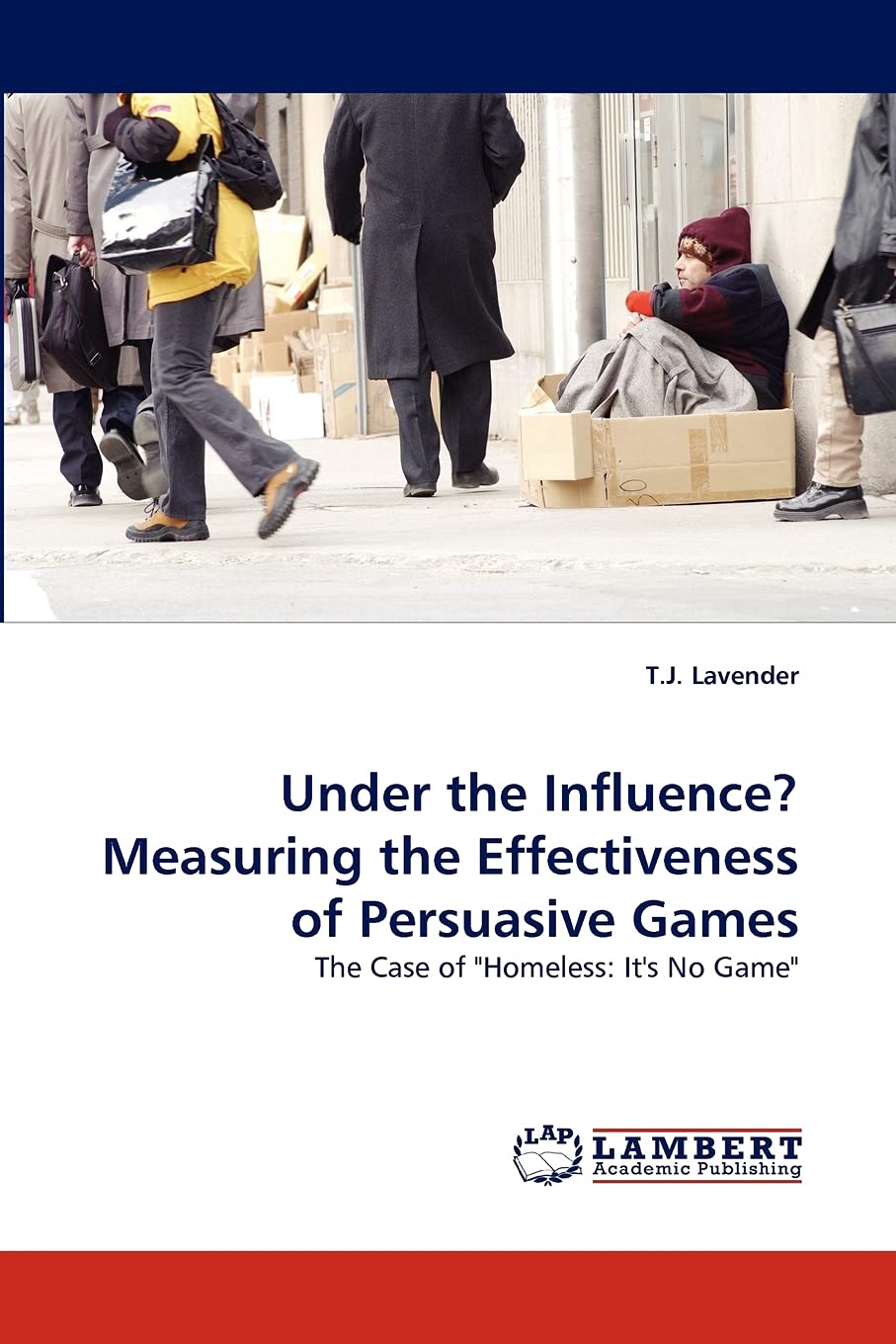
Thanks to the maturation of the Internet as a game distribution platform and the development of a new generation of lowcost, easytouse game development tools, videogames are being used increasingly often for serious goals such as raising awareness, changing attitudes and motivating behavioural change. But little empirical research has been done as to the effectiveness of these persuasive videogames. The videogame Homeless: It's No Game was developed to determine whether people could be persuaded to become more sympathetic to the plight of the homeless by playing the role of a homeless woman in a videogame and whether this persuasive effect could be measured. The results of the research were promising, and indicated that persuasive games can have an effect, especially if participants considered the game to be realistic.
⚠️ WARNING (California Proposition 65):
This product may contain chemicals known to the State of California to cause cancer,
birth defects, or other reproductive harm.
For MAP (Minimum Advertised Price) violations and Intellectual Property (IP) or Trademark concerns, please contact:
support@ergodebooks.com
⚠️ California Proposition 65 Warning: Some products sold on this website may expose you to chemicals known to the State of California to cause cancer, birth defects, or other reproductive harm. For more information, visit www.P65Warnings.ca.gov.