
Title
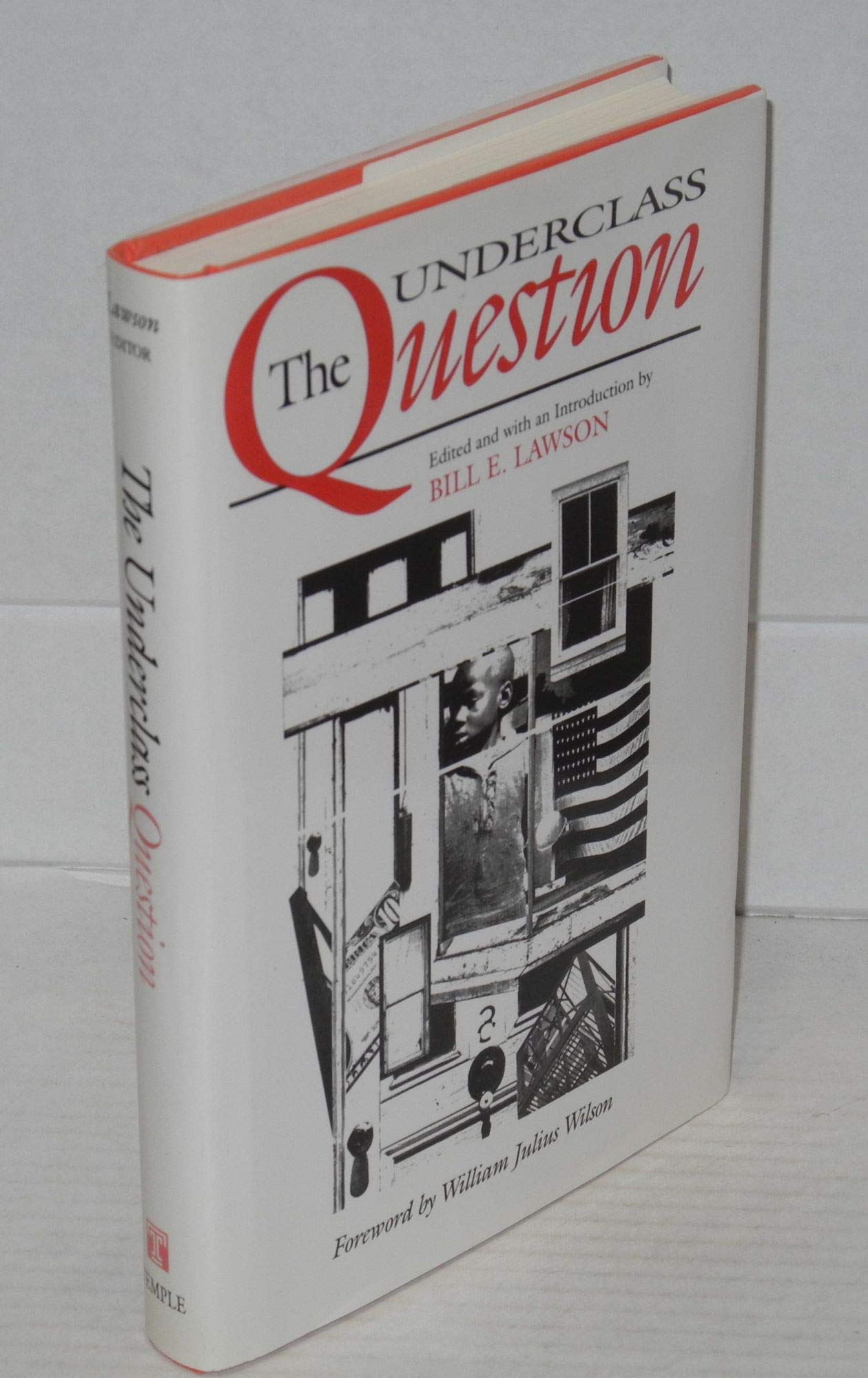
Underclass Question,Used
Sold by Ergodebooks, an authorized reseller.
Returns accepted within 30 days | support@ergodebooks.com
Shipping Information
- Free Standard Shipping — United States only
- Processing Time: 3–5 business days
- Estimated Delivery: 6–10 business days after dispatch
- Double-boxed, fully insured & discreetly packaged
- Tracking number sent via email once dispatched
Returns & Refund
Returns accepted within 30 days of delivery.
Damaged or Defective Item
Free return shipping + replacement or full refund
Wrong Item Received
Free return shipping + replacement or full refund
Change of Mind
Return shipping at customer's expense · 25% restocking fee applies
Payment Option

Review '...a uniquely telling volume.... These probing essays are a welcome antidote to the unanalyzed buzzwords and attitudes that shape American notions of race, class, and the disaffected among us.'U.S. Congresswoman Eleanor Holmes Norton, District of Columbia'One of the most intriguing, useful and stimulating responses not only to Wilson's book but to the whole debate on the urban underclass and the 'race vs. class' analysis of black poverty and alleged pathology.... [I]t should be required reading.'United Press International'The subject is an important one and this is the only treatment of it by professional philosophers.'T. Kermit Scott, Purdue University Product Description The American dream will never be a reality for a large number of poor urban blacks. Civil rights legislation and government programs have been unable to move much of this population into the American mainstream. The Underclass Question is a collection of original essays by wellknown AfricanAmerican philosophers. The writers consider philosophical questions raised by the existence in the United States of a group of people whose lives dramatically contradict the belief that social and economic disadvantage can be overcome. The plight of the socalled underclass has given rise to intense debates over what social scientists have termed 'the paradox of social progress.' This lively and accessible collection is the first fulllength philosophical treatment of the underclass debate and one of the few volumes of writings by AfricanAmerican philosophers.The essays examine the role of racism in the emergence of the underclass and explore the extent to which public policies should be race based. Challenging certain sociological assumptions about how urban poverty and the urban poor should be viewed, the contributors address William Julius Wilson's controversial work, The Truly Disadvantaged. They discuss whether the underclass is simply a new label for the poor or whether it indeed represents a distinct class. And they ask the following questions: Are there values that are unique to poor urban blacks? What does rap music tell us about the underclass? Do middle class blacks have an obligation toward poor urban blacks? What are the obligations of the American government to the urban poor? What is wrong with the current conception of urban poverty? Addressing these and other questions regarding urban poverty and how it affects public policy, the contributors find that a combination of attitudes and assumptions about the impact of race, class, the economy, government policies, and our conception of citizenship makes it difficult to formulate policies that redress the problems faced by the urban poor. About the Author Bill E. Lawson is Associate Professor of Philosophy at the University of Delaware.
⚠️ WARNING (California Proposition 65):
This product may contain chemicals known to the State of California to cause cancer, birth defects, or other reproductive harm.
For more information, please visit www.P65Warnings.ca.gov.