
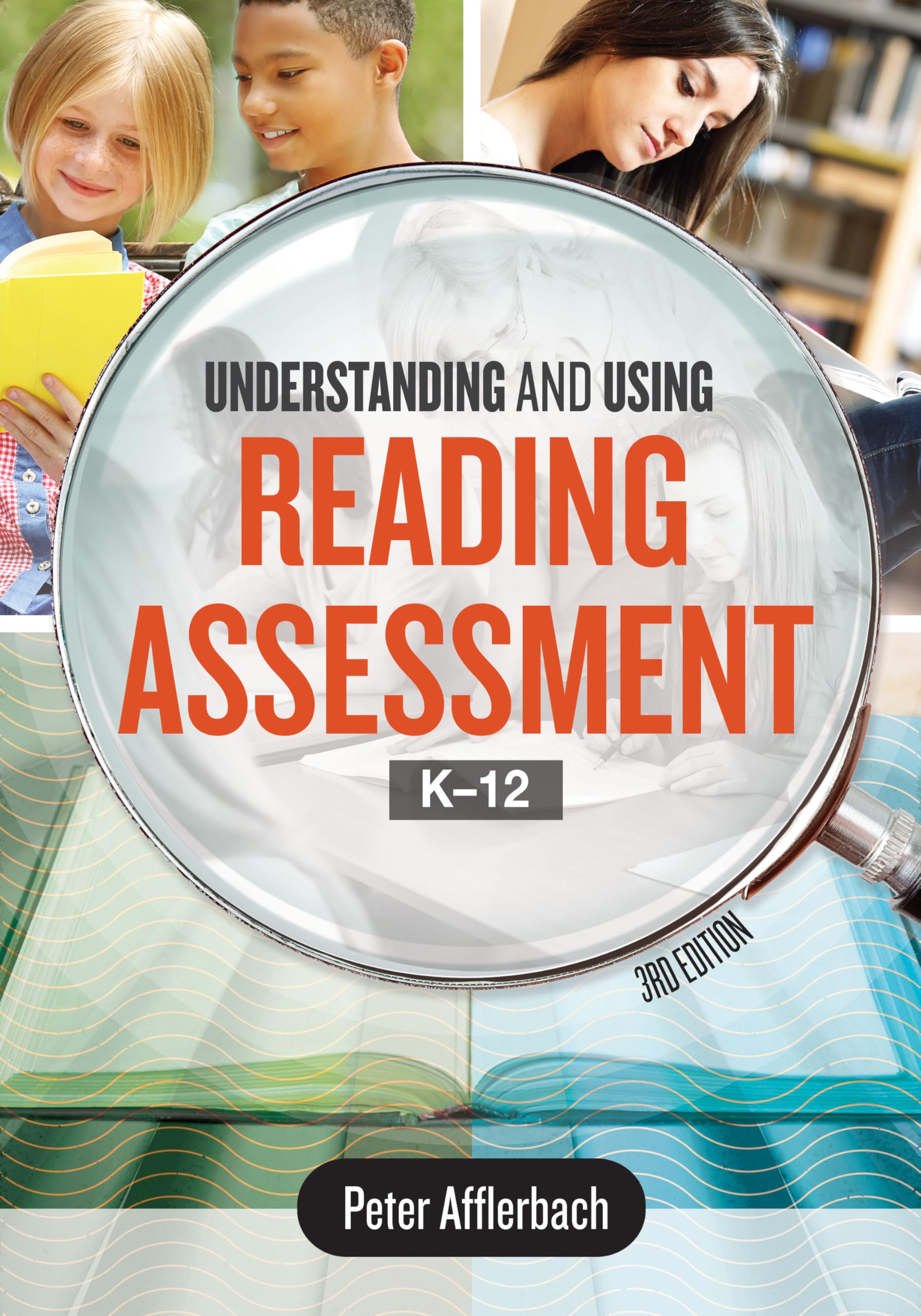
Title
Understanding and Using Reading Assessment, K12,New
Sold by Ergodebooks, an authorized reseller.
Returns accepted within 30 days | support@ergodebooks.com
Shipping Information
- Free Standard Shipping — United States only
- Processing Time: 3–5 business days
- Estimated Delivery: 6–10 business days after dispatch
- Double-boxed, fully insured & discreetly packaged
- Tracking number sent via email once dispatched
Returns & Refund
Returns accepted within 30 days of delivery.
Damaged or Defective Item
Free return shipping + replacement or full refund
Wrong Item Received
Free return shipping + replacement or full refund
Change of Mind
Return shipping at customer's expense · 25% restocking fee applies
Payment Option

Why do we assess reading? What do we assess when we assess reading? How, where, and when do we assess reading? Reading instruction and assessment expert Peter Afflerbach addresses these questions and much more in the 3rd edition of Understanding and Using Reading Assessment, K12.Using the CURRV model to evaluate reading assessment methodsincluding reading inventories, teacher questioning, performance assessment, and highstakes reading testsAfflerbach considers the consequences and usefulness of each method, the roles and responsibilities of key stakeholders, and the reliability and validity of the assessments. In addition, he examines four important but often overlooked aspects of reading assessment: Assessment accommodation for Englishlanguage learners and students with special needs Assessment of noncognitive aspects of reading, such as motivation, engagement, selfconcept, and selfefficacy The use of formative and summative assessment The importance of selfassessment in building reading independenceThe book provides detailed case studies from all grade levels to illustrate reading assessment done well. It also includes 15 reproducible forms and checklists that teachers and administrators can use to optimize their reading assessment efforts.Students are expected to read increasingly complex texts and to complete increasingly complex readingrelated tasks to demonstrate their growth as readers. This book offers teachers and administrators alike a clear path to helping students meet those expectations.This book is a copublication of ASCD and ILA.New to the 3rd edition: New chapter Formative and Summative Assessment Three significantly revised chaptersPerformance Assessment; Assessment Accommodation for English Learners and Students With Special Needs (Accommodation and Reading Assessment in 2nd edition); Assessing the Other: Important Noncognitive Aspects of Reading Fifteen reproducible and downloadable forms and checklists
⚠️ WARNING (California Proposition 65):
This product may contain chemicals known to the State of California to cause cancer, birth defects, or other reproductive harm.
For more information, please visit www.P65Warnings.ca.gov.
- Q: What is the main focus of 'Understanding and Using Reading Assessment, K-12'? A: The book focuses on the purpose and methods of assessing reading for K-12 students, addressing critical questions about how, when, and what to assess in reading.
- Q: Who is the author of this book? A: The author is Peter Afflerbach, an expert in reading instruction and assessment.
- Q: What new features are included in the 3rd edition of this book? A: The 3rd edition includes a new chapter on 'Formative and Summative Assessment' and significant revisions to three existing chapters, along with fifteen reproducible forms and checklists.
- Q: How many pages does the book have? A: The book contains 288 pages.
- Q: Is this book suitable for teachers and administrators? A: Yes, the book is designed for both teachers and administrators, providing practical insights and tools for effective reading assessment.
- Q: What are some assessment methods discussed in the book? A: The book discusses various assessment methods, including reading inventories, teacher questioning, performance assessments, and high-stakes reading tests.
- Q: Does the book cover accommodations for English-language learners? A: Yes, it examines assessment accommodations for English-language learners and students with special needs.
- Q: What aspects of reading assessment are often overlooked and discussed in this book? A: The book highlights noncognitive aspects of reading such as motivation, engagement, self-concept, and self-efficacy.
- Q: What is the binding type of this book? A: The book is available in paperback binding.
- Q: When was 'Understanding and Using Reading Assessment, K-12' published? A: The book was published on December 20, 2017.