
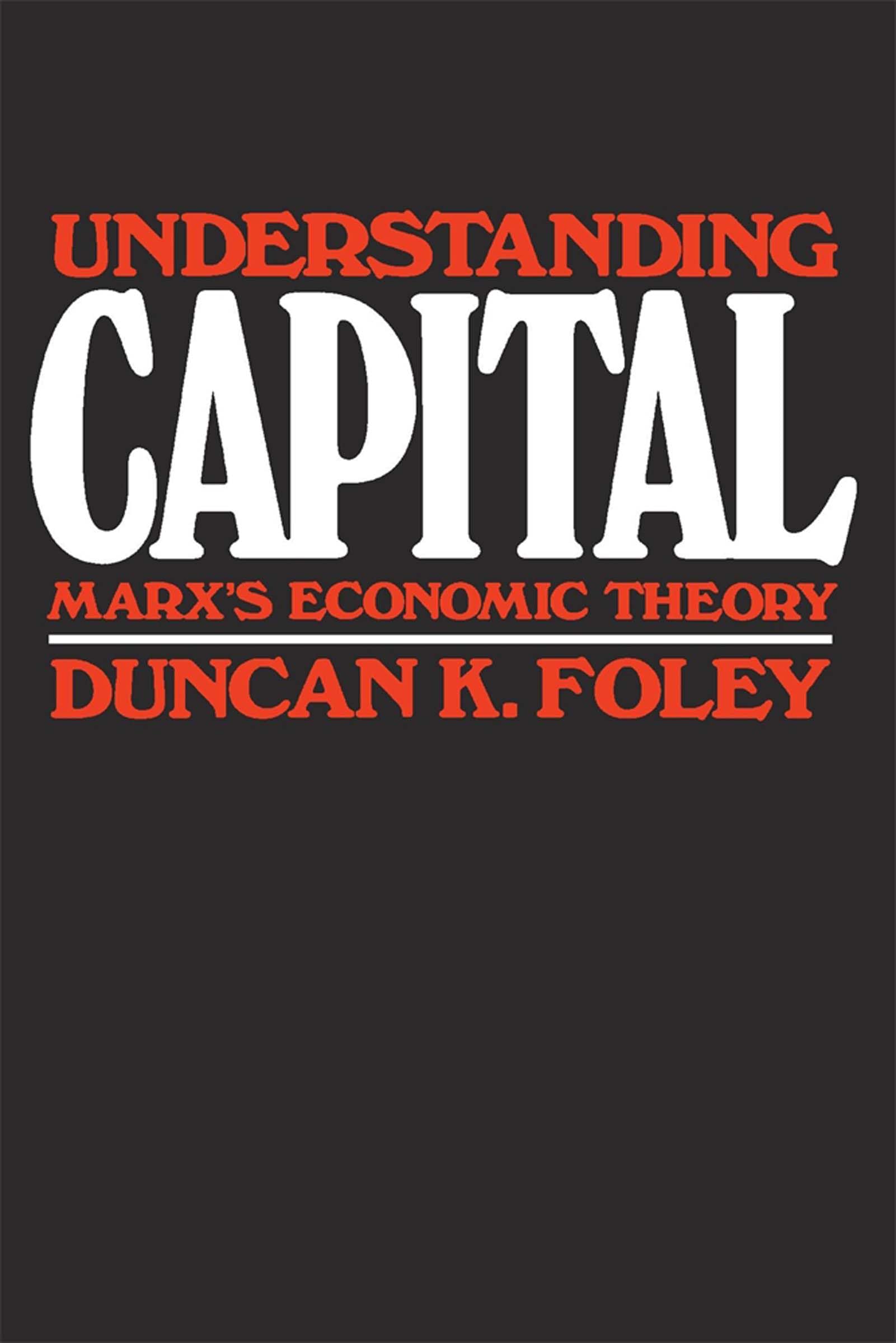
Title
Understanding Capital: Marxs Economic Theory,New
Sold by Ergodebooks, an authorized reseller.
Returns accepted within 30 days | support@ergodebooks.com
Shipping Information
- Free Standard Shipping — United States only
- Processing Time: 3–5 business days
- Estimated Delivery: 6–10 business days after dispatch
- Double-boxed, fully insured & discreetly packaged
- Tracking number sent via email once dispatched
Returns & Refund
Returns accepted within 30 days of delivery.
Damaged or Defective Item
Free return shipping + replacement or full refund
Wrong Item Received
Free return shipping + replacement or full refund
Change of Mind
Return shipping at customer's expense · 25% restocking fee applies
Payment Option

Understanding Capital is a brilliantly lucid introduction to Marxist economic theory. Duncan Foley builds an understanding of the theory systematically, from first principles through the definition of central concepts to the development of important applications. All of the topics in the three volumes of Capital are included, providing the reader with a complete view of Marxist economics.Foley begins with a helpful discussion of philosophical problems readers often encounter in tackling Marx, including questions of epistemology, explanation, prediction, determinism, and dialectics. In an original extension of theory, he develops the often neglected concept of the circuit of capital to analyze Marxs theory of the reproduction of capital. He also takes up central problems in the capitalist economy: equalization of the rates of profit (the transformation problem); productive and unproductive labor and the division of surplus value; and the falling rate of profit. He concludes with a discussion of the theory of capitalist crisis and of the relation of Marxs critique of capitalism to his conception of socialism.Through a careful treatment of the theory of money in relation to the labor theory of value, Foley clarifies the relation of prices to value and of Marxs categories of analysis to conventional business and national income accounts, enabling readers to use Marxs theory as a tool for the analysis of practical problems. The text is closely keyed throughout to the relevant chapters in Capital and includes suggestions for further reading on the topics discussed.
⚠️ WARNING (California Proposition 65):
This product may contain chemicals known to the State of California to cause cancer, birth defects, or other reproductive harm.
For more information, please visit www.P65Warnings.ca.gov.
- Q: What is the main focus of 'Understanding Capital: Marx’s Economic Theory'? A: The book provides a comprehensive introduction to Marxist economic theory, covering central concepts and applications found in Marx's three volumes of Capital.
- Q: Who is the author of this book? A: The author is Duncan K. Foley, who offers a clear interpretation of Marx's economic theories.
- Q: What topics does this book cover? A: It discusses philosophical problems, the circuit of capital, the transformation problem, productive and unproductive labor, the falling rate of profit, and the theory of capitalist crisis.
- Q: Is this book suitable for beginners in Marxist economics? A: Yes, it is designed as an introduction and systematically builds understanding from first principles.
- Q: What is the condition of the book? A: The book is listed as a used book in good condition.
- Q: How many pages does 'Understanding Capital' have? A: The book contains 200 pages.
- Q: What is the binding type of this book? A: The book is available in paperback binding.
- Q: When was 'Understanding Capital' published? A: The book was published on November 23, 1986.
- Q: Does this book provide practical applications of Marx's theory? A: Yes, it clarifies the relationship between money, labor value, and provides insights applicable to practical economic problems.
- Q: Are there suggestions for further reading included in the book? A: Yes, the text includes suggestions for further reading on the topics discussed.