
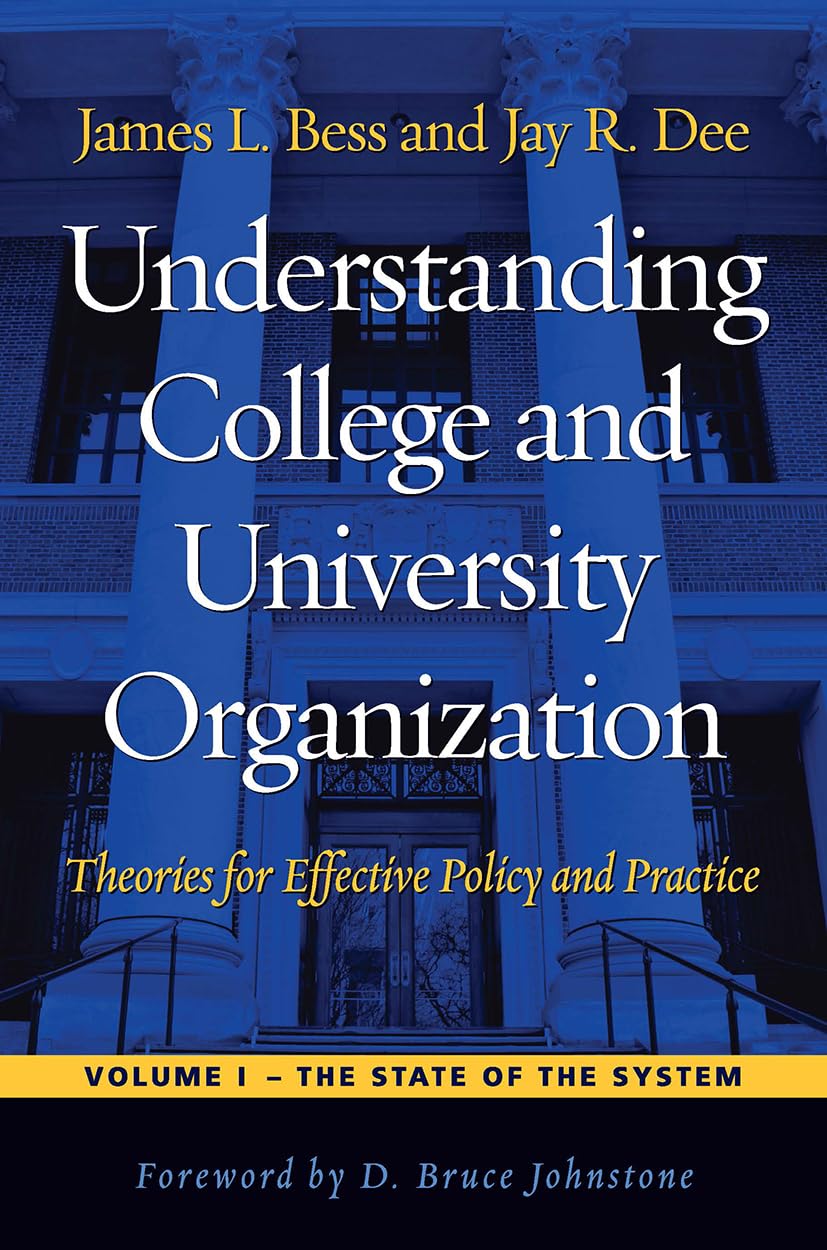
Title
Understanding College And University Organization: Theories For Effective Policy And Practice: Volume I The State Of The Syste
Sold by Ergodebooks, an authorized reseller.
Returns accepted within 30 days | support@ergodebooks.com
Shipping Information
- Free Standard Shipping — United States only
- Processing Time: 3–5 business days
- Estimated Delivery: 6–10 business days after dispatch
- Double-boxed, fully insured & discreetly packaged
- Tracking number sent via email once dispatched
Returns & Refund
Returns accepted within 30 days of delivery.
Damaged or Defective Item
Free return shipping + replacement or full refund
Wrong Item Received
Free return shipping + replacement or full refund
Change of Mind
Return shipping at customer's expense · 25% restocking fee applies
Payment Option

Now Available In Paperback, This Twovolume Work Is Intended To Help Readers Develop Powerful New Ways Of Thinking About Organizational Principles, And Apply Them To Policymaking And Management In Colleges And Universities.The Book Is Written With Two Audiences In Mind: Administrative And Faculty Leaders In Institutions Of Higher Learning, And Students (Both Doctoral And Master'S Degree) Studying To Become Upperlevel Administrators, Leaders, And Policy Makers In Higher Education.It Systematically Presents A Range Of Theories That Can Be Applied To Many Of The Difficult Management Situations That College And University Leaders Encounter. It Provides Them With The Theoretical Background To Knowledgeably Evaluate The Many New Ideas That Emerge In The Current Literature, And In Workshops And Conferences. The Purpose Is To Help Leaders Develop Their Own Effective Management Style And Approaches, And Feel Confident That Their Actions Are Informed By Appropriate Theory And Knowledge Of The Latest Research In The Field.Without Theory, Organizational Leaders Are Forced To Treat Each Problem That They Encounter As Uniqueas If It Were A Firsttime Occurrence. While Leaders May Have Some Experience With A Particular Issue, Their Solutions Are Usually Not Informed By The Accumulated Wisdom Of Others Who Have Already Encountered And Resolved Similar Situations. The Authors Approach The Theory Of The Organization And Administration Of Colleges And Universities From Three Quite Different Perspectives, Or Paradigms, Each Relying On Different Assumptions About The Reality Of Organizational Life In Colleges And Universities. The Positivist Paradigmprimarily An Omnibus Systems Theoryintegrates The Chapters Into A Comprehensive, Yet Easily Accessible Whole. Social Constructionism, The Second Paradigm, Is Introduced In Each Chapter To Illuminate The Difficulty Of Seeking And Finding Meaningful Consensus On Problems And Policies, While Also Addressing Important Ethical Issues That Tend To Be Overlooked In Leadership Thought And Action. The Third Paradigm, Postmodernism, Draws Attention To Difficulties Of Logic And Communication Under The Constraints Of Strictly Linear Thinking That Authorities At All Levels Attempt To Impose On Organizations.This Multiple Paradigm Approach Enables Readers To Become More Cognizant Of Their Own Assumptions, How They May Differ From Those Of Others In Their Organization, And How Those Differences May Both Create Difficulties In Resolving Problems And Expand The Range Of Alternatives Considered In Organizational Decision Making. The Book Offers Readers The Tools To Balance The Realworld Needs To Succeed In Todays Challenging And Competitive Environment With The Social And Ethical Aspirations Of All Its Stakeholders And Society At Large. The Authors Aim Is To Elucidate How Administration Can Be Made More Efficient And Effective Through Rational Decisionmaking While Also Respecting Humanistic Values. This Approach Highlights A Range Of Phenomena That Require Attention If The Institution Is Ultimately To Be Considered Successful.Also Available:Volume 1: The State Of The Systemtwo Volume Set
⚠️ WARNING (California Proposition 65):
This product may contain chemicals known to the State of California to cause cancer, birth defects, or other reproductive harm.
For more information, please visit www.P65Warnings.ca.gov.
- Q: How many pages does the book have? A: The book has five hundred pages. This comprehensive length covers various organizational principles and management theories.
- Q: What is the binding type of the book? A: The book is available in paperback binding. This makes it lightweight and easy to handle for readers.
- Q: What are the dimensions of the book? A: The book measures five point nine eight inches in length, one point one four inches in width, and nine point zero two inches in height. These dimensions make it a convenient size for reading.
- Q: What is the focus of this book? A: The book focuses on organizational principles in higher education. It is aimed at both academic leaders and students in related fields.
- Q: Is this book suitable for students studying higher education? A: Yes, this book is suitable for students pursuing master's and doctoral degrees. It provides valuable insights for future administrators and policymakers.
- Q: Who are the authors of this book? A: The book is authored by James L. Bess. His expertise contributes to the depth of the content.
- Q: What are the ethical considerations discussed in the book? A: The book addresses important ethical issues in leadership. It emphasizes the need for consensus and humanistic values in decision-making.
- Q: How can I apply the theories from the book? A: You can apply the theories by evaluating management situations in higher education. The book provides frameworks for enhancing your management style.
- Q: How should I store this book to keep it in good condition? A: Store the book in a cool, dry place away from direct sunlight. This helps preserve the paperback cover and pages.
- Q: Are there any cleaning instructions for the book? A: No specific cleaning instructions are needed for the book. However, handle it with clean hands to avoid dirt on the pages.
- Q: What should I do if the book arrives damaged? A: If the book arrives damaged, contact customer support for a return or replacement. They can assist you with the return process.
- Q: Is this book a good resource for college administrators? A: Yes, this book is an excellent resource for college administrators. It provides practical theories and management styles relevant to their roles.
- Q: Does the book include multiple perspectives on organization? A: Yes, the book includes multiple paradigms such as positivism, social constructionism, and postmodernism. This diversity enriches the understanding of organizational dynamics.
- Q: Is this book available in other formats? A: Currently, the book is only available in paperback format. There are no digital or hardcover editions listed.
- Q: Can this book help improve decision-making in colleges? A: Yes, the book offers tools for rational decision-making in higher education. It balances practical needs with ethical considerations.