
Title
Understanding Elections through Statistics: Polling, Prediction, and Testing (Chapman & Hall/CRC Statistics in the Social and Be,New
Sold by Ergodebooks, an authorized reseller.
Returns accepted within 30 days | support@ergodebooks.com
Shipping Information
- Free Standard Shipping — United States only
- Processing Time: 3–5 business days
- Estimated Delivery: 6–10 business days after dispatch
- Double-boxed, fully insured & discreetly packaged
- Tracking number sent via email once dispatched
Returns & Refund
Returns accepted within 30 days of delivery.
Damaged or Defective Item
Free return shipping + replacement or full refund
Wrong Item Received
Free return shipping + replacement or full refund
Change of Mind
Return shipping at customer's expense · 25% restocking fee applies
Payment Option

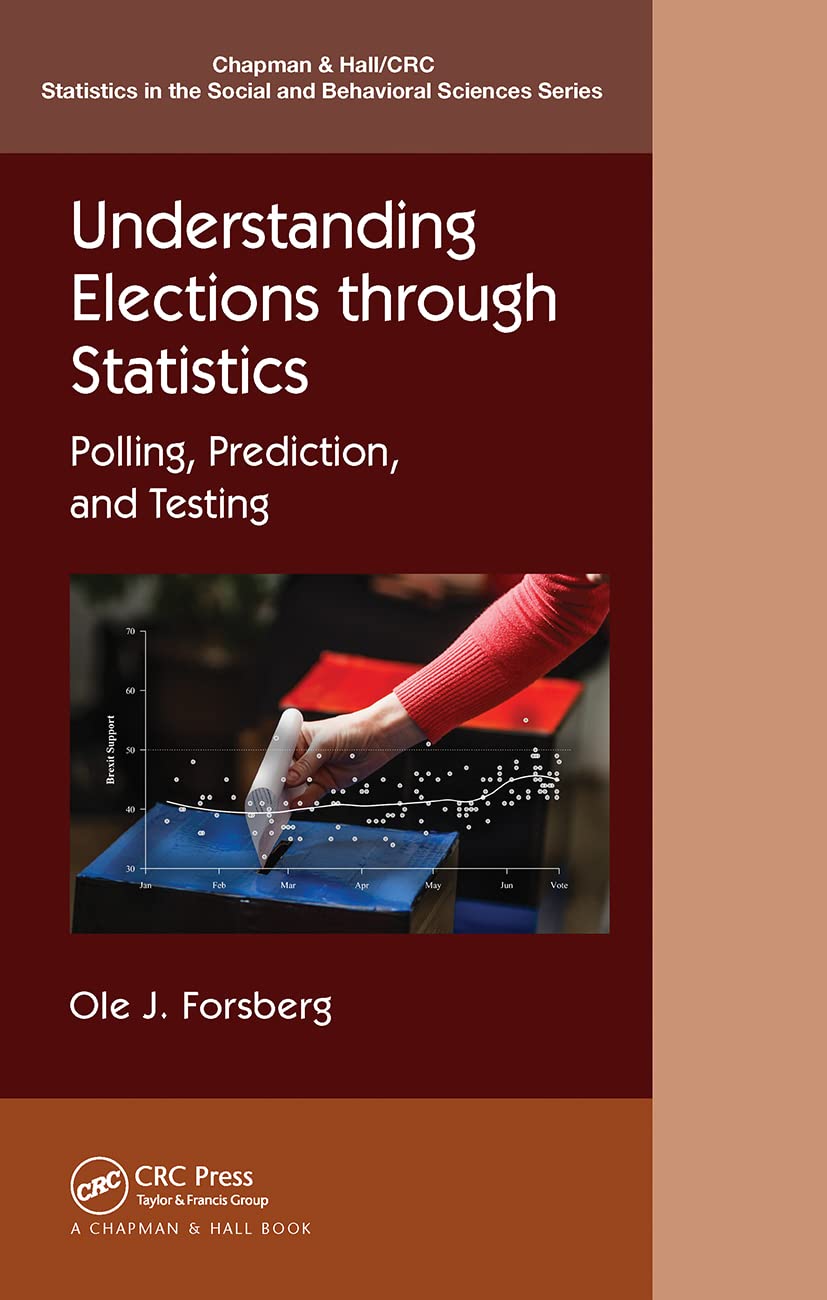
Elections are random events. From individuals deciding whether to vote, to people deciding for whom to vote, to election authorities deciding what to count, the outcomes of competitive democratic elections are rarely known until election dayor beyond. Understanding Elections through Statistics: Polling, Prediction, and Testing explores this random phenomenon from two points of view: predicting the election outcome using opinion polls and testing the election outcome using governmentreported data.Written for those with only a brief introduction to statistics, this book takes you on a statistical journey from how polls are taken to how they canand shouldbe used to estimate current popular opinion. Once an understanding of the election process is built, we turn toward testing elections for evidence of unfairness. While holding elections has become the de facto proof of government legitimacy, those electoral processes may hide a dirty little secret of the government illicitly ensuring a favorable election outcome.This book includes these features designed to make your statistical journey more enjoyable:Vignettes of elections, including maps, to provide concrete bases for the materialInchapter cues to help one avoid the heavy mathor to focus on itEndofchapter problems designed to review and extend that which was covered in the chapterMany opportunities to turn the power of the R statistical environment to the enclosed election data files, as well as to those you find interestingFrom these features, it is clear the audience for this book is quite diverse. This text provides mathematics for those interested in mathematics, but also offers detours for those who just want a good read and a deeper understanding of elections.AuthorOle J. Forsberg holds PhDs in both political science and statistics. He currently teaches mathematics and statistics in the Department of Mathematics at Knox College in Galesburg, IL.
⚠️ WARNING (California Proposition 65):
This product may contain chemicals known to the State of California to cause cancer, birth defects, or other reproductive harm.
For more information, please visit www.P65Warnings.ca.gov.