If you have any questions, you are always welcome to contact us. We'll get back to you as soon as possible, withing 24 hours on weekdays.
Customer service
All questions about your order, return and delivery must be sent to our customer service team by e-mail at yourstore@yourdomain.com
Sale & Press
If you are interested in selling our products, need more information about our brand or wish to make a collaboration, please contact us at press@yourdomain.com
Help
If you have any questions, you are always welcome to contact us. We'll get back to you as soon as possible, withing 24 hours on weekdays.
Customer service
All questions about your order, return and delivery must be sent to our customer service team by e-mail at yourstore@yourdomain.com
Sale & Press
If you are interested in selling our products, need more information about our brand or wish to make a collaboration, please contact us at press@yourdomain.com
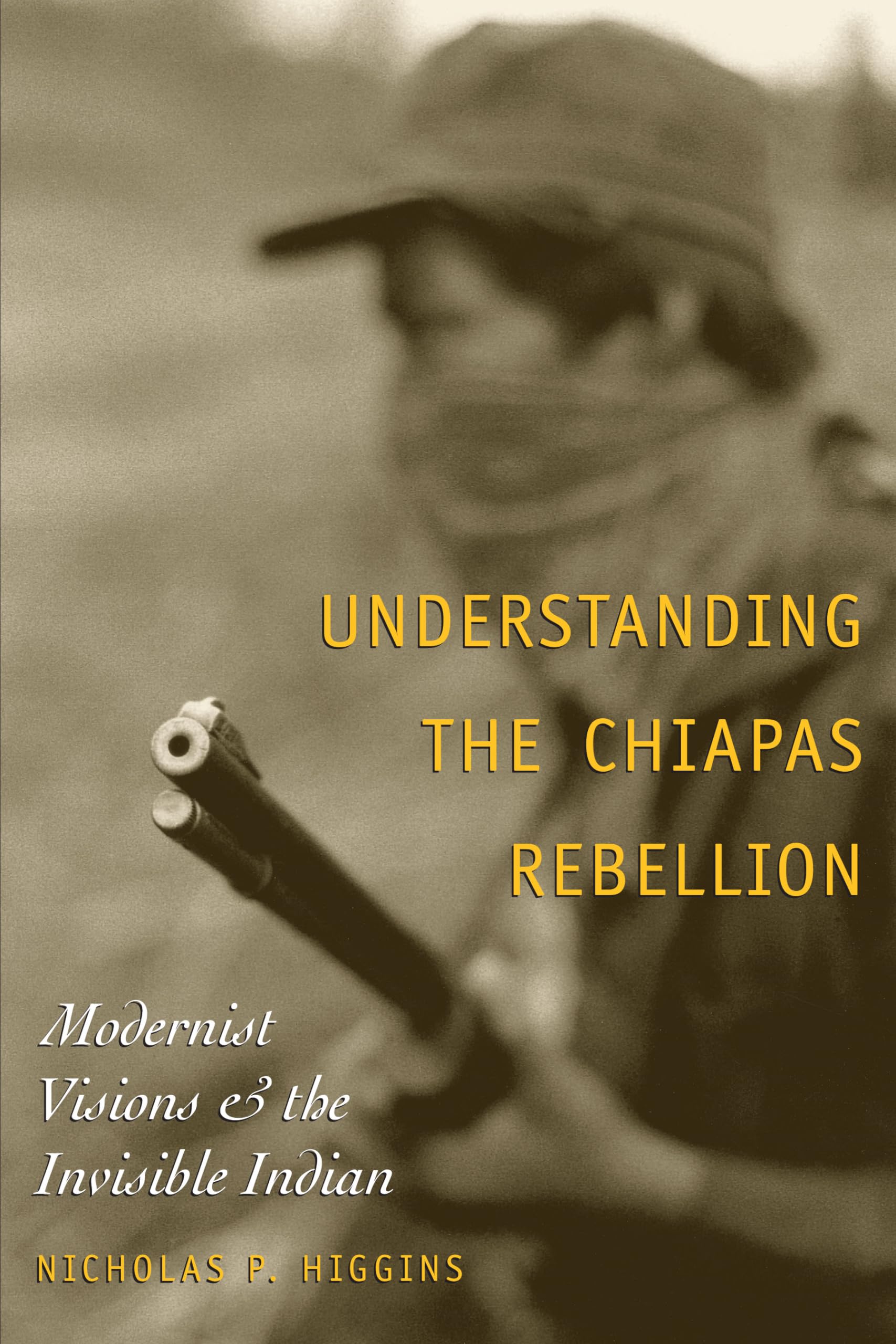
To many observers in the late 1980s and early 1990s, Mexico appeared to be a modern nationstate at last assuming an international role through its participation in NAFTA and the OECD (Organization of Economic Cooperation and Development). Then came the Zapatista revolt on New Year's Day 1994. Wearing ski masks and demanding not power but a new understanding of the indigenous peoples of Mexico, Subcomandante Marcos and his followers launched what may be the first 'post' or 'counter' modern revolution, one that challenges the very concept of the modern nationstate and its vision of a fully assimilated citizenry.This book offers a new way of understanding the Zapatista conflict as a counteraction to the forces of modernity and globalization that have rendered indigenous peoples virtually invisible throughout the world. Placing the conflict within a broad sociopolitical and historical context, Nicholas Higgins traces the relations between Maya Indians and the Mexican state from the conquest to the presentwhich reveals a centurieslong contest over the Maya people's identity and place within Mexico. His incisive analysis of this contest clearly explains how the notions of 'modernity' and even of 'the state' require the assimilation of indigenous peoples. With this understanding, Higgins argues, the Zapatista uprising becomes neither surprising nor unpredictable, but rather the inevitable outcome of a modernizing program that suppressed the identity and aspirations of the Maya peoples.
⚠️ WARNING (California Proposition 65):
This product may contain chemicals known to the State of California to cause cancer,
birth defects, or other reproductive harm.
For MAP (Minimum Advertised Price) violations and Intellectual Property (IP) or Trademark concerns, please contact:
support@ergodebooks.com
⚠️ California Proposition 65 Warning: Some products sold on this website may expose you to chemicals known to the State of California to cause cancer, birth defects, or other reproductive harm. For more information, visit www.P65Warnings.ca.gov.