If you have any questions, you are always welcome to contact us. We'll get back to you as soon as possible, withing 24 hours on weekdays.
Customer service
All questions about your order, return and delivery must be sent to our customer service team by e-mail at yourstore@yourdomain.com
Sale & Press
If you are interested in selling our products, need more information about our brand or wish to make a collaboration, please contact us at press@yourdomain.com
Help
If you have any questions, you are always welcome to contact us. We'll get back to you as soon as possible, withing 24 hours on weekdays.
Customer service
All questions about your order, return and delivery must be sent to our customer service team by e-mail at yourstore@yourdomain.com
Sale & Press
If you are interested in selling our products, need more information about our brand or wish to make a collaboration, please contact us at press@yourdomain.com
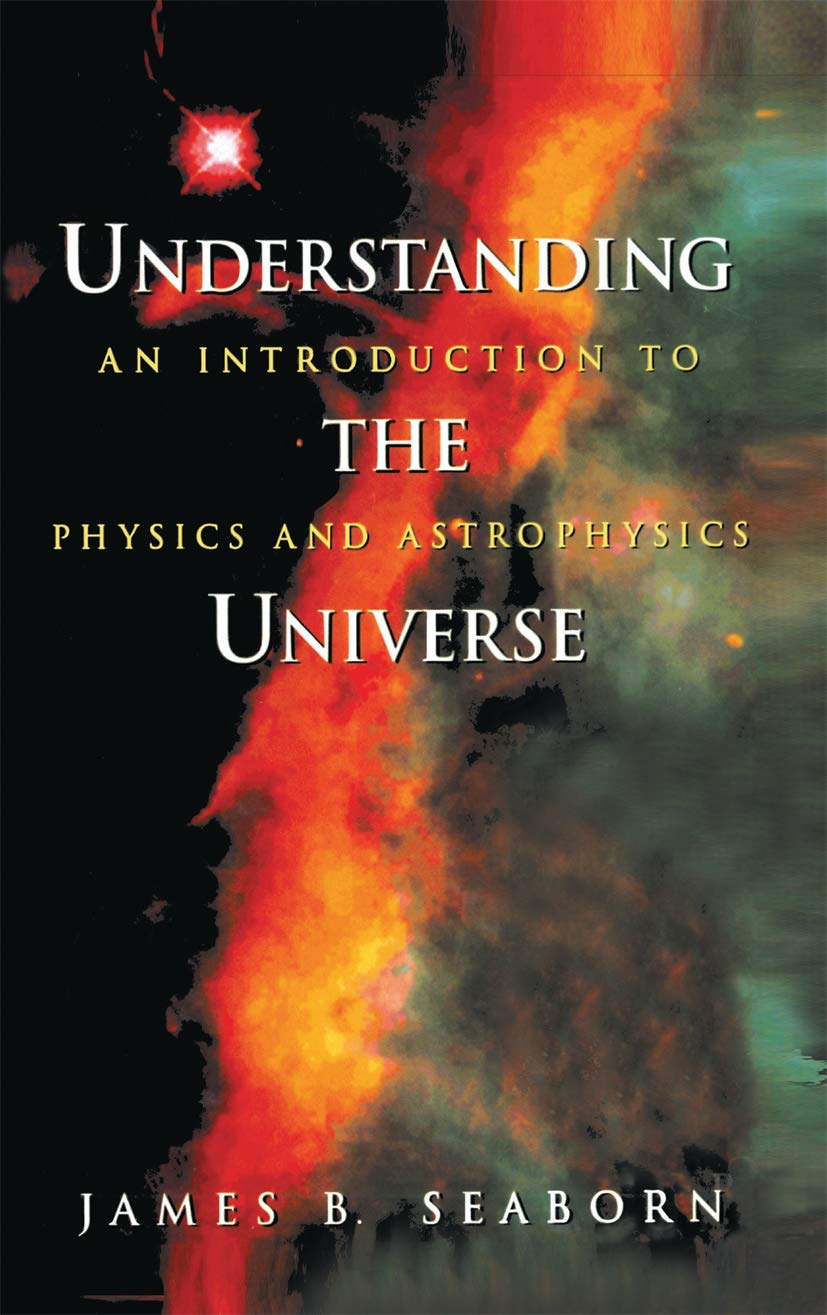
For the last eighteen years, I have been teaching an introductory course in as trophysics. The course is intended for nonscience majors satisfying a general education requirement in natural science. It is a physics course with applications in astronomy. The only prerequisite is the high school mathematics required for ad mission to the university. For a number of years, I used an astronomy text, which I supplemented with lecture notes on physics. There are many good astronomy texts available, but this was not a satisfactory state of affairs, since the course is a physics course. The students needed a physics text that focused on astronomical applications. Over the last few years, I have developed a text which my students have been using in manuscript form in this course. This book is an outgrowth of that effort. The purpose of the book is to develop the physics that describes the behavior of matter here on the earth and use it to try to understand the things that are seen in the heavens. Following a brief discussion of the history of astronomy from the Greeks through the Copernican Revolution, we begin to develop the physics needed to understand three important problems at a level accessible to undergraduate nonscience majors: (1) the solar system, (2) the structure and evolution of stars, and (3) the early universe. All ofthese are related to the fundamental problem of how matter and energy behave in space and time.
⚠️ WARNING (California Proposition 65):
This product may contain chemicals known to the State of California to cause cancer,
birth defects, or other reproductive harm.
For MAP (Minimum Advertised Price) violations and Intellectual Property (IP) or Trademark concerns, please contact:
support@ergodebooks.com
⚠️ California Proposition 65 Warning: Some products sold on this website may expose you to chemicals known to the State of California to cause cancer, birth defects, or other reproductive harm. For more information, visit www.P65Warnings.ca.gov.