
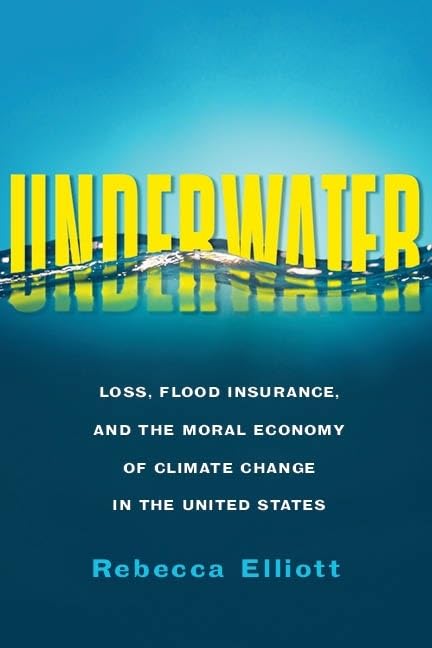
Title
Underwater: Loss, Flood Insurance, and the Moral Economy of Climate Change in the United States (Society and the Environment),New
Sold by Ergodebooks, an authorized reseller.
Returns accepted within 30 days | support@ergodebooks.com
Shipping Information
- Free Standard Shipping — United States only
- Processing Time: 3–5 business days
- Estimated Delivery: 6–10 business days after dispatch
- Double-boxed, fully insured & discreetly packaged
- Tracking number sent via email once dispatched
Returns & Refund
Returns accepted within 30 days of delivery.
Damaged or Defective Item
Free return shipping + replacement or full refund
Wrong Item Received
Free return shipping + replacement or full refund
Change of Mind
Return shipping at customer's expense · 25% restocking fee applies
Payment Option

Communities around the United States face the threat of being underwater. This is not only a matter of rising waters reaching the doorstep. It is also the threat of being financially underwater, owning assets worth less than the money borrowed to obtain them. Many areas around the country may become economically uninhabitable before they become physically unlivable.In Underwater, Rebecca Elliott explores how families, communities, and governments confront problems of loss as the climate changes. She offers the first indepth account of the politics and social effects of the U.S. National Flood Insurance Program (NFIP), which provides flood insurance protection for virtually all homes and small businesses that require it. In doing so, the NFIP turns the risk of flooding into an immediate economic reality, shaping who lives on the waterfront, on what terms, and at what cost.Drawing on archival, interview, ethnographic, and other documentary data, Elliott follows controversies over the NFIP from its establishment in the 1960s to the present, from local backlash over flood maps to Congressional debates over insurance reform. Though flood insurance is often portrayed as a rational solution for managing risk, it has ignited recurring fights over what is fair and valuable, what needs protecting and what should be let go, who deserves assistance and on what terms, and whose expectations of future losses are used to govern the present. An incisive and comprehensive consideration of the fundamental dilemmas of moral economy underlying insurance, Underwater sheds new light on how Americans cope with loss as the water rises.
⚠️ WARNING (California Proposition 65):
This product may contain chemicals known to the State of California to cause cancer, birth defects, or other reproductive harm.
For more information, please visit www.P65Warnings.ca.gov.