If you have any questions, you are always welcome to contact us. We'll get back to you as soon as possible, withing 24 hours on weekdays.
Customer service
All questions about your order, return and delivery must be sent to our customer service team by e-mail at yourstore@yourdomain.com
Sale & Press
If you are interested in selling our products, need more information about our brand or wish to make a collaboration, please contact us at press@yourdomain.com
Help
If you have any questions, you are always welcome to contact us. We'll get back to you as soon as possible, withing 24 hours on weekdays.
Customer service
All questions about your order, return and delivery must be sent to our customer service team by e-mail at yourstore@yourdomain.com
Sale & Press
If you are interested in selling our products, need more information about our brand or wish to make a collaboration, please contact us at press@yourdomain.com
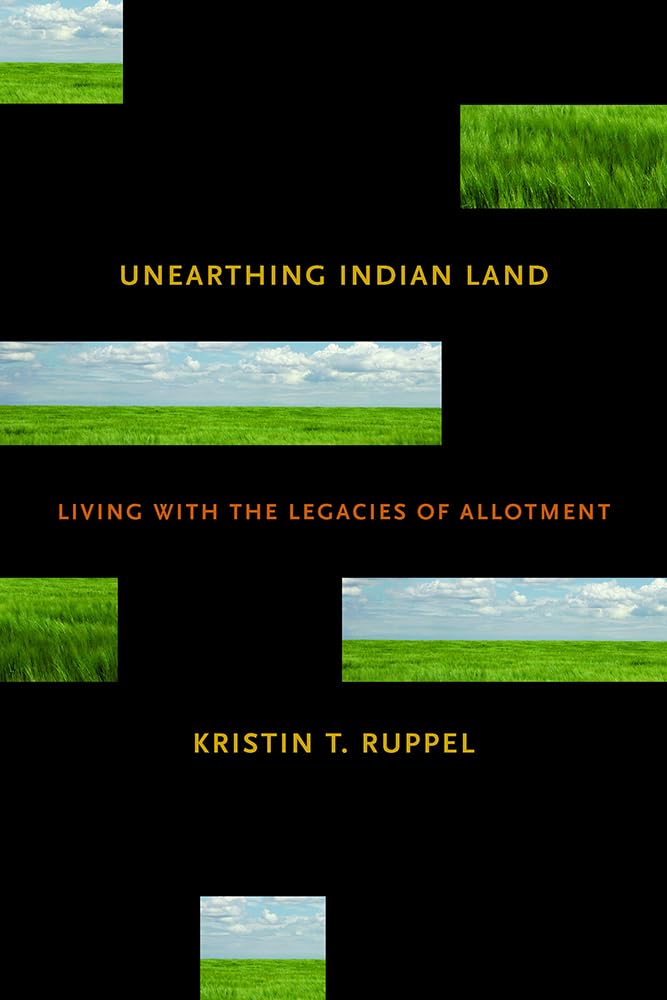
Unearthing Indian Land offers a comprehensive examination of the consequences of more than a century of questionable public policies. In this book, Kristin Ruppel considers the complicated issues surrounding American Indian land ownership in the United States.Under the General Allotment Act of 1887, also known as the Dawes Act,individual Indians were issued title to land allotments while socalled surplusIndian lands were opened to nonIndian settlement. During the fortyseven years that the act remained in effect, American Indians lost an estimated 90 million acres of landabout twothirds of the land they had held in 1887. Worse, the loss of control over the land left to them has remained an ongoing and insidious result.Unearthing Indian Land traces the complex legacies of allotment, including numerous instructive examples of a policy gone wrong. Aside from the initial catastrophic land loss, the fractionated land ownership that resulted from the acts provisions has disrupted native families and their descendants for more than a century. With each new generation, the owners of tribal lands grow in number and therefore own ever smaller interests in parcels of land. It is not uncommon now to find reservation allotments coowned by hundreds of individuals.Coupled with the federal governments troubled trusteeship of Indian assets,this means that Indian landowners have very little control over their own lands.Illuminated by interviews with Native American landholders, this book is essential reading for anyone who is interested in what happened as a result of the federal governments quasiprivatization of native lands.
⚠️ WARNING (California Proposition 65):
This product may contain chemicals known to the State of California to cause cancer,
birth defects, or other reproductive harm.
For MAP (Minimum Advertised Price) violations and Intellectual Property (IP) or Trademark concerns, please contact:
support@ergodebooks.com
⚠️ California Proposition 65 Warning: Some products sold on this website may expose you to chemicals known to the State of California to cause cancer, birth defects, or other reproductive harm. For more information, visit www.P65Warnings.ca.gov.