
Title
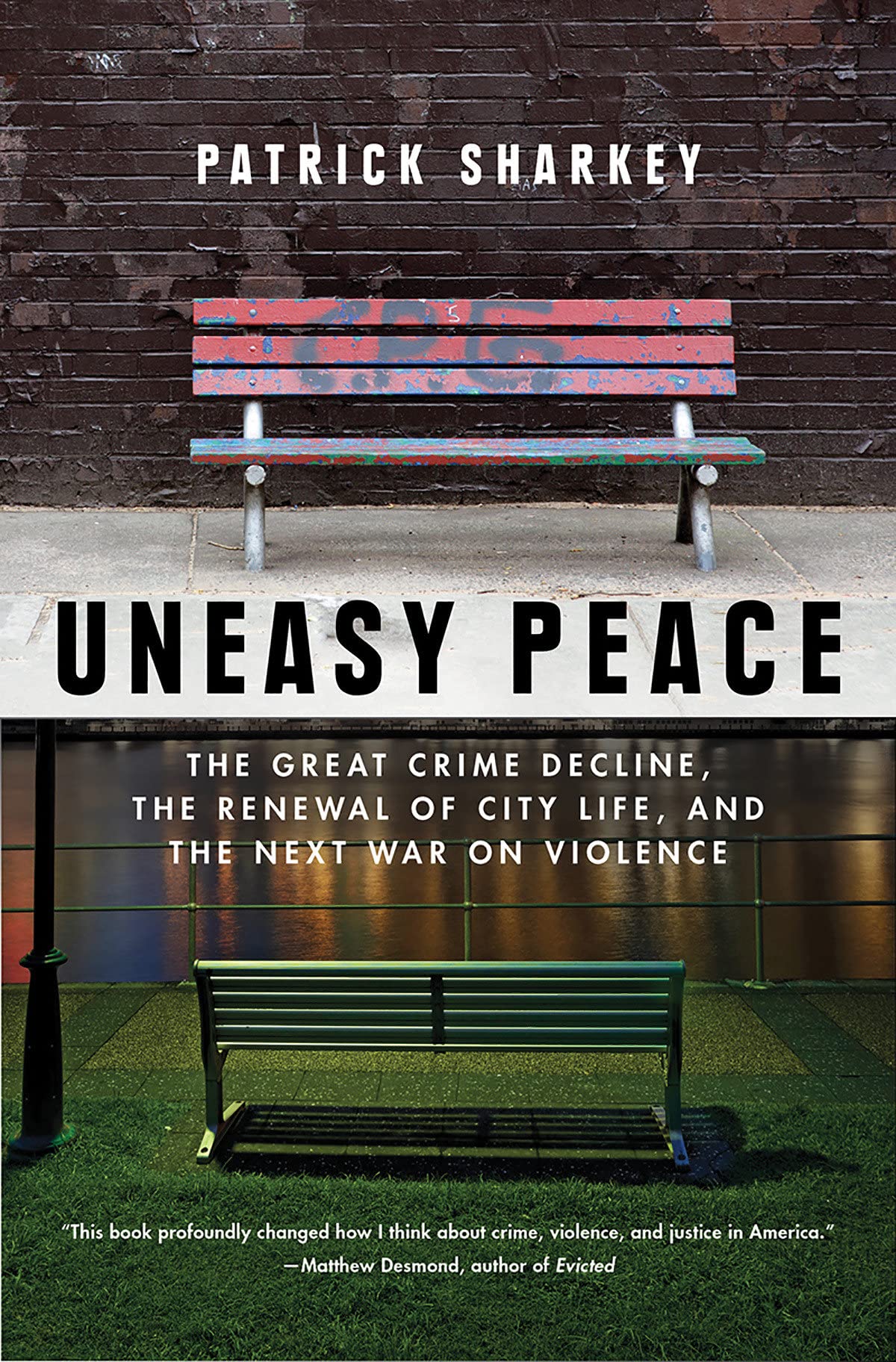
Uneasy Peace: The Great Crime Decline, the Renewal of City Life, and the Next War on Violence,Used
Sold by Ergodebooks, an authorized reseller.
Returns accepted within 30 days | support@ergodebooks.com
Shipping Information
- Free Standard Shipping — United States only
- Processing Time: 3–5 business days
- Estimated Delivery: 6–10 business days after dispatch
- Double-boxed, fully insured & discreetly packaged
- Tracking number sent via email once dispatched
Returns & Refund
Returns accepted within 30 days of delivery.
Damaged or Defective Item
Free return shipping + replacement or full refund
Wrong Item Received
Free return shipping + replacement or full refund
Change of Mind
Return shipping at customer's expense · 25% restocking fee applies
Payment Option

Admirably connects two stories about the criminal legal system that are usually told separately. One is that the country that Americans live in is safer than it has been for a long time. The other story is that for some citizens, especially AfricanAmerican men, the country that they live in is not free. Paul Butler, New York Times Book ReviewFrom the late 90s to the mid2010s, American cities experienced an astonishing drop in violent crime, dramatically changing urban life. In many cases, places once characterized by decay and abandonment are now thriving, the fear of death by gunshot wound replaced by concern about skyrocketing rents.In Uneasy Peace, Patrick Sharkey, the leading young scholar of urban crime and concentrated poverty (Richard Florida, author of The Rise of the Creative Class and The New Urban Crisis) reveals the striking effects: improved school test scores, because children are better able to learn when not traumatized by nearby violence; better chances that poor children will rise into the middle class; and a marked increase in the life expectancy of African American men.Some of the forces that brought about safer streetssuch as the intensive efforts made by local organizations to confront violence in their own communitieshave been positive, Sharkey explains. But the drop in violent crime has also come at the high cost of aggressive policing and mass incarceration. From Harlem to South Los Angeles, Sharkey draws on original data and textured accounts of neighborhoods across the country to document the most successful proven strategies for combating violent crime and to lay out innovative and necessary approaches to the problem of violence. At a time when crime is rising again, the issue of police brutality has taken center stage, and powerful political forces seek to disinvest in cities, the insights in this book are indispensable.
⚠️ WARNING (California Proposition 65):
This product may contain chemicals known to the State of California to cause cancer, birth defects, or other reproductive harm.
For more information, please visit www.P65Warnings.ca.gov.
- Q: What is the main theme of 'Uneasy Peace'? A: 'Uneasy Peace' explores the paradox of declining violent crime in American cities while highlighting the ongoing struggles faced by marginalized communities, particularly African-American men.
- Q: Who is the author of this book? A: The book is authored by Patrick Sharkey, a recognized scholar in urban crime and poverty.
- Q: What is the publication date of 'Uneasy Peace'? A: 'Uneasy Peace' was published on February 5, 2019.
- Q: How many pages does 'Uneasy Peace' have? A: The book contains 272 pages.
- Q: What type of binding does this book have? A: 'Uneasy Peace' is available in paperback binding.
- Q: Is 'Uneasy Peace' suitable for academic study? A: Yes, 'Uneasy Peace' is suitable for academic study, especially in fields such as criminology, sociology, and urban studies.
- Q: What insights does Patrick Sharkey provide in the book? A: Sharkey provides insights on the strategies that led to reduced violent crime and discusses the consequences of aggressive policing and mass incarceration.
- Q: Can this book help understand urban crime trends? A: Yes, 'Uneasy Peace' offers a detailed analysis of urban crime trends and the socio-economic factors influencing them.
- Q: Does the book include statistical data? A: Yes, the book draws on original data to support its findings on crime reduction and its impacts on communities.
- Q: What audience would benefit from reading 'Uneasy Peace'? A: Students, educators, policymakers, and anyone interested in understanding urban crime and community dynamics would benefit from this book.