
Title
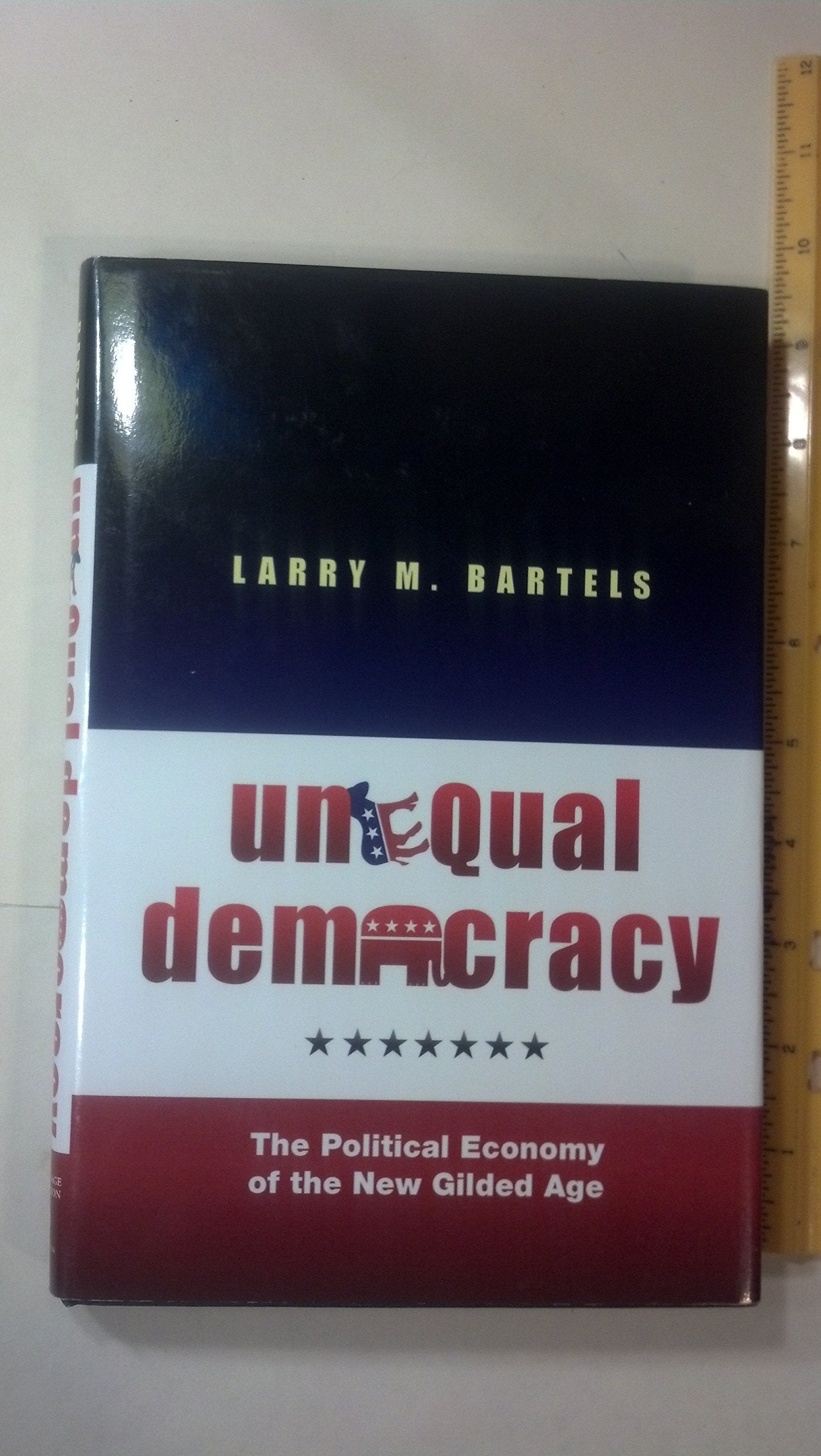
Unequal Democracy: The Political Economy Of The New Gilded Age,Used
Sold by Ergodebooks, an authorized reseller.
Returns accepted within 30 days | support@ergodebooks.com
Shipping Information
- Free Standard Shipping — United States only
- Processing Time: 3–5 business days
- Estimated Delivery: 6–10 business days after dispatch
- Double-boxed, fully insured & discreetly packaged
- Tracking number sent via email once dispatched
Returns & Refund
Returns accepted within 30 days of delivery.
Damaged or Defective Item
Free return shipping + replacement or full refund
Wrong Item Received
Free return shipping + replacement or full refund
Change of Mind
Return shipping at customer's expense · 25% restocking fee applies
Payment Option

Using a vast swath of data spanning the past six decades, Unequal Democracy debunks many myths about politics in contemporary America, using the widening gap between the rich and the poor to shed disturbing light on the workings of American democracy. Larry Bartels shows the gap between the rich and poor has increased greatly under Republican administrations and decreased slightly under Democrats, leaving America grossly unequal. This is not simply the result of economic forces, but the product of broadreaching policy choices in a political system dominated by partisan ideologies and the interests of the wealthy.Bartels demonstrates that elected officials respond to the views of affluent constituents but ignore the views of poor people. He shows that Republican presidents in particular have consistently produced much less income growth for middleclass and workingpoor families than for affluent families, greatly increasing inequality. He provides revealing case studies of key policy shifts contributing to inequality, including the massive Bush tax cuts of 2001 and 2003 and the erosion of the minimum wage. Finally, he challenges conventional explanations for why many voters seem to vote against their own economic interests, contending that workingclass voters have not been lured into the Republican camp by 'values issues' like abortion and gay marriage, as commonly believed, but that Republican presidents have been remarkably successful in timing income growth to cater to shortsighted voters.Unequal Democracy is social science at its very best. It provides a deep and searching analysis of the political causes and consequences of America's growing income gap, and a sobering assessment of the capacity of the American political system to live up to its democratic ideals.
⚠️ WARNING (California Proposition 65):
This product may contain chemicals known to the State of California to cause cancer, birth defects, or other reproductive harm.
For more information, please visit www.P65Warnings.ca.gov.