If you have any questions, you are always welcome to contact us. We'll get back to you as soon as possible, withing 24 hours on weekdays.
Customer service
All questions about your order, return and delivery must be sent to our customer service team by e-mail at yourstore@yourdomain.com
Sale & Press
If you are interested in selling our products, need more information about our brand or wish to make a collaboration, please contact us at press@yourdomain.com
Help
If you have any questions, you are always welcome to contact us. We'll get back to you as soon as possible, withing 24 hours on weekdays.
Customer service
All questions about your order, return and delivery must be sent to our customer service team by e-mail at yourstore@yourdomain.com
Sale & Press
If you are interested in selling our products, need more information about our brand or wish to make a collaboration, please contact us at press@yourdomain.com
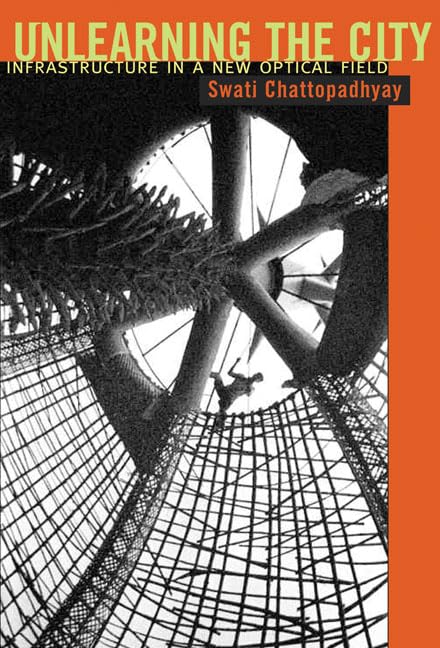
Cities are more than concrete and steel infrastructure. But modern urban theory does not have the language to describe and debate the vital component of urban life that is lived on the streets of cities and towns. Swati Chattopadhyay has written a nuanced argument for a new vocabulary of the city in Unlearning the City, proposing a way of analyzing the materiality of the urban that captures the everchanging element of human experience.Urban life is intrinsically messy and usually refuses to conform to the rigid views laid down in much of urban studies theory. Chattopadhyay looks at urban life in India with a fresh perspective that incorporates the everyday and the unstructured. As the first to apply the theories of subalternity for an understanding of urban history, Chattopadhyay provides an indepth study of vehicular art, street cricket, political wall writing, and religious festivities that link the visual and spatial attributes of these popular cultural forms with the imagination and practices of urban life. She contends that these practices have a direct impact on the configuration and knowledge of public space, and the political potential of the people inhabiting cities.Unlearning the City uses the popular culture of Indian cities to question the dominant conception of urban infrastructure and encourage a conceptual realignment in how the city is seen, discussed, and even experienced.
⚠️ WARNING (California Proposition 65):
This product may contain chemicals known to the State of California to cause cancer,
birth defects, or other reproductive harm.
For MAP (Minimum Advertised Price) violations and Intellectual Property (IP) or Trademark concerns, please contact:
support@ergodebooks.com
⚠️ California Proposition 65 Warning: Some products sold on this website may expose you to chemicals known to the State of California to cause cancer, birth defects, or other reproductive harm. For more information, visit www.P65Warnings.ca.gov.