If you have any questions, you are always welcome to contact us. We'll get back to you as soon as possible, withing 24 hours on weekdays.
Customer service
All questions about your order, return and delivery must be sent to our customer service team by e-mail at yourstore@yourdomain.com
Sale & Press
If you are interested in selling our products, need more information about our brand or wish to make a collaboration, please contact us at press@yourdomain.com
Help
If you have any questions, you are always welcome to contact us. We'll get back to you as soon as possible, withing 24 hours on weekdays.
Customer service
All questions about your order, return and delivery must be sent to our customer service team by e-mail at yourstore@yourdomain.com
Sale & Press
If you are interested in selling our products, need more information about our brand or wish to make a collaboration, please contact us at press@yourdomain.com
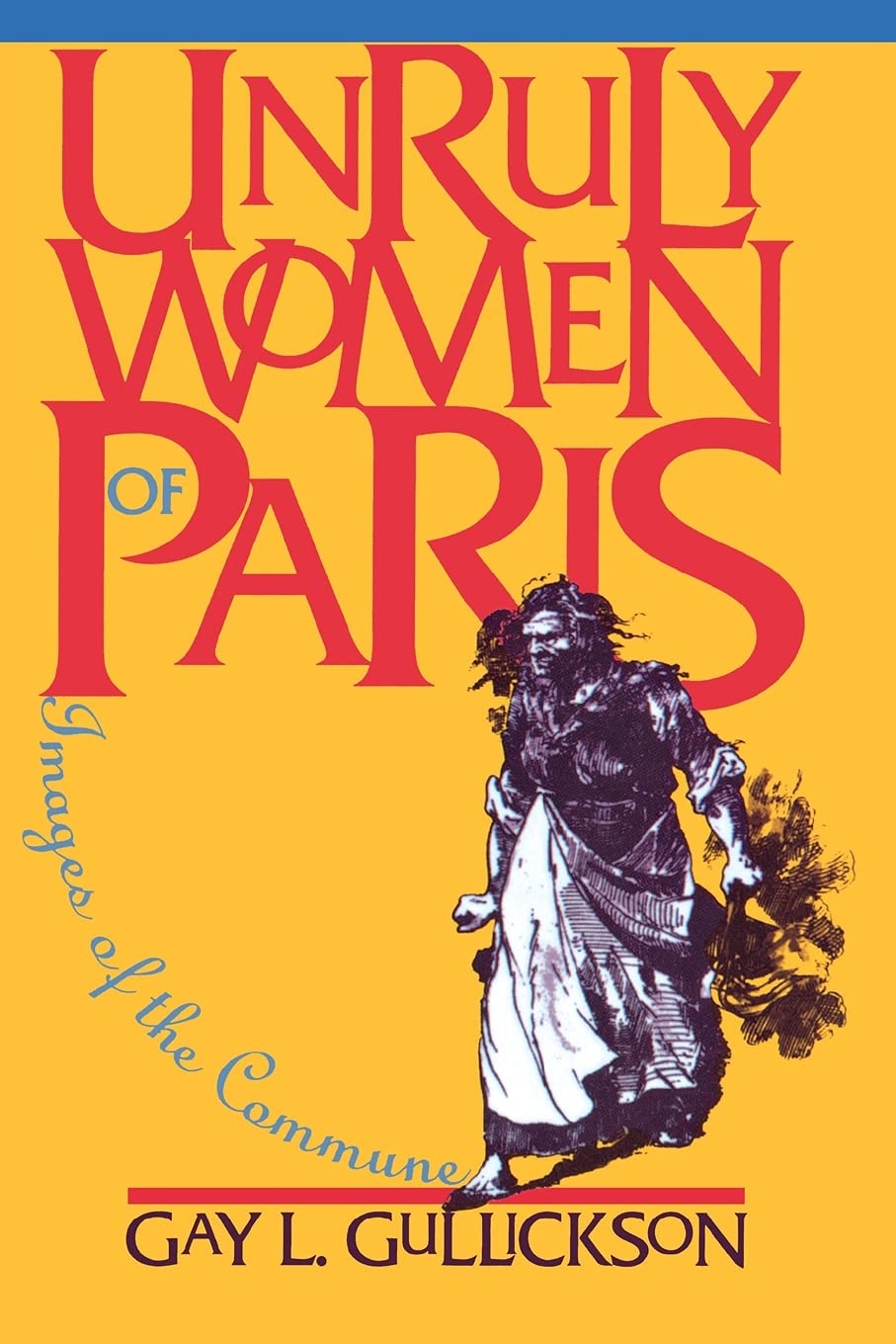
In this vividly written and amply illustrated book, Gay L. Gullickson analyzes the representations of women who were part of the insurrection known as the Paris Commune. The uprising and its bloody suppression by the French army is still one of the most hotly debated episodes in modern history. Especially controversial was the role played by women, whose prominent place among the Communards shocked many commentators and spawned the legend of the ptroleuses, women who were accused of burning the city during the battle that ended the Commune.In the midst of the turmoil that shook Paris, the media distinguished women for their cruelty and rage. The ParisJournal, for example, raved: 'Madness seems to possess them; one sees them, their hair down like furies, throwing boiling oil, furniture, paving stones, on the soldiers.' Gullickson explores the significance of the images created by journalists, memoirists, and political commentators, and elaborated by latterday historians and political thinkers. The ptroleuse is the most notorious figure to emerge from the Commune, but the literature depicts the Communardes in other guises, too: the innocent victim, the scandalous orator, the Amazon warrior, and the ministering angel, among others.Gullickson argues that these caricatures played an important role in conveying and evoking moral condemnation of the Commune. More important, they reveal the gender conceptualizations that structured, limited, and assigned meaning to women as political actors for the balance of the nineteenth and well into the twentieth century.
⚠️ WARNING (California Proposition 65):
This product may contain chemicals known to the State of California to cause cancer,
birth defects, or other reproductive harm.
For MAP (Minimum Advertised Price) violations and Intellectual Property (IP) or Trademark concerns, please contact:
support@ergodebooks.com
⚠️ California Proposition 65 Warning: Some products sold on this website may expose you to chemicals known to the State of California to cause cancer, birth defects, or other reproductive harm. For more information, visit www.P65Warnings.ca.gov.