
Title
Untimely Bollywood: Globalization And India'S New Media Assemblage,Used
Sold by Ergodebooks, an authorized reseller.
Returns accepted within 30 days | support@ergodebooks.com
Shipping Information
- Free Standard Shipping — United States only
- Processing Time: 3–5 business days
- Estimated Delivery: 6–10 business days after dispatch
- Double-boxed, fully insured & discreetly packaged
- Tracking number sent via email once dispatched
Returns & Refund
Returns accepted within 30 days of delivery.
Damaged or Defective Item
Free return shipping + replacement or full refund
Wrong Item Received
Free return shipping + replacement or full refund
Change of Mind
Return shipping at customer's expense · 25% restocking fee applies
Payment Option

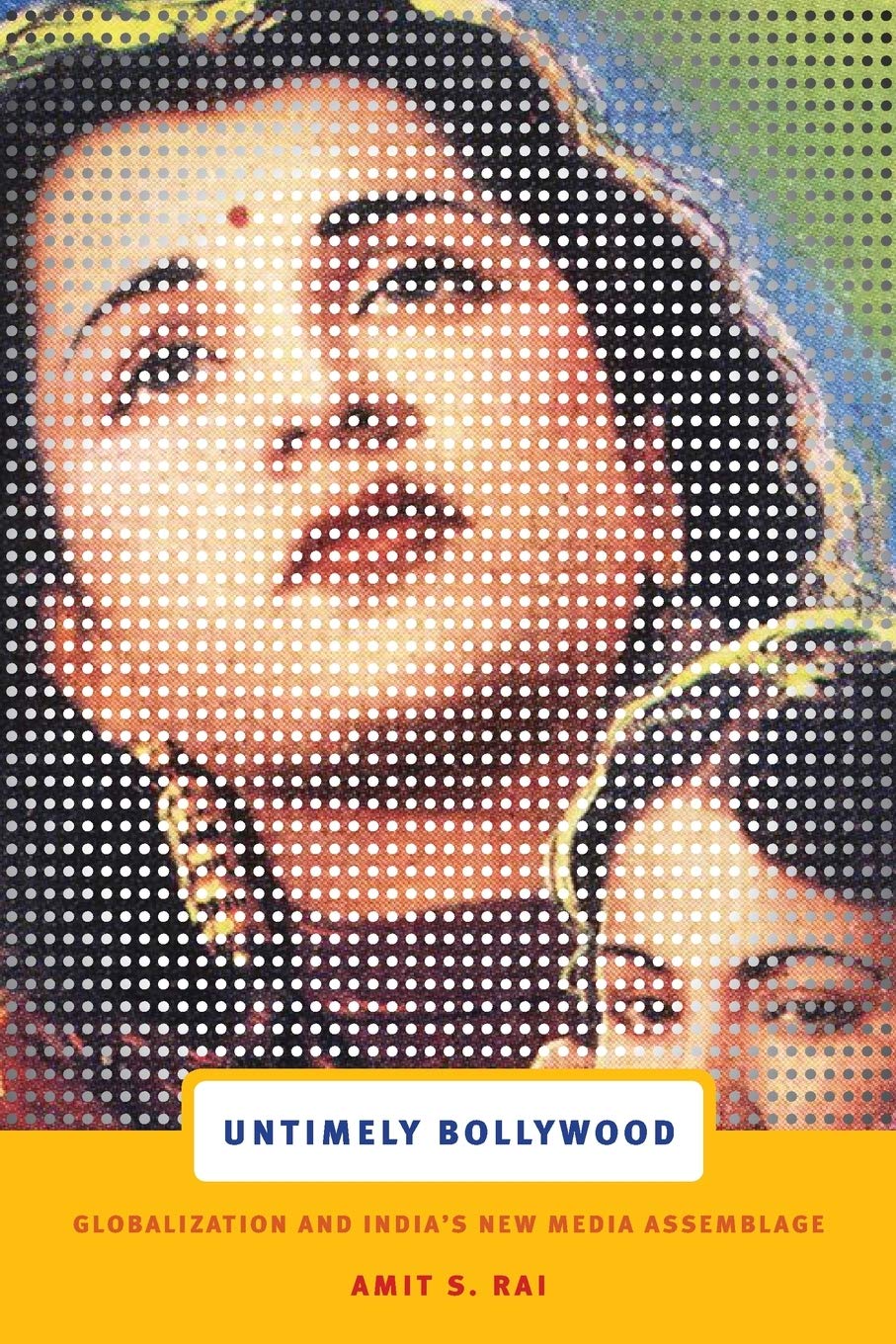
Known for its elaborate spectacle of music, dance, costumes, and fantastical story lines, Bollywood cinema is a genre that foregrounds narrative rupture, indeterminacy, and bodily sensation. In Untimely Bollywood, Amit S. Rai argues that the fastpaced, multivalent qualities of contemporary Bollywood cinema are emblematic of the changing conditions of media consumption in a globalizing India. Through analyses of contemporary media practices, Rai shifts the emphasis from a representational and linear understanding of the effects of audiovisual media to the multiple, contradictory, and evolving aspects of media events. He uses the Deleuzian concept of assemblage as a model for understanding the complex clustering of technological, historical, and physical processes that give rise to contemporary media practices. Exploring the ramifications of globalized media, he sheds light on how cinema and other popular media organize bodies, populations, and spaces in order to manage the risky excesses of power and sensation and to reinforce a liberalized postcolonial economy.Rai recounts his experience of attending the first showing of a Bollywood film in a singlescreen theater in Bhopal: the sensory experience of the exhibition space, the sound system, the visual style of the film, the crush of the crowd. From that event, he elicits an understanding of cinema as a historically contingent experience of pleasure, a place where the boundaries of identity and social spaces are dissolved and redrawn. He considers media as a form of contagion, endlessly mutating and spreading, connecting human bodies, organizational structures, and energies, thus creating an inextricable bond between affect and capital. Expanding on the notion of media contagion, Rai traces the emerging correlation between the postcolonial media assemblage and capitalist practices, such as viral marketing and the development of multiplexes and malls in India.
⚠️ WARNING (California Proposition 65):
This product may contain chemicals known to the State of California to cause cancer, birth defects, or other reproductive harm.
For more information, please visit www.P65Warnings.ca.gov.