
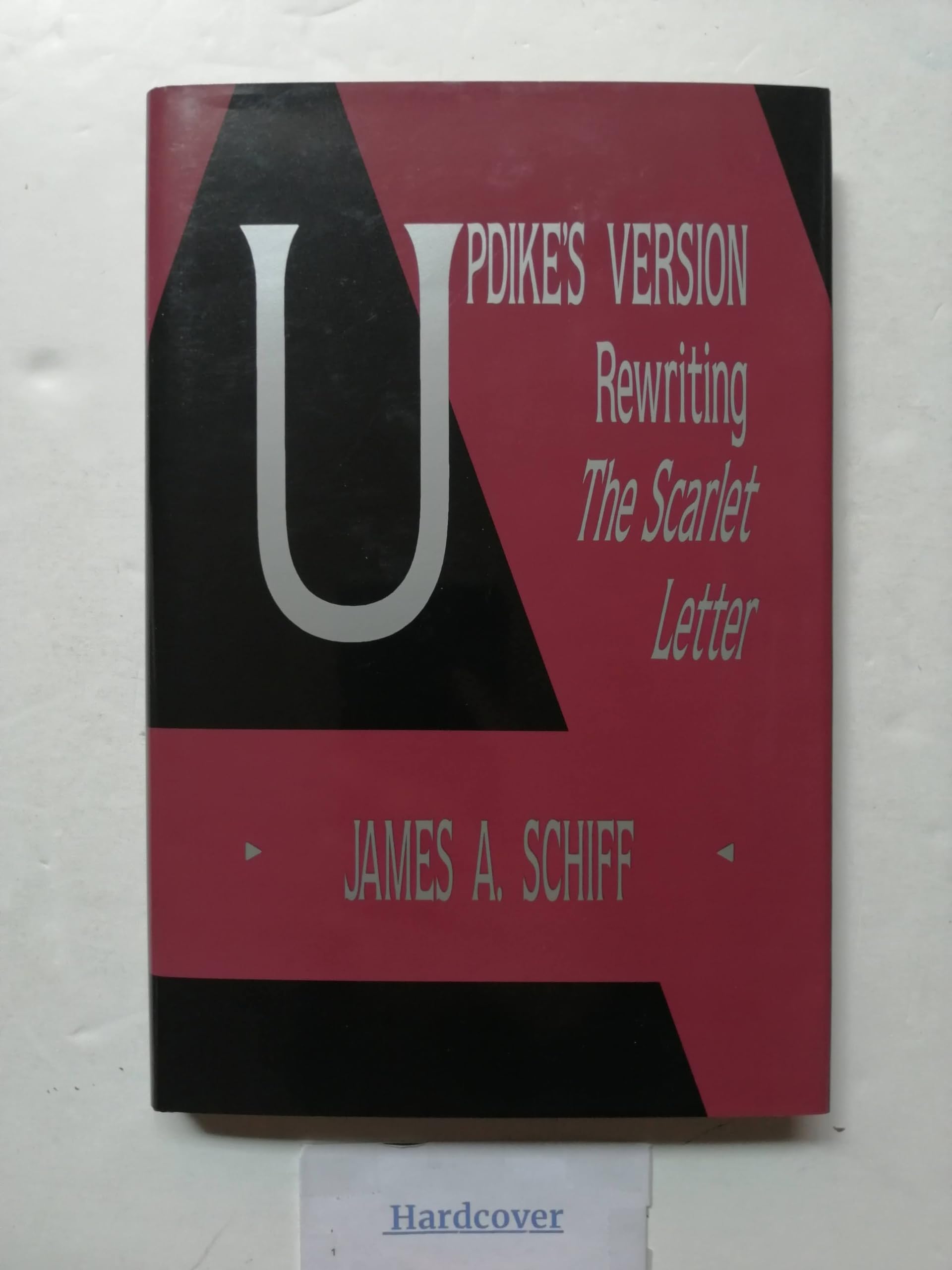
Title
Updike'S Version: Rewriting The Scarlet Letter (Volume 1)
Sold by Ergodebooks, an authorized reseller.
Returns accepted within 30 days | support@ergodebooks.com
Shipping Information
- Free Standard Shipping — United States only
- Processing Time: 3–5 business days
- Estimated Delivery: 6–10 business days after dispatch
- Double-boxed, fully insured & discreetly packaged
- Tracking number sent via email once dispatched
Returns & Refund
Returns accepted within 30 days of delivery.
Damaged or Defective Item
Free return shipping + replacement or full refund
Wrong Item Received
Free return shipping + replacement or full refund
Change of Mind
Return shipping at customer's expense · 25% restocking fee applies
Payment Option

Although Many Readers Are Aware Of John Updike'S Rabbit Tetralogy, Fewer Have Paid Close Attention To His Other Multivolume Work, The Scarlet Letter Trilogy. In Updike'Sversion, James Schiff Provides The First Fulllength Critical Analysis Of Updike'S Trilogy Since The Publication Of Its Final Volume In 1988. He Demonstrates How Hawthorne'S Classic Novel Of Adulterous Love And Divided Selves Has Become An American Myth, And How Updike, In His Trilogy, Has Sought To Expand, Update, And Satirize That Myth. The Three Volumes That Make Up The Trilogy, A Month Of Sundays (1975), Roger'S Version (1986), And S. (1988), Engage In A Dialogue With Hawthorne'S Novel, Commenting Upon And Altering The Original Story. To Understand The Nature Of This Dialogue, Schiff Employs A Methodolgy Specifically Suited To Updike'S Mythical Method, In Which Special Attention Is Given To Reader Expectation, Parody, Point Of View, And Principles Of Fragmentation And Condensation.Updike'S Version Covers New Ground In Updike'S Studies, Revealing How The Intertextual Dialogue Between Updike And Hawthorne Is Far More Complex And Extensive Than Has Yet Been Acknowledged. Providing Close And Detailed Readings Of The Novels, Updike'S Version Will Be Of Major Importance To Students And Scholars Of John Updike, Nathaniel Hawthorne'S Canonical American Text, And American Literature In General.
⚠️ WARNING (California Proposition 65):
This product may contain chemicals known to the State of California to cause cancer, birth defects, or other reproductive harm.
For more information, please visit www.P65Warnings.ca.gov.
- Q: What is the main theme of 'Updike's Version: Rewriting the Scarlet Letter'? A: 'Updike's Version' explores the intertextual dialogue between John Updike's trilogy and Nathaniel Hawthorne's original 'The Scarlet Letter', focusing on themes of adulterous love and the complexities of identity.
- Q: Who is the author of 'Updike's Version'? A: The book is authored by James A. Schiff, who provides a critical analysis of Updike's trilogy.
- Q: What type of book is 'Updike's Version'? A: 'Updike's Version' is a hardcover book categorized under Criticism & Theory, providing a detailed literary analysis.
- Q: How many pages does 'Updike's Version' have? A: 'Updike's Version' consists of 160 pages.
- Q: When was 'Updike's Version' published? A: 'Updike's Version' was published on December 1, 1992.
- Q: What condition is the book in? A: 'Updike's Version' is available as a used book in good condition.
- Q: What is the significance of Updike's trilogy in American literature? A: Updike's trilogy is significant for its complex engagement with Hawthorne's 'The Scarlet Letter', contributing to the understanding of American myths and literary dialogue.
- Q: Does 'Updike's Version' provide detailed readings of the novels? A: Yes, the book includes close and detailed readings of Updike's trilogy, offering insights into the dialogue with Hawthorne's work.
- Q: Is 'Updike's Version' suitable for students of literature? A: Yes, 'Updike's Version' is of major importance to students and scholars of both John Updike and American literature.
- Q: What methodology does James Schiff use in 'Updike's Version'? A: Schiff employs a methodology that focuses on reader expectation, parody, point of view, and fragmentation to analyze Updike's works.