
Title
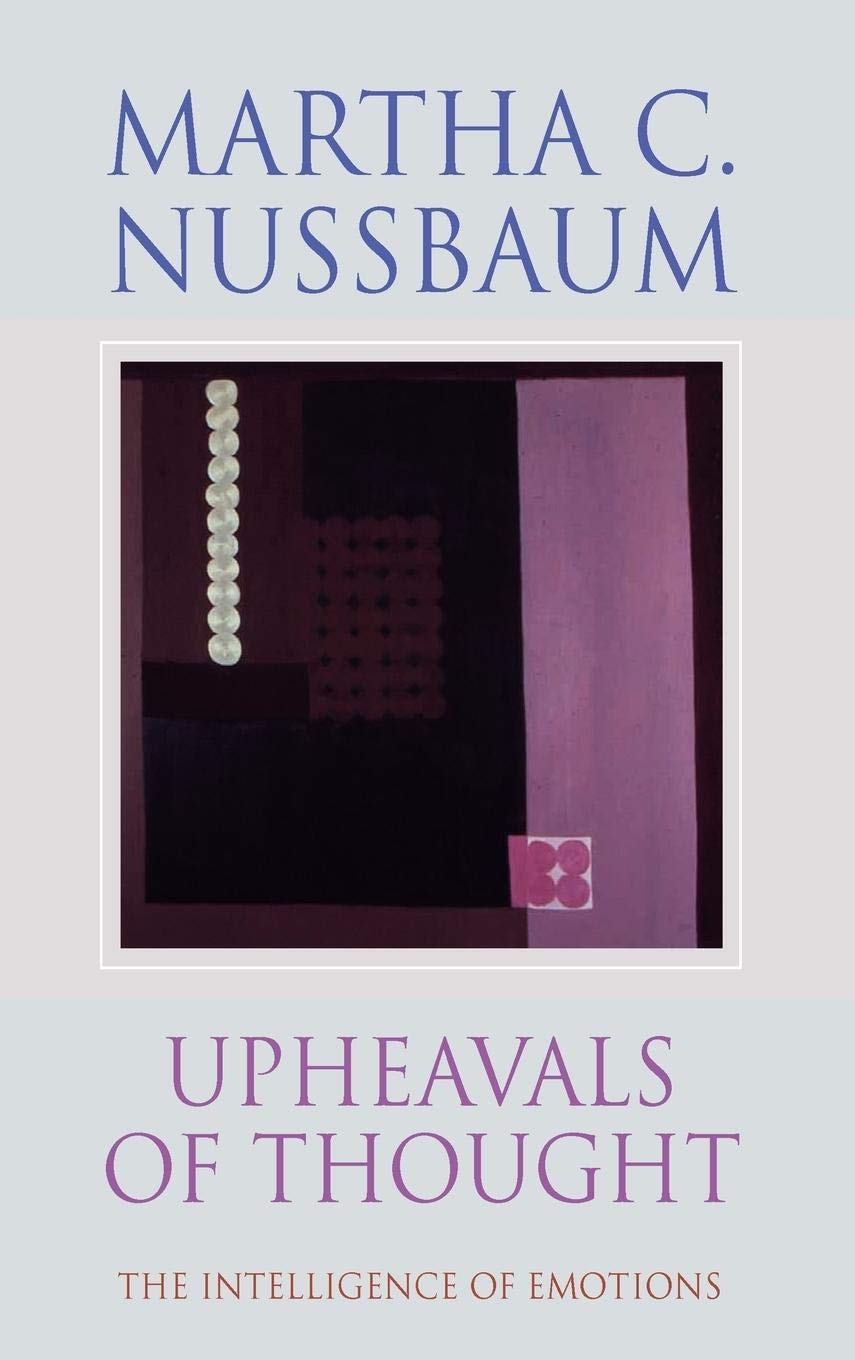
Upheavals Of Thought: The Intelligence Of Emotions
Sold by Ergodebooks, an authorized reseller.
Returns accepted within 30 days | support@ergodebooks.com
Shipping Information
- Free Standard Shipping — United States only
- Processing Time: 3–5 business days
- Estimated Delivery: 6–10 business days after dispatch
- Double-boxed, fully insured & discreetly packaged
- Tracking number sent via email once dispatched
Returns & Refund
Returns accepted within 30 days of delivery.
Damaged or Defective Item
Free return shipping + replacement or full refund
Wrong Item Received
Free return shipping + replacement or full refund
Change of Mind
Return shipping at customer's expense · 25% restocking fee applies
Payment Option

What Is It To Grieve For The Death Of A Parent? More Literary And Experiential Than Other Philosopical Works On Emotion, Upheavals Of Thought Will Engage The Reader Who Has Ever Stopped To Ask That Question. Emotions Such As Grief, Fear, Anger And Love Seem To Be Alien Forces That Disturb Our Thoughts And Plans. Yet They Also Embody Some Of Our Deepest Thoughtsabout The Importance Of The People We Love, About The Vulnerability Of Our Bodies And Our Plans To Events Beyond Our Control. In This Wideranging Book, Based On Her Gifford Lectures, Philosopher Martha Nussbaum Draws On Philosophy, Psychology, Anthropology, Music And Literature To Illuminate The Role Emotions Play In Our Thoughts About Important Goals. Starting With An Account Of Her Own Mother'S Death, She Argues That Emotions Are Intelligent Appraisals Of A World That We Do Not Control, In The Light Of Our Own Most Significant Goals And Plans. She Then Investigates The Implications Of This Idea For Normative Issues, Analyzing The Role Of Compassion In Private And Public Reasoning And The Attempts Of Authors Both Philosophical And Literary To Purify Or Reform The Emotion Of Erotic Love. Ultimately, She Illuminates The Structure Of Emotions And Argues That Once We Understand The Complex Intelligence Of Emotions We Will Also Have New Reasons To Value Works Of Literature As Sources Of Ethical Education. Martha C. Nussbaum Is Ernst Freund Distinguished Service Professor Of Law And Ethics, University Of Chicago, Appointed In Law School, Philosophy Department, And Divinity School, And An Associate In Classics. A Leading Scholar In Ancient Greek Ethics, Aesthetics And Literature, Her Previous Books Include The Fragility Of Goodness (Cambridge, 1986), Loves'S Knowledge (Oxford, 1992), Poetic Justice (Beacon Press, 1997), The Therapy Of Desire (Princeton, 1996), Cultivating Humanity (Harvard, 1997), And Sex And Social Justice (Oxford, 1999). Her Reviews Have Appeared In The New York Times, Boston Globe, New York Review Of Books, And New Republic.
⚠️ WARNING (California Proposition 65):
This product may contain chemicals known to the State of California to cause cancer, birth defects, or other reproductive harm.
For more information, please visit www.P65Warnings.ca.gov.
- Q: What are the dimensions of 'Upheavals of Thought'? A: The book measures six inches in length, two point zero one inches in width, and nine point twenty-five inches in height. These dimensions make it a standard-sized hardcover book.
- Q: How many pages does the book contain? A: The book contains seven hundred sixty-eight pages. This extensive length allows for a comprehensive exploration of emotions and their implications.
- Q: What type of binding does 'Upheavals of Thought' have? A: This book is bound in hardcover. The hardcover binding offers durability and protection for the pages.
- Q: How should I read 'Upheavals of Thought'? A: You can read this book at your own pace, as it is suitable for anyone interested in philosophy and emotions. It is particularly beneficial for readers looking to deepen their understanding of emotional intelligence.
- Q: Is 'Upheavals of Thought' suitable for beginners in philosophy? A: Yes, it is suitable for beginners. The author, Martha Nussbaum, presents complex ideas in an accessible manner, making it a good starting point.
- Q: What themes are explored in 'Upheavals of Thought'? A: The book explores themes such as grief, love, and ethical education. It delves into how emotions influence our thoughts and decisions.
- Q: How should I care for my hardcover book? A: To keep your hardcover book in good condition, store it upright in a cool, dry place. Avoid exposing it to direct sunlight to prevent fading.
- Q: Can I clean the pages of 'Upheavals of Thought'? A: No, you should avoid cleaning the pages directly. Instead, maintain cleanliness by keeping the book closed when not in use and handling it with clean hands.
- Q: Is this book safe for children? A: While there are no explicit adult themes, the philosophical content may not be suitable for younger children. It is more appropriate for mature readers.
- Q: What if my book arrives damaged? A: If your book arrives damaged, you should contact the seller or retailer for a return or exchange. Most retailers have a customer service policy for such issues.
- Q: Does 'Upheavals of Thought' come with a warranty? A: No, books typically do not come with a warranty. However, check the return policy of the retailer for any specific guarantees.
- Q: How can I find more works by Martha Nussbaum? A: You can find more works by Martha Nussbaum by searching online bookstores or libraries. She has authored several influential books on ethics and emotions.
- Q: Is there a specific edition of 'Upheavals of Thought' I should look for? A: You should look for the hardcover edition published by Cambridge University Press. This is the recommended edition for its quality.
- Q: What makes 'Upheavals of Thought' unique? A: The book is unique because it combines philosophy with insights from psychology, literature, and music to explore the intelligence of emotions.
- Q: How does 'Upheavals of Thought' relate to ethical education? A: The book argues that understanding emotions provides new reasons to value literature as sources of ethical education, emphasizing the role of compassion.