
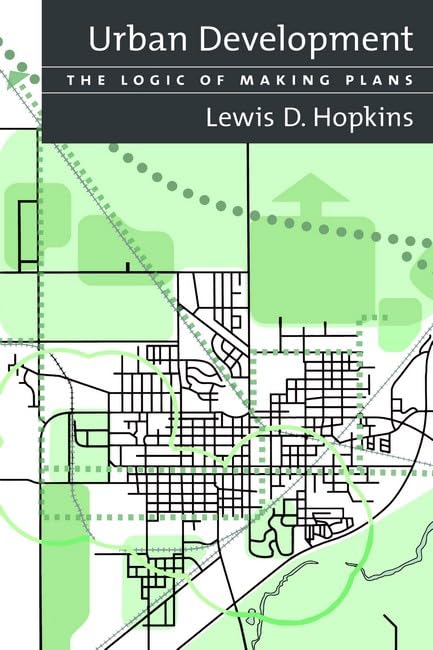
Title
Urban Development: The Logic Of Making Plans,New
Sold by Ergodebooks, an authorized reseller.
Returns accepted within 30 days | support@ergodebooks.com
Shipping Information
- Free Standard Shipping — United States only
- Processing Time: 3–5 business days
- Estimated Delivery: 6–10 business days after dispatch
- Double-boxed, fully insured & discreetly packaged
- Tracking number sent via email once dispatched
Returns & Refund
Returns accepted within 30 days of delivery.
Damaged or Defective Item
Free return shipping + replacement or full refund
Wrong Item Received
Free return shipping + replacement or full refund
Change of Mind
Return shipping at customer's expense · 25% restocking fee applies
Payment Option

With increased awareness of the role of plans in shaping urban and suburban landscapes has come increased criticism of planners and the planning profession. Developers, politicians, and citizens alike blame 'poor planning' for a host of community ills. But what are plans really supposed to do? How do they work? What problems can they successfully address, and what is beyond their scope? In Urban Development, leading planning scholar Lewis Hopkins tackles these thorny issues as he explains the logic of plans for urban development and justifies prescriptions about when and how to make them. He explores the concepts behind plans, some that are widely accepted but seldom examined, and others that modify conventional wisdom about the use and usefulness of plans. The book: places the role of plans and planners within the complex system of urban development offers examples from the history of plans and planning discusses when plans should be made (and when they should not be made) gives a realistic idea of what can be expected from plans examines ways of gauging the success or failure of plansThe author supports his explanations with graphics, case examples, and hypothetical illustrations that enliven, clarify, and make concrete the discussions of how decisions about plans are and should be made.Urban Development will give all those involved with planning human settlements a more thorough understanding of why and how plans are made, enabling them to make better choices about using and making plans. It is an important contribution that will be essential for students and faculty in planning theory, land use planning, and planning project courses.
⚠️ WARNING (California Proposition 65):
This product may contain chemicals known to the State of California to cause cancer, birth defects, or other reproductive harm.
For more information, please visit www.P65Warnings.ca.gov.
- Q: How many pages does the book have? A: This book has three hundred twelve pages. It's a comprehensive read that covers various aspects of urban development.
- Q: What is the binding type of this book? A: The binding type is paperback. This makes it lightweight and easy to handle.
- Q: What are the dimensions of the book? A: The book measures six inches in length, nine inches in height, and is zero point nine inches thick. These dimensions make it portable for easy reading.
- Q: Who is the author of this book? A: The author is Lewis D. Hopkins. He is a leading scholar in the field of planning.
- Q: What genre does this book belong to? A: This book belongs to the Landscape and Urban Development genre. It focuses on planning for human settlements.
- Q: How can I use this book in my studies? A: You can use this book as a foundational text in planning theory and land use courses. It provides insights into making effective urban plans.
- Q: Is this book suitable for beginners in urban planning? A: Yes, this book is suitable for beginners. It explains complex concepts in a clear and accessible manner.
- Q: What topics does the book cover? A: The book covers the logic of plans, the role of planners, and the evaluation of planning success. It provides a thorough understanding of urban development.
- Q: Can this book be used for academic courses? A: Yes, this book is essential for academic courses. It's particularly useful for students and faculty in planning and project courses.
- Q: How should I store this book to keep it in good condition? A: Store the book in a cool, dry place away from direct sunlight. Keep it on a shelf to prevent bending or damage.
- Q: Is there any special care required for this book? A: No special care is required. Just avoid exposing it to moisture to prevent damage.
- Q: What should I do if the book arrives damaged? A: If the book arrives damaged, contact the seller for a return or exchange. Most sellers have policies in place for such issues.
- Q: Can I return the book if I don't like it? A: Yes, you can return the book if it is within the seller's return policy period. Check the specific return guidelines for details.
- Q: How can I ensure I get the latest edition of this book? A: To ensure you get the latest edition, purchase from reputable retailers and check for the publication date listed in the product details.
- Q: Are there any illustrations in this book? A: Yes, the book includes graphics and hypothetical illustrations. These enhance understanding of the planning concepts discussed.
- Q: Does this book cover historical examples of urban planning? A: Yes, it discusses historical examples of plans and planning practices. This provides context to the theories presented.