
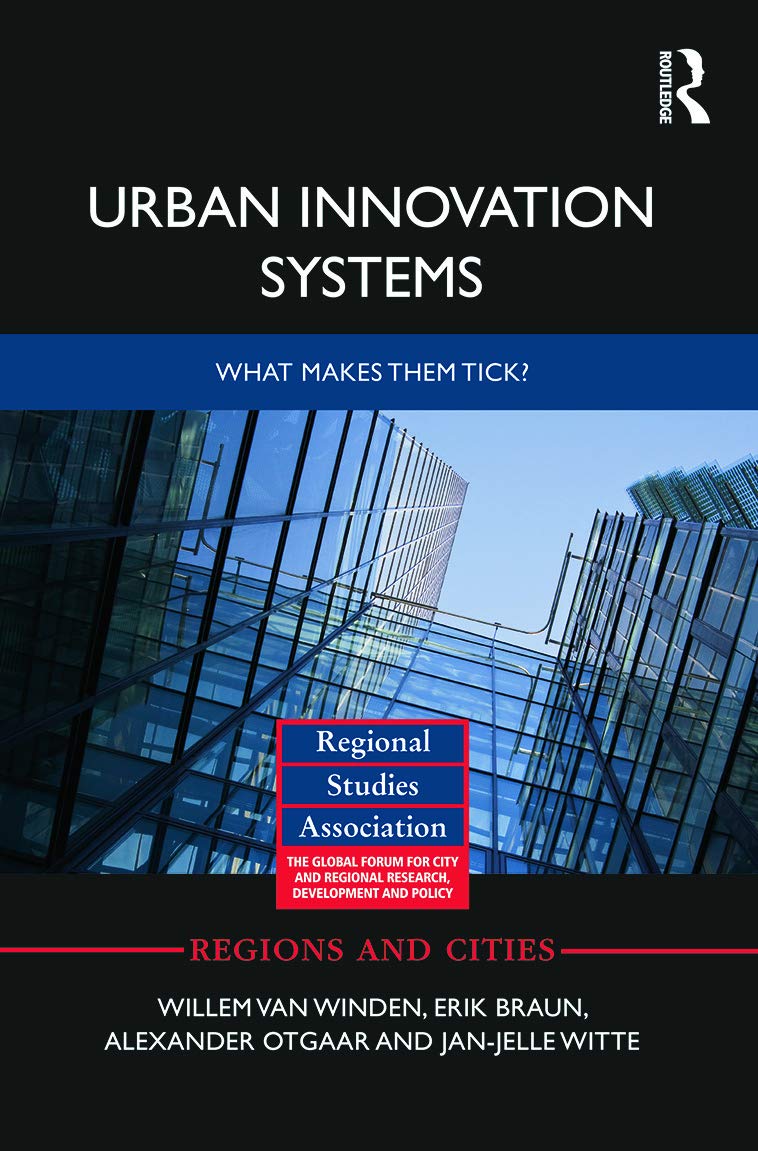
Title
Urban Innovation Systems: What makes them tick? (Regions and Cities),Used
Sold by Ergodebooks, an authorized reseller.
Returns accepted within 30 days | support@ergodebooks.com
Shipping Information
- Free Standard Shipping — United States only
- Processing Time: 3–5 business days
- Estimated Delivery: 6–10 business days after dispatch
- Double-boxed, fully insured & discreetly packaged
- Tracking number sent via email once dispatched
Returns & Refund
Returns accepted within 30 days of delivery.
Damaged or Defective Item
Free return shipping + replacement or full refund
Wrong Item Received
Free return shipping + replacement or full refund
Change of Mind
Return shipping at customer's expense · 25% restocking fee applies
Payment Option

Why are some regions and cities so good at attracting talented people, creating highlevel knowledge, and producing exciting new ideas and innovations? What are the ingredients of success? Can innovative cities be created and stimulated, or do they just flourish by mere chance? This book analyses the development and management of innovation systems in cities, in order to provide a better understanding of what makes such systems perform.The book opens by developing a conceptual model that combines insights from urban economics with economic geography, urban governance and place marketing. This highlights the relevance of path dependence, different types of proximity (and the role of clusters, networks and platforms), institutional conditions, place attractiveness and place identity in the evolution of local innovation systems. The authors then draw on this conceptual framework to structure empirical case studies in three cities with a relatively high innovation performance: Eindhoven (the Netherlands), Stockholm (Sweden) and Suzhou (China). Through these case studies they provide a detailed analysis of how successful innovation systems evolve and what makes them tick.Unique to this book is the linking of analysis to concrete policy and management responses. The book ends with a discussion on six themes in the development of successful urban innovation systems: firmcapabilities and leader firms, higher education and research, attractive environment, place branding, institutional environment and entrepreneurship. Each theme is examined fully, drawing lessons from the case studies, and from recent insights and other cases discussed in the literature.This title will be of interest to students, researchers and policymakers involved in regional innovation systems, knowledge locations and cluster development.
⚠️ WARNING (California Proposition 65):
This product may contain chemicals known to the State of California to cause cancer, birth defects, or other reproductive harm.
For more information, please visit www.P65Warnings.ca.gov.