
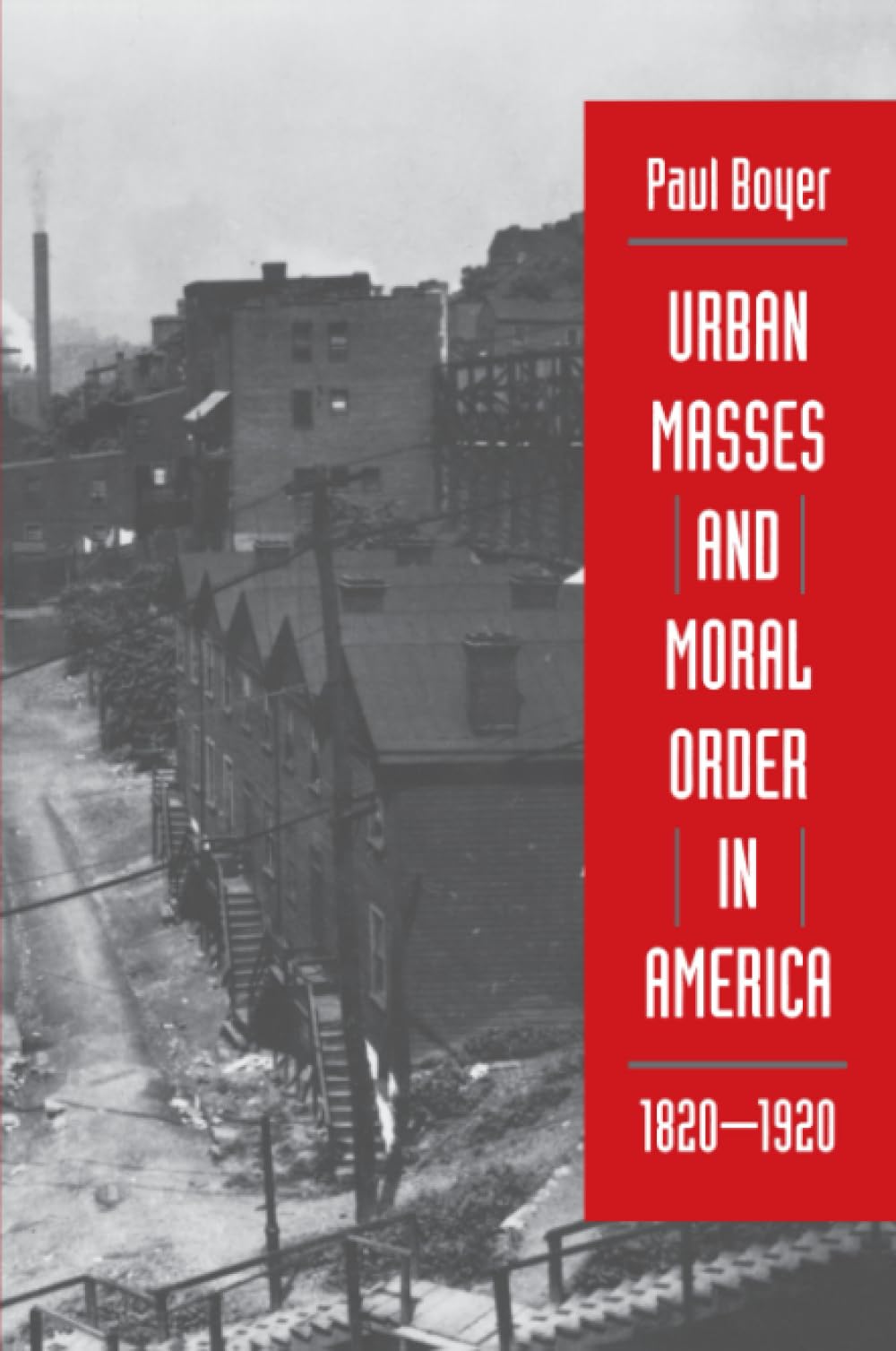
Title
Urban Masses And Moral Order In America, 18201920,Used
Sold by Ergodebooks, an authorized reseller.
Returns accepted within 30 days | support@ergodebooks.com
Shipping Information
- Free Standard Shipping — United States only
- Processing Time: 3–5 business days
- Estimated Delivery: 6–10 business days after dispatch
- Double-boxed, fully insured & discreetly packaged
- Tracking number sent via email once dispatched
Returns & Refund
Returns accepted within 30 days of delivery.
Damaged or Defective Item
Free return shipping + replacement or full refund
Wrong Item Received
Free return shipping + replacement or full refund
Change of Mind
Return shipping at customer's expense · 25% restocking fee applies
Payment Option

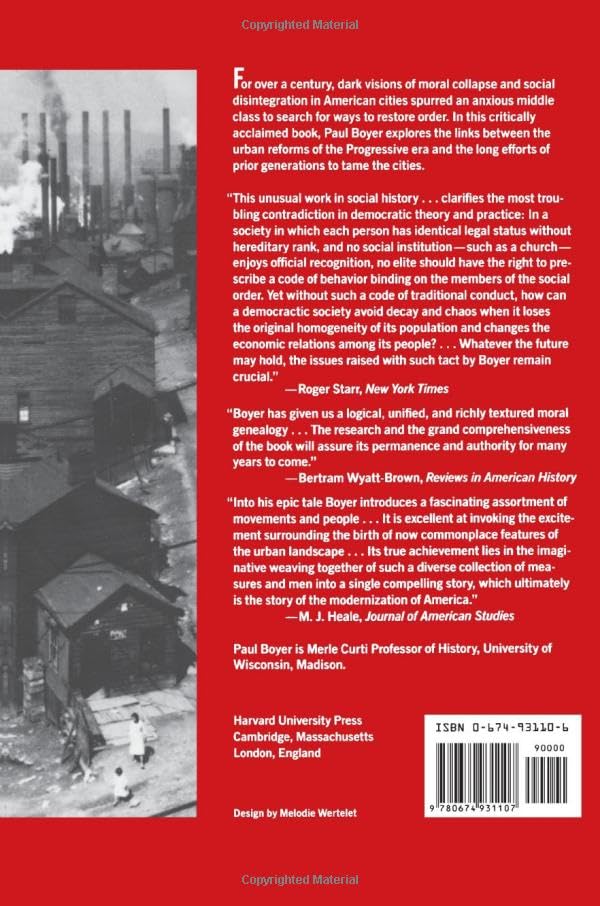
For Over A Century, Dark Visions Of Moral Collapse And Social Disintegration In American Cities Spurred An Anxious Middle Class To Search For Ways To Restore Order. In This Important Book, Paul Boyer Explores The Links Between The Urban Reforms Of The Progressive Era And The Long Efforts Of Prior Generations To Tame The Cities. He Integrates The Ideologies Of Urban Crusades With An Examination Of The Careers And The Mentalities Of A Group Of Vigorous Activists, Including Lyman Beecher; The Pioneers Of The Tract Societies And Sunday Schools; Charles Loring Brace Of The Children'S Aid Society; Josephine Shaw Lowell Of The Charity Organization Movement; The Father Of American Playgrounds, Joseph Lee; And The Eloquent City Planner Daniel Hudson Burnham.Boyer Describes The Early Attempts Of Jacksonian Evangelicals To Recreate In The City The Social Equivalent Of The Morally Homogeneous Village; He Also Discusses Later Strategies That Tried To Exert A Moral Influence On Urban Immigrant Families By Voluntarist Effort, Including, For Instance, The Charity Organizations' 'Friendly Visitors.' By The 1890S There Had Developed Two Sharply Divergent Trends In Thinking About Urban Planning And Social Control: The Bleak Assessment That Led To Coercive Strategies And The Hopeful Evaluation That Emphasized The Importance Of Environmental Betterment As A Means Of Urban Moral Control.
⚠️ WARNING (California Proposition 65):
This product may contain chemicals known to the State of California to cause cancer, birth defects, or other reproductive harm.
For more information, please visit www.P65Warnings.ca.gov.
- Q: How many pages are in 'Urban Masses and Moral Order in America, 1820-1920'? A: This book has four hundred thirty-two pages. It provides an in-depth exploration of urban reforms and moral influences in American cities.
- Q: What is the binding type of this book? A: The binding type is paperback. This makes it lightweight and portable, ideal for reading on the go.
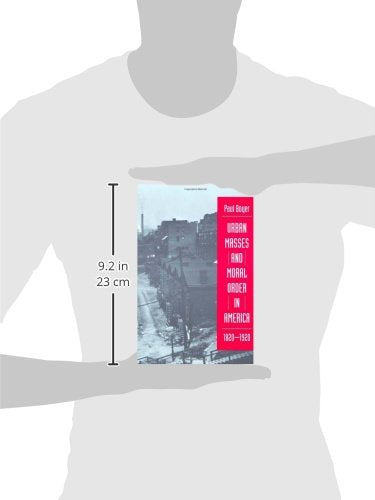
- Q: What are the dimensions of the book? A: The book measures six point fourteen inches in length, one point zero eight inches in width, and nine point two five inches in height. These dimensions make it easy to store on a bookshelf.
- Q: Who is the author of this book? A: The author is Paul Boyer. He is known for his historical analysis and insights into American urban life.
- Q: What topics does this book cover? A: The book covers urban reforms and social control during the Progressive era in America. It examines the efforts of activists and ideologies that shaped urban living.
- Q: Is this book suitable for academic study? A: Yes, it is suitable for academic study. Its detailed analysis and historical context make it valuable for students and researchers.
- Q: How should I care for this book? A: To care for this book, keep it in a dry place away from direct sunlight. Avoid bending the spine to preserve its condition.
- Q: Can I store this book on a regular bookshelf? A: Yes, it can be stored on a regular bookshelf. Its dimensions allow it to fit standard bookcases easily.
- Q: Is this book safe for younger readers? A: Yes, it is generally safe for older teens and adults. However, younger readers should have guidance due to its complex themes.
- Q: What makes this book different from other historical texts? A: This book integrates the ideologies of urban crusades with the careers of various activists. It offers a unique perspective on urban moral control.
- Q: What if my book arrives damaged? A: If your book arrives damaged, you can contact the seller for a return or exchange. Most sellers have policies to handle such issues.
- Q: Is there a warranty for this book? A: No, books typically do not come with warranties. However, check with the seller for their return policy.
- Q: Where can I find reviews of this book? A: You can find reviews on online bookstores and literary websites. These reviews provide insights from other readers.
- Q: How can I contact support if I have issues with my order? A: You can contact support through the website where you purchased the book. Look for customer service options for assistance.
- Q: Is this book part of a series? A: No, this book is not part of a series. It stands alone in its examination of urban history and moral order.
- Q: What are the key themes discussed in the book? A: Key themes include moral collapse, social disintegration, urban reforms, and the role of activists in shaping American cities. These themes reflect the historical context of the Progressive era.