
Title
Urban Modernity: Cultural Innovation In The Second Industrial Revolution (Mit Press)
Sold by Ergodebooks, an authorized reseller.
Returns accepted within 30 days | support@ergodebooks.com
Shipping Information
- Free Standard Shipping — United States only
- Processing Time: 3–5 business days
- Estimated Delivery: 6–10 business days after dispatch
- Double-boxed, fully insured & discreetly packaged
- Tracking number sent via email once dispatched
Returns & Refund
Returns accepted within 30 days of delivery.
Damaged or Defective Item
Free return shipping + replacement or full refund
Wrong Item Received
Free return shipping + replacement or full refund
Change of Mind
Return shipping at customer's expense · 25% restocking fee applies
Payment Option

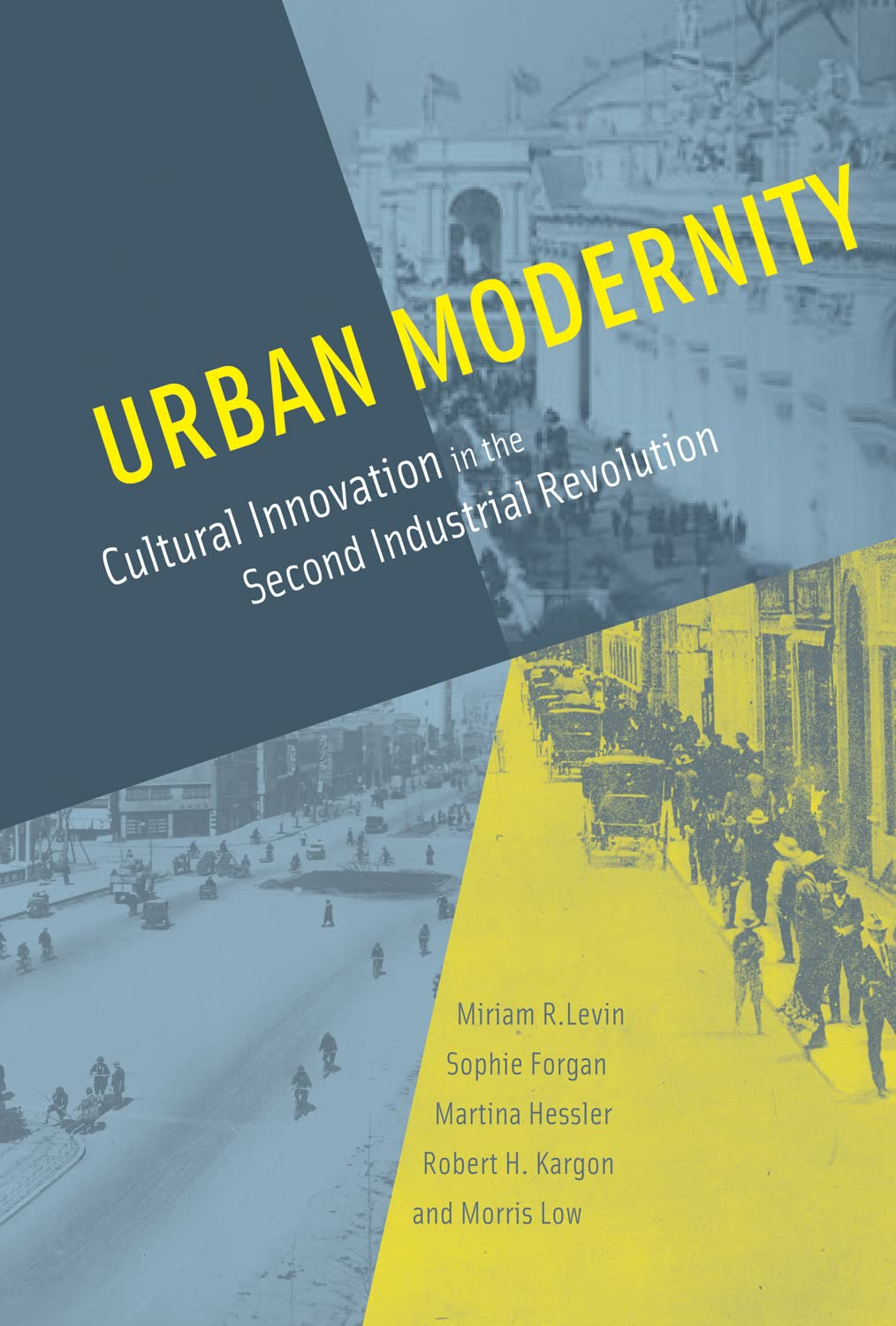
How Paris, London, Chicago, Berlin, and Tokyo created modernity through science and technology by means of urban planning, international expositions, and museums.At the close of the nineteenth century, industrialization and urbanization marked the end of the traditional understanding of society as rooted in agriculture. Urban Modernity examines the construction of an urbancentered, industrialbased culturean entirely new social reality based on science and technology. The authors show that this invention of modernity was brought about through the efforts of urban elitesbusinessmen, industrialists, and officialsto establish new science and technologyrelated institutions. International expositions, museums, and other such institutions and projects helped stem the economic and social instability fueled by industrialization, projecting the past and the future as part of a steady continuum of scientific and technical progress. The authors examine the dynamic connecting urban planning, museums, educational institutions, and expositions in Paris, London, Chicago, Berlin, and Tokyo from 1870 to 1930. In Third Republic Paris, politicians, administrators, social scientists, architects, and engineers implemented the future city through a series of commissions, agencies, and organizations; in rapidly expanding London, cultures of science and technology were both rooted in and constitutive of urban culture; in Chicago after the Great Fire, Commercial Club members pursued civic ideals through scientific and technological change; in Berlin, industry, scientific institutes, and the popularization of science helped create a modern metropolis; and in Meijiera Tokyo (Edo), modernization and Westernization went hand in hand.
⚠️ WARNING (California Proposition 65):
This product may contain chemicals known to the State of California to cause cancer, birth defects, or other reproductive harm.
For more information, please visit www.P65Warnings.ca.gov.