
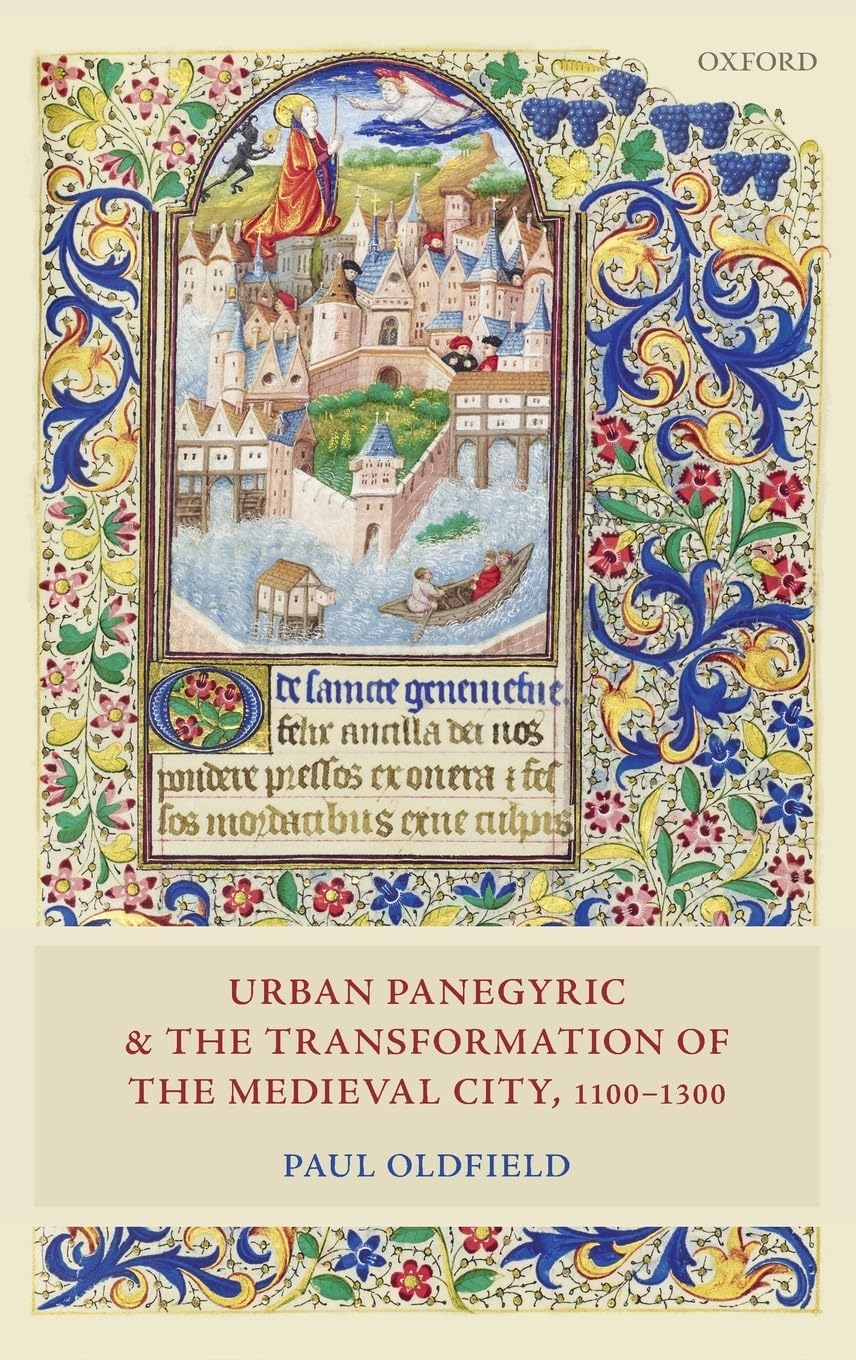
Title
Urban Panegyric and the Transformation of the Medieval City, 11001300 (Oxford Studies in Medieval European History),Used
Sold by Ergodebooks, an authorized reseller.
Returns accepted within 30 days | support@ergodebooks.com
Shipping Information
- Free Standard Shipping — United States only
- Processing Time: 3–5 business days
- Estimated Delivery: 6–10 business days after dispatch
- Double-boxed, fully insured & discreetly packaged
- Tracking number sent via email once dispatched
Returns & Refund
Returns accepted within 30 days of delivery.
Damaged or Defective Item
Free return shipping + replacement or full refund
Wrong Item Received
Free return shipping + replacement or full refund
Change of Mind
Return shipping at customer's expense · 25% restocking fee applies
Payment Option

This study offers the first extensive analysis of the function and significance of urban panegyric in the Central Middle Ages, a flexible literary genre which enjoyed a marked and renewed popularity in the period 1100 to 1300. In doing so, it connects the production of urban panegyric to major underlying transformations in the medieval city and explores praise of cities primarily in England, Flanders, France, Germany, Iberia, and Italy (including the South and Sicily). The volume demonstrates how laudatory ideas on the city appeared in extremely diverse textual formats which had the potential to interact with a wide audience via multiple textual and material sources. When contextualized within the developments of the twelfth and thirteenth centuries these ideas could reflect more than formulaic, rhetorical outputs for an educated elite, they were instead integral to the process of urbanisation. In Urban Panegyric and the Transformation of the Medieval City, 11001300, Paul Oldfield assesses the generation of ideas on the Holy City, on counternarratives associated with the Evil City, on the interrelationship between the City and abundance (primarily through discourses on commercial productivity, hinterlands and population size), on landscapes and sites of power, and on knowledge generation and the construction of urban histories.Urban panegyric can enable us to comprehend more deeply material, functional, and ideological change associated with the city during a period of notable urbanization, and, importantly, how this change might have been experienced by contemporaries. This study therefore highlights the importance of urban panegyric as a product of, and witness to, a period of substantial urban change. In examining the laudatory depiction of medieval cities in a thematic analysis it can contribute to a deeper understanding of civic identity and its important connection to urban transformation.
⚠️ WARNING (California Proposition 65):
This product may contain chemicals known to the State of California to cause cancer, birth defects, or other reproductive harm.
For more information, please visit www.P65Warnings.ca.gov.