
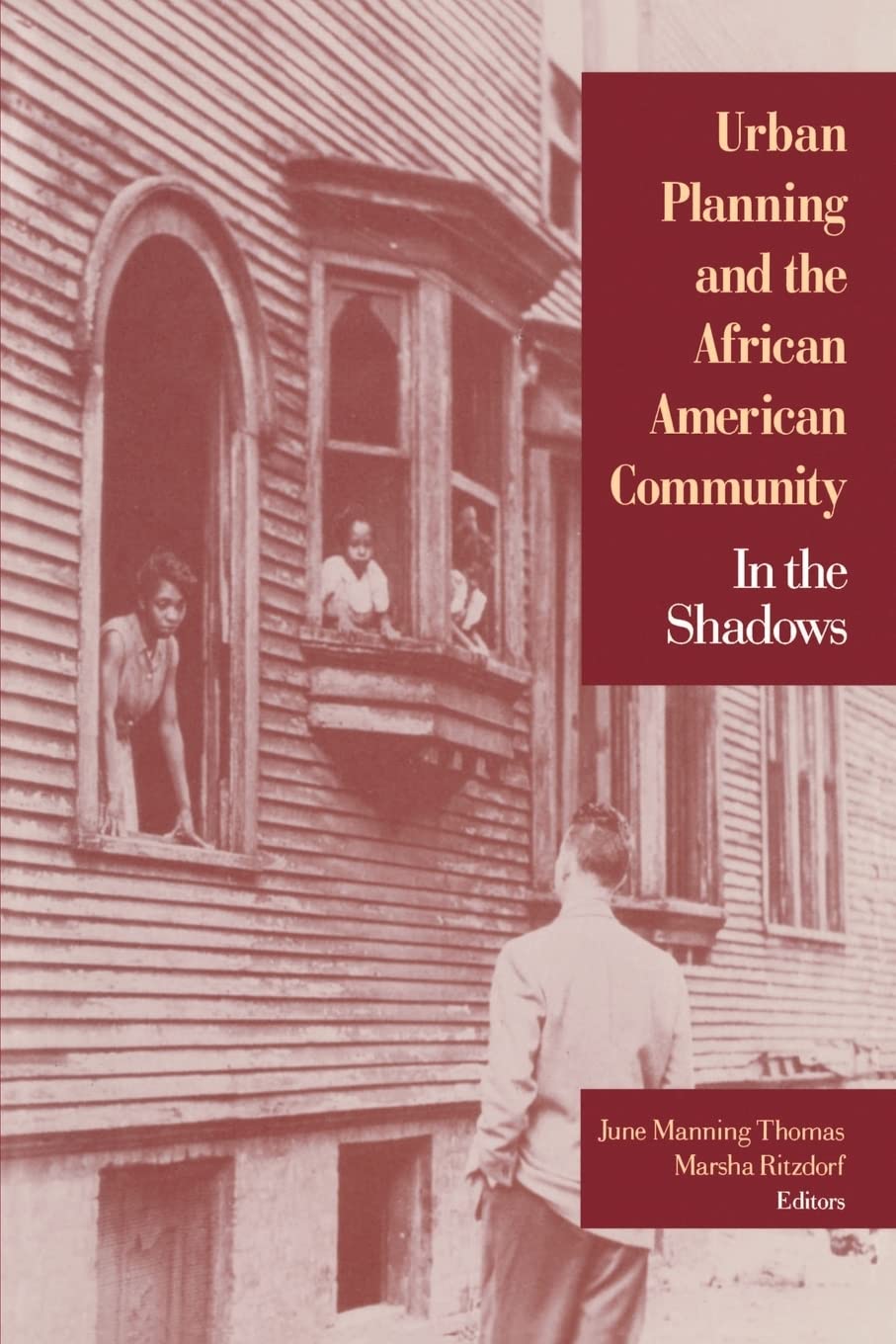
Title
Urban Planning And The African American Community: In The Shadows
Sold by Ergodebooks, an authorized reseller.
Returns accepted within 30 days | support@ergodebooks.com
Shipping Information
- Free Standard Shipping — United States only
- Processing Time: 3–5 business days
- Estimated Delivery: 6–10 business days after dispatch
- Double-boxed, fully insured & discreetly packaged
- Tracking number sent via email once dispatched
Returns & Refund
Returns accepted within 30 days of delivery.
Damaged or Defective Item
Free return shipping + replacement or full refund
Wrong Item Received
Free return shipping + replacement or full refund
Change of Mind
Return shipping at customer's expense · 25% restocking fee applies
Payment Option

Clarifying The Historical Connections Between The Africanamerican Population In The United States And The Urban Planning Profession, This Book Suggests Means By Which Cooperation And Justice May Be Increased. Chapters Examine: The Racial Origins Of Zoning In Us Cities; How Eurocentric Family Models Have Shaped Planning Processes Of Cities Such As Los Angeles; And Diversifying Planning Education In Order To Advance The Profession. There Is Also A Chapter Of Excerpts From Court Cases And Government Reports That Have Shaped Or Reflected The Racial Aspects Of Urban Planning.
⚠️ WARNING (California Proposition 65):
This product may contain chemicals known to the State of California to cause cancer, birth defects, or other reproductive harm.
For more information, please visit www.P65Warnings.ca.gov.
- Q: How many pages are in 'Urban Planning and the African American Community: In the Shadows'? A: This book has three hundred thirty-two pages. It provides in-depth insights into urban planning and its historical connections with the African American community.
- Q: What is the binding type of this book? A: The book is a paperback. This makes it lightweight and easy to handle for readers.
- Q: What are the dimensions of this book? A: The dimensions are six inches in length, zero point eight three inches in width, and nine inches in height. This size is standard for paperback books.
- Q: Who is the author of this book? A: The author is June Manning Thomas. She explores the intersections of race and urban planning in this work.
- Q: What is the main topic of this book? A: The main topic is the relationship between urban planning and the African American community. It clarifies historical connections and suggests ways to enhance cooperation and justice.
- Q: How can I use the insights from this book? A: You can use the insights to understand urban planning better. It offers valuable perspectives for students, urban planners, and community activists.
- Q: Is this book suitable for beginners in urban planning? A: Yes, this book is suitable for beginners. It provides foundational insights into urban planning and its racial implications.
- Q: What audience is this book intended for? A: This book is intended for students, urban planners, and anyone interested in social justice and urban issues. It is relevant for both professionals and laypersons.
- Q: Can I recommend this book to someone interested in social justice? A: Yes, it is highly recommended for those interested in social justice. The book addresses important historical and contemporary issues related to race and urban planning.
- Q: How should I care for this paperback book? A: Keep it in a dry place and avoid exposure to direct sunlight. This will help maintain its condition over time.
- Q: Is this book safe for young readers? A: Yes, the content is educational and addresses historical aspects of urban planning. However, adult supervision is recommended for discussions on sensitive topics.
- Q: How do I store this book to prevent damage? A: Store the book upright on a shelf away from moisture. Use a bookend if necessary to keep it standing and avoid bending the cover.
- Q: What should I do if the book arrives damaged? A: If the book arrives damaged, you can contact the seller for a return or exchange. Most sellers have a return policy for such situations.
- Q: Can I return this book if I'm not satisfied? A: Yes, return policies typically allow for returns if you're not satisfied. Be sure to check the specific return policy of the seller.
- Q: What if I need help finding more resources on urban planning? A: You can consult your local library or online educational platforms. They often have additional resources and related literature on urban planning.
- Q: Is there a glossary or index in this book? A: Yes, the book includes an index. This helps readers locate specific topics or terms related to urban planning and the African American community.